This is how much Hungarians earned in 2024 - The purchasing power of wages has increased enormously


According to KSH data, the average gross earnings of full-time employees were HUF 646 800 last year. The average net salary was HUF 430 100 without tax benefits and HUF 445 200 with tax benefits.

Average gross earnings and average net earnings excluding tax benefits increased by 13.2% and net earnings including tax benefits increased by 13.1% compared to the same period last year.

However, wage growth slowed during the year, rising by 'only' 11% in December, as shown in the graph above.
But two-thirds of workers earn less than the average gross wage. The median wage (where half of the workers can take home less and the other half can take home more) was HUF 520,000 gross in 2024, which was HUF 332,500 net according to Portfolio's calculations.
Looking not at the whole year but only at the month of December, the average gross earnings of full-time employees were HUF 727 700, 11% higher than in the previous year. Average gross regular wages (excluding premiums, bonuses and one-month special payments) are estimated at HUF 625 400, 10.6% higher than in the same period last year. In other words, bonuses again boosted wages in the last month of the year.
The purchasing power of earnings has grown exceptionally fast, driven by double-digit nominal wage dynamics and low inflation.
Real wages rose by 9.2% last year, one of the fastest increases in 30 years.
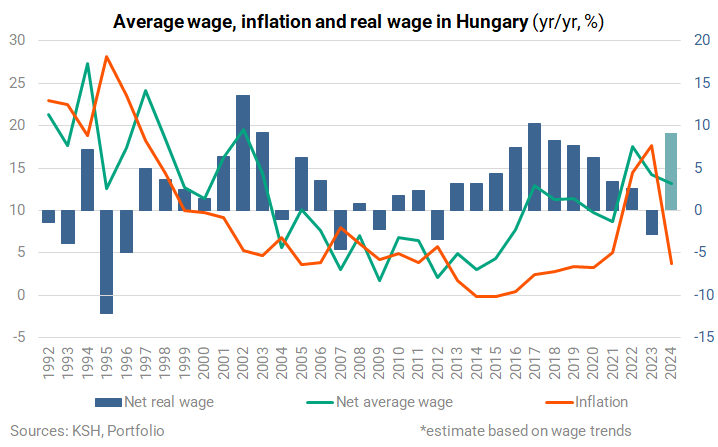
As the chart above shows, the record rate of price rises in 2023 reduced the purchasing power of earnings, but last year real wages rose at their fastest rate since 1992.
This year is likely to bring much slower wage growth. Wages could rise by 8-10% in nominal terms, down from over 13% last year, as the labour market is not nearly as tight as it was and the minimum wage and wage minimum for skilled workers have risen more slowly than last year. This, in turn, determines the wages of workers in the higher wage brackets. Meanwhile, inflation could be as high as 4.5-5% this year, compared with 3.7% last year, after surprisingly high price dynamics in January.
In the coming months it will be crucial for inflation to fall to lower levels, as consumer price changes will have a decisive impact on whether consumption can make a meaningful contribution to GDP growth. The purchasing power of earnings is expected to increase by around 4-5%.
Cover image (for illustration purposes only): Getty Images





