Banks have had a great year: money is flowing to Hungarians


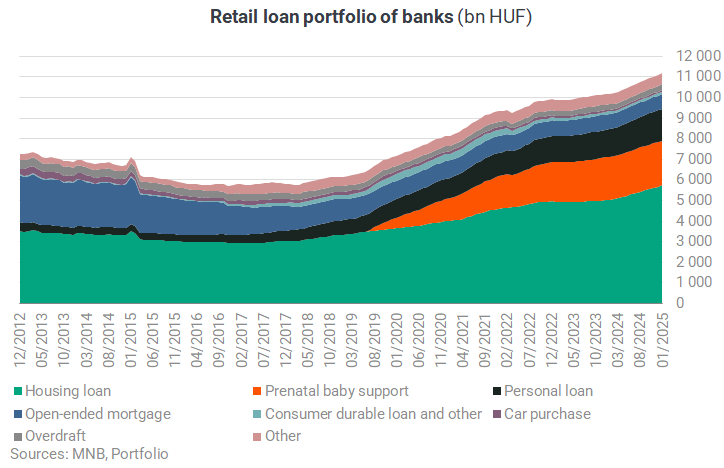
In addition to last year's banking sector results, the National Bank of Hungary (MNB) also published its loan and deposit statistics for January 2025. The performance of the credit market remains mixed, with retail lending showing the brighter side. In January, housing loans amounted to HUF 125 billion, personal loans to HUF 74 billion, Baby Loans to HUF 16 billion and all other loans to HUF 29 billion.
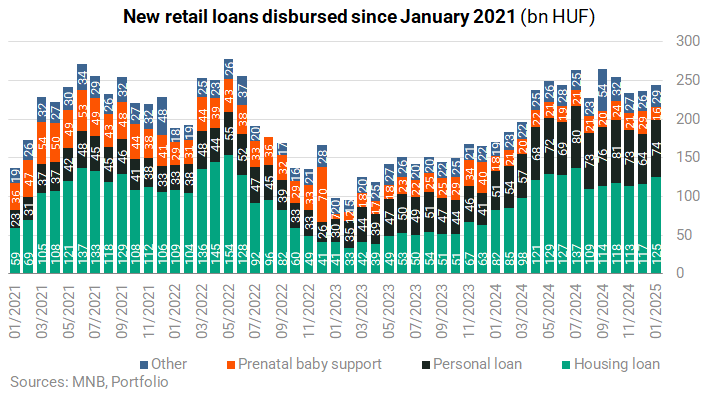
The table below shows the year-on-year change in retail lending. As the base has also increased, it is natural that the momentum has slowed, but even so, housing loans are up 52% on January last year and new personal loan contracts are up 44%. At the same time, the take-up of Baby Loans fell by 11%, which may be due to the fact that pregnant women aged 35-41 are no longer eligible for such loans (but non-pregnant women aged 30-35 are, but the negative effect seems to have been stronger).

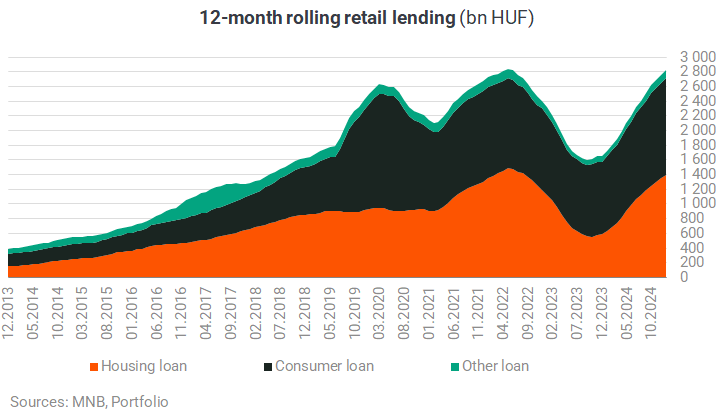
Thanks to the MNB's memorable Green Home Programme, which was launched in October 2021 as part of the Funding for Growth Scheme (FGS), retail lending reached its nominal peak in May 2022 with HUF 2,843 billion on a 12-month rolling basis. We are now only HUF 10 billion behind. In real terms, however, the gap is much larger.
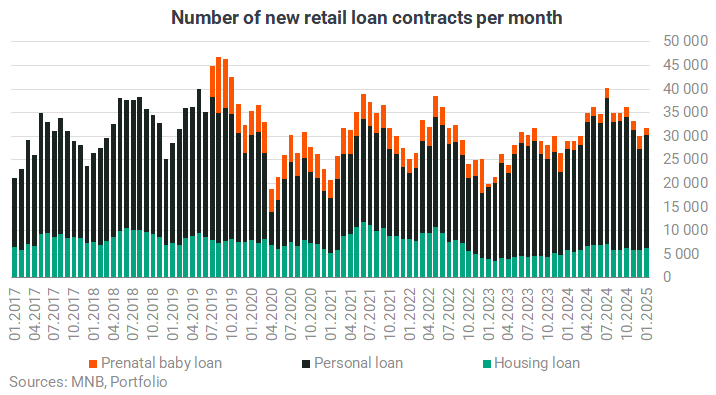
The perennial question is whether it is the increase in the number of contracts or the average amount that is driving lending. With the number of mortgages up by only 7% in January and personal loans up by 12%, it is clear that the increase in the average amount is now accounting for the bulk of the expansion.
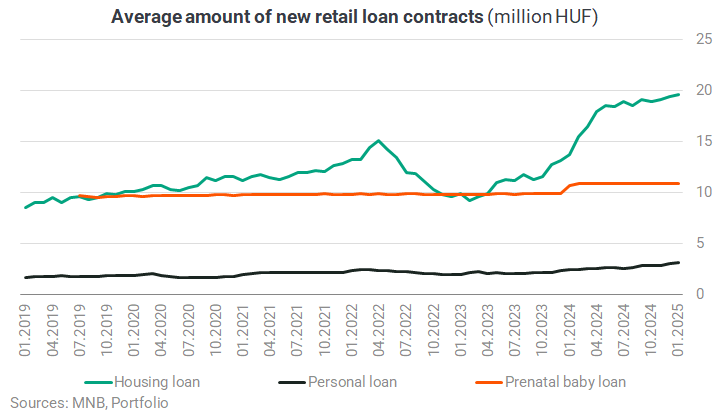
The average amount of new personal loans has now exceeded HUF 3 million for the first time, while housing loans are approaching HUF 20 million, with CSOK Plus (family housing subsidy) playing an important role in the latter.
Although CSOK Plus was still in its infancy at this time last year, it is not subsidised loans but market loans that are showing more growth than at that time, with market schemes accounting for 79% of total housing loans and 75% of mortgage loans in January. The market for home equity loans is still limited.

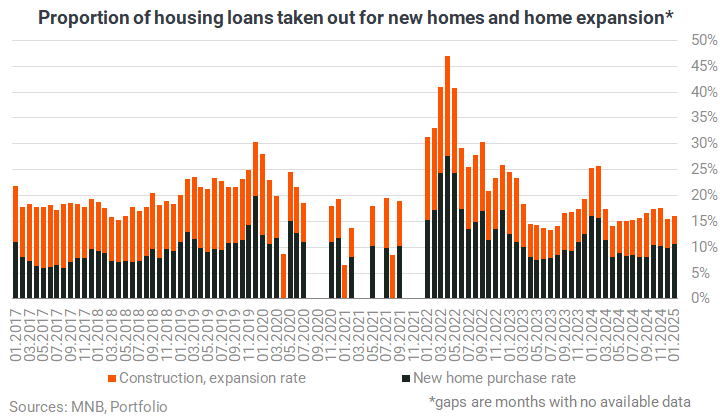
According to the MNB, the share of new housing loans was around 16% in January, while the share of loans for renovation purposes was only 2.4%. The former figure could be boosted in the near future by the government's new housing market capitalisation programme and the 5% APR home loan for young people under 35 starting on 1 April, while the latter could be boosted by the interest-subsidised home renovation loan starting on 1 February.
Under the programme, HUF 200 billion will be made available to real estate funds over the next five years, but the planned budget could be increased to HUF 300 billion, to be used for the construction of student halls of residence, rental apartments and new housing.
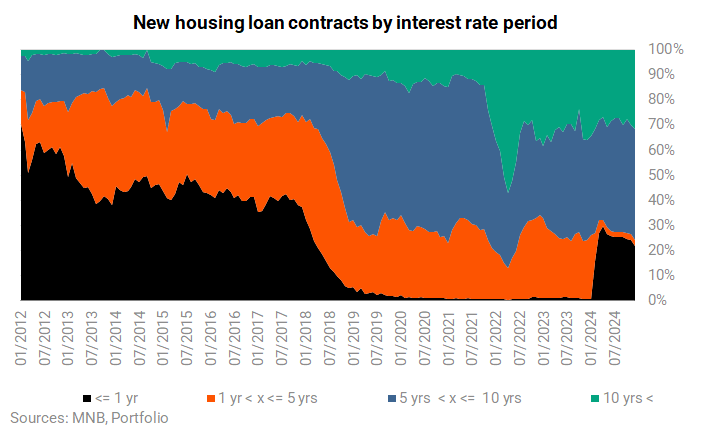
In terms of the interest period, loans with a 10-year interest period and fixed throughout continue to dominate, with a cc. 20% share of loans with a variable interest rate only due to the interest subsidy principle of CSOK Plus, which in fact also offers customers a fixed interest rate.
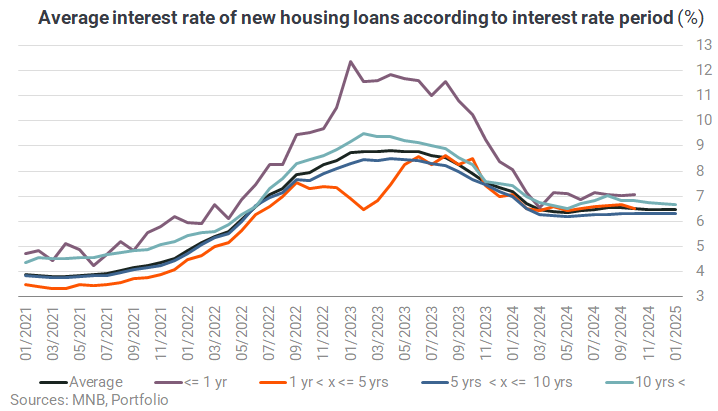
Interest rates have frozen: households took out market rate mortgages at an average rate of 6.46% in January, the same as in December.
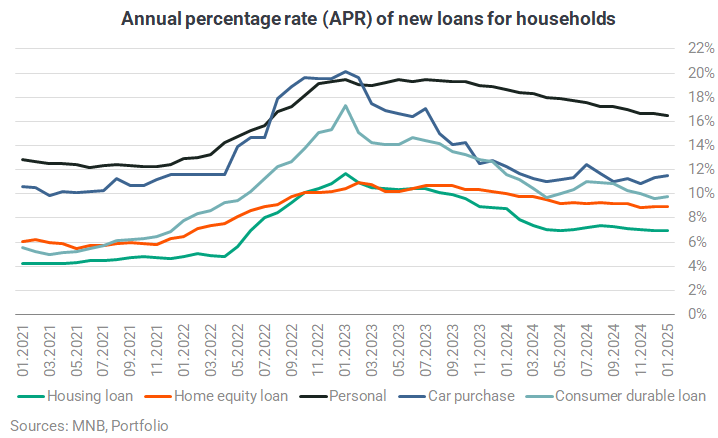
The average APR on new personal loans has fallen slightly to 16.4%, but there are much more affordable products on the market and another major bank (CIB) has reduced its lowest available personal loan rate to below 10%.
According to the MNB, total household credit grew dynamically by 9.7% last year, with housing loans increasing by 13.7% and personal loans by 14.5%.
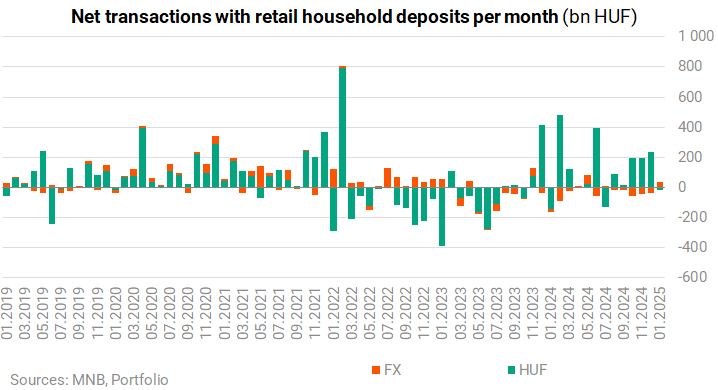
As for deposits, there is also good news: for the first time since 2021, household deposits increased on a transaction basis in January, meaning that more money was added to accounts than was withdrawn from them. The PMÁP interest payments, along with many other forms of savings, have obviously supported this.
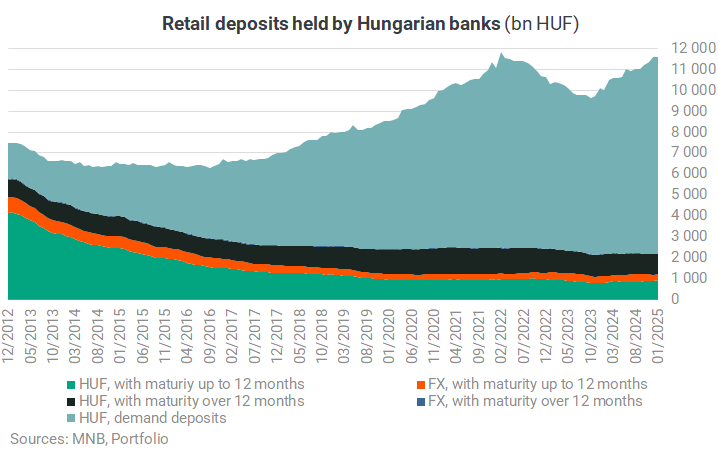
Banks continue to have much less demand for household money than for corporate money: while they pay an average interest rate of 1.4% to households, companies receive 5.0% average interest on their fixed deposits.

Of course, 84% of retail deposits are not fixed because of low interest rates. Total household deposits rose slightly in January and are up 12.6% over the past year.
Corporate lending remained weak in January amid low business investment activity, but in February the interest rate on Széchenyi Card investment loans fell to 3.5% from 5.0%, which may provide some stimulus as volumes may be supported by new EXIM programmes.
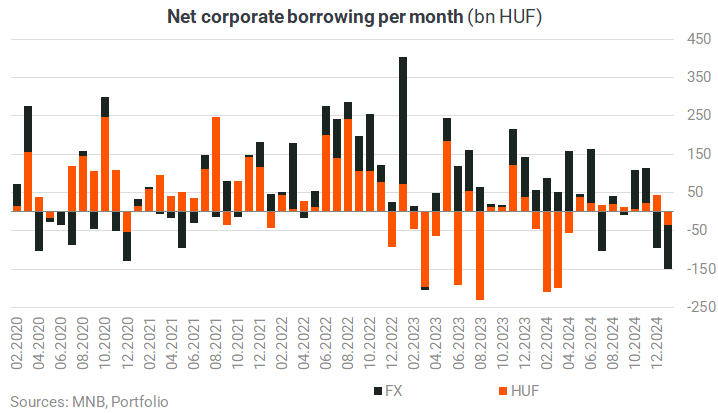
In January, companies repaid HUF 149 billion more than they borrowed (this may, of course, include individual large transactions), while over the past 12 months the net increase was only HUF 33 billion, i.e. the net borrowing of foreign currency loans was much higher than the net repayment of forint loans.
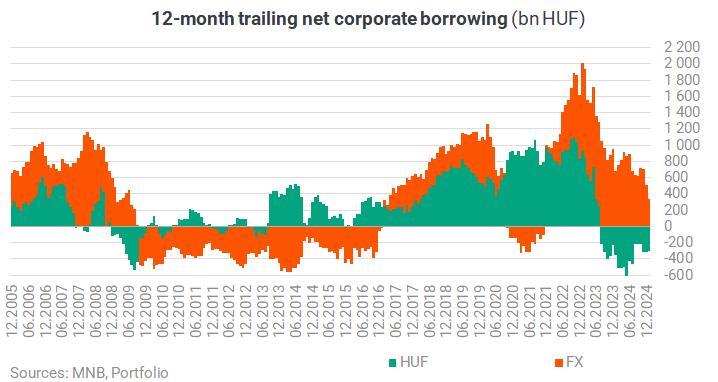
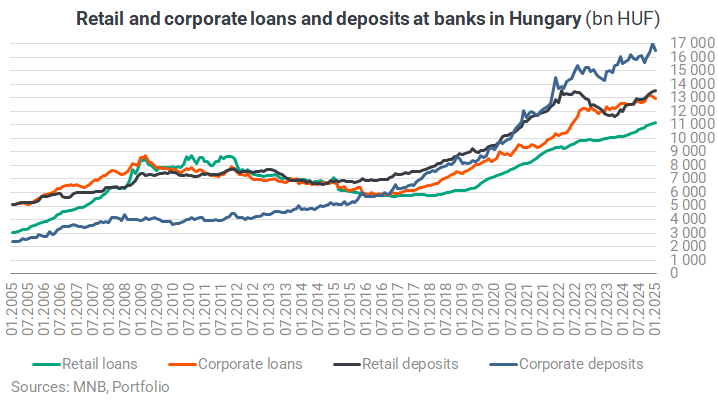
While retail lending grew by 9.7% last year, corporate lending increased by only 2.9%, mainly due to the depreciation of the forint. Similarly, while household deposits grew by 12.6% over the year, corporate deposits grew by only 6.1%.
Cover image (for illustration purposes only): Getty Images





