Retail loan defaults in Hungary: banks expected anything but this


When we reported on the 2024 performance of Hungarian banks, we said that
- the share of loans classified as non-performing had fallen to 3.8% from 4.0% in the corporate loan portfolio and
- to 2.0% from 2.9% in the retail loan portfolio
for local credit institutions, i.e. the quality of loan portfolios has continued to improve last year.
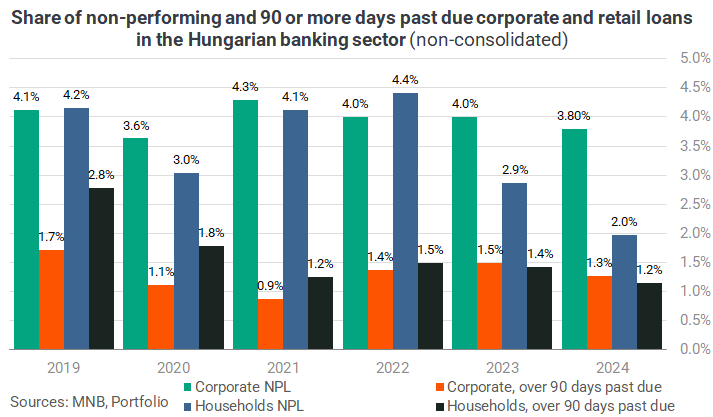
Today, the central bank published another, more detailed set of statistics on banks' lending to households, which showed that
the share of household loans over 90 days past due, which is actually a subset of loans classified as non-performing, fell from 1.53% to 1.29% last year, close to the previous low of 1.23%
reached by the banking sector at the end of 2021, immediately after the pandemic-induced repayment moratorium.
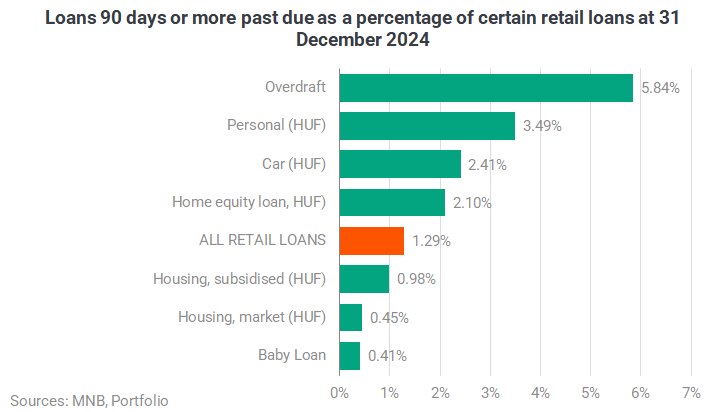
The overdue rate is highest for bank overdrafts (5.8%) and has even increased slightly compared to last year, while the rate for Baby Loans (0.4%) is the lowest. And the rate for housing loans, which account for around half of household loans, is less than 1%, with traditionally disciplined repayment behaviour.
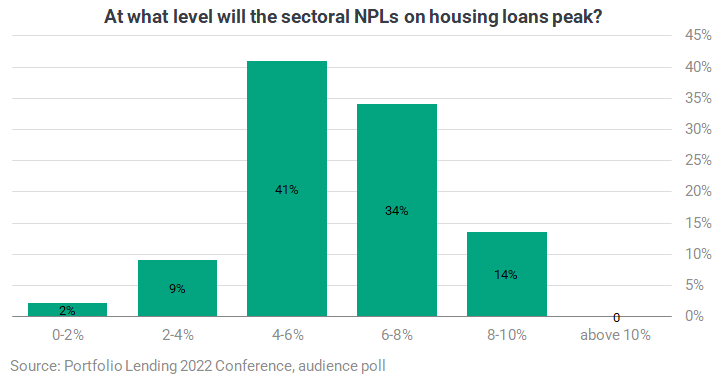
By comparison, banks' expectations during the economic turmoil of recent years were quite different: at the Portfolio Lending conference in the spring of 2022, for example, only 2% of the audience projected the housing loan default rate to fall below 2% - the expectations were much more pessimistic.
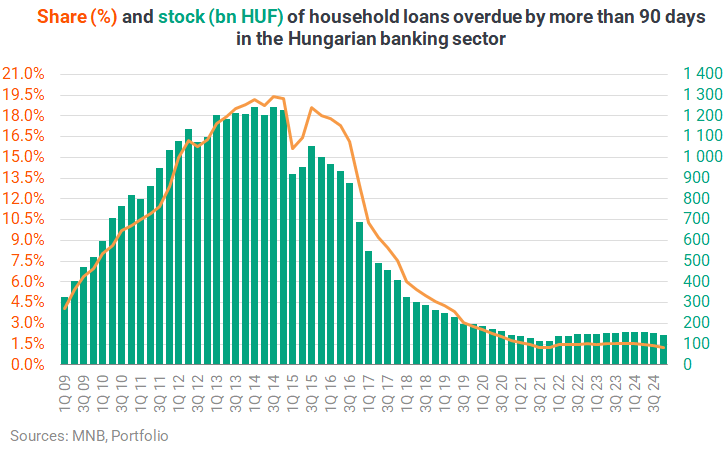
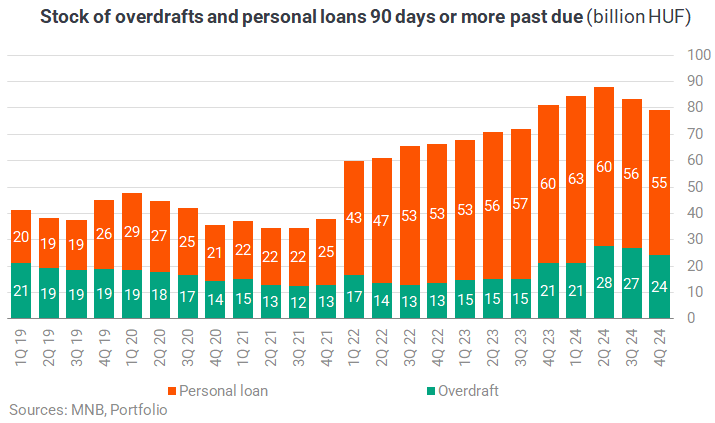
The picture is further improved by the fact that not only the share of overdue loans but also their stock decreased last year, to HUF 146 billion from HUF 158 billion.
Overdrafts were the only item to increase, to HUF 24 billion from HUF 21 billion.
In the chart below, we have also highlighted personal loans, where the issue of portfolio quality has been more pronounced in recent years, but where the trend is also positive: the stock of overdue loans fell to EUR 55 billion from EUR 60 billion last year.
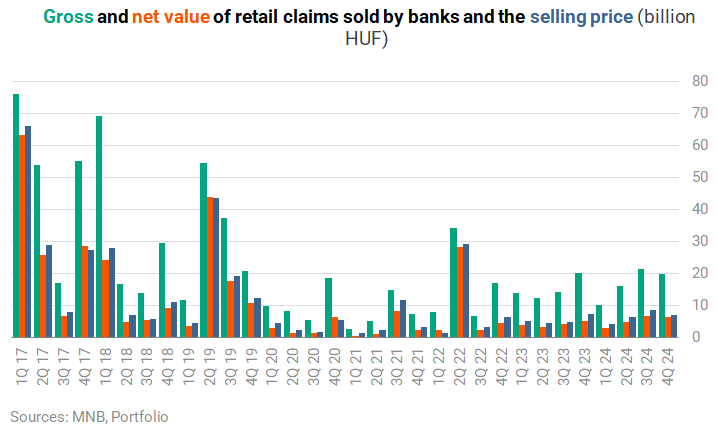
This is good news from a bank and client perspective, but not so good news from a debt buyer perspective, as the positive development of the portfolio is not due to the sale of receivables; the market remains relatively dry. After HUF 61 billion in the previous year, banks sold HUF 68 billion of household loans with capital debt last year, of which HUF 45 billion were personal loans. The market for debt buyers remains low-intensity, at least as far as bank loans are concerned.
Another positive development in the MNB's statistics is that
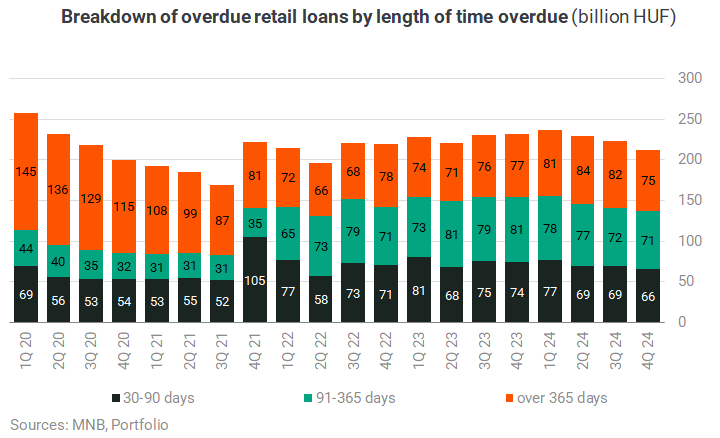
not only the stock of loans overdue for more than 90 days, but also the stock of loans overdue for shorter periods, i.e. between 30 and 90 days, decreased at banks,
from HUF 74 billion to HUF 66 billion. The possibility to use voluntary pension savings to pay off mortgages may even improve this statistic this year.
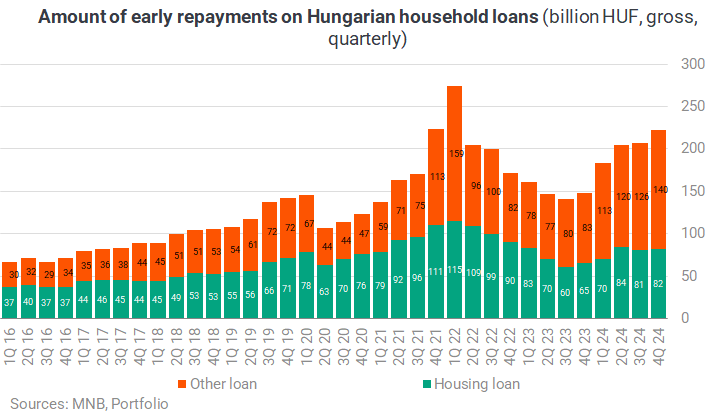
The volume of early repayments is also increasing for Hungarian households, especially for unsecured loans. It is likely that the volume of consumer loan restructurings has also increased in a declining interest rate environment, but has not yet reached the previous record levels.
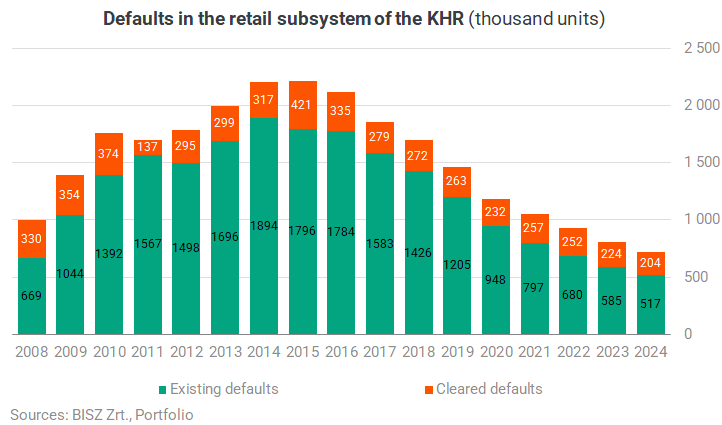
We also looked at data from the Central Credit Information System (KHR) on how many defaults people have, and for loans, being overdue for more than 90 days or more than the minimum wage can put you on the 'blacklist' (formerly BAR).
The number of outstanding defaults fell to 517,000 from 585,000 last year, so this statistic also shows an improvement.
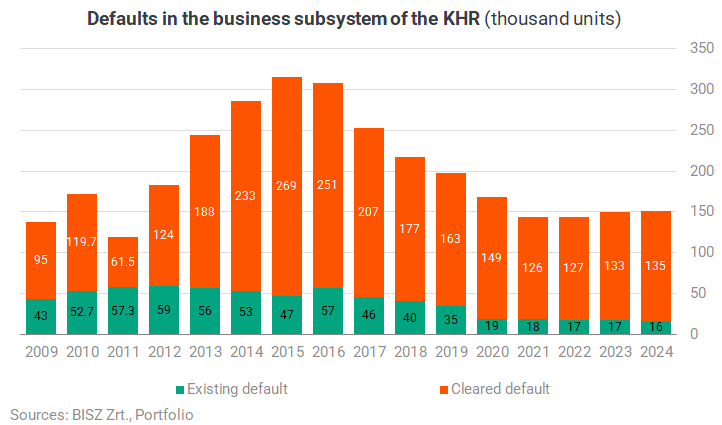
In the case of small and medium-sized enterprises, it's more like stagnation.
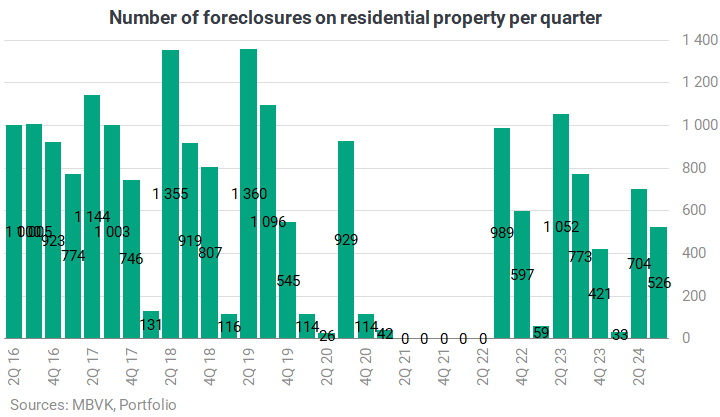
Finally, there has been no increase in the number of foreclosures on residential property. Data published so far by the Association of Judicial Officers (MBVK) up to the end of September show that
the number of foreclosures in the first three quarters of the year fell to 1,263 from 1,884 a year earlier.
Cover image (for illustration purposes only): Getty Images





