Double whammy for Hungarian workers: wage growth slows while inflation hits harder


Average gross earnings in Hungary rose by 9.3% in February 2025, slowing down from 10.4% in January, the Central Statistical Office (KSH) reported on Thursday.

this is the smallest increase wages since 2021.
- The average gross earnings of full-time employees were HUF 661,400.
- The average gross regular earnings (without premiums and one-month bonuses) were estimated at HUF 632,500, which is 9.4% higher than in the same period of the previous year.
- Average net earnings reached HUF 439,800 excluding tax benefits and HUF 455,000 including tax benefits, up 9.3% and 9.1% respectively on February 2024.

In the business sector, the statistical office reported an increase of 9%, a slowdown from the 9.9% growth recorded in the previous month. As shown in the chart below, growth continues to slow.

In the business sector, gross average earnings were HUF 667,100 and net average earnings reached HUF 443,600.

Growth in the public sector is also lower, as there are no ambitious wage increase programmes this year, as there were last year, and the minimum wage and the wage minimum for skilled workers have only increased by single digits.

Median earnings are also growing more slowly
Median gross earnings were HUF 533 600, 8.5% higher than a year earlier. Median net earnings including tax benefits reached HUF 370 700, an increase of 8.8% compared to the same period last year. The median is the wage level at which half of the employees take home less and half more. However, two thirds of employees earn less than the median wage.
With higher inflation and lower wage growth, the purchasing power of earnings is not growing as fast as it used to. In February, real earnings rose by 3.5%, while consumer prices were up 5.6% year-on-year.
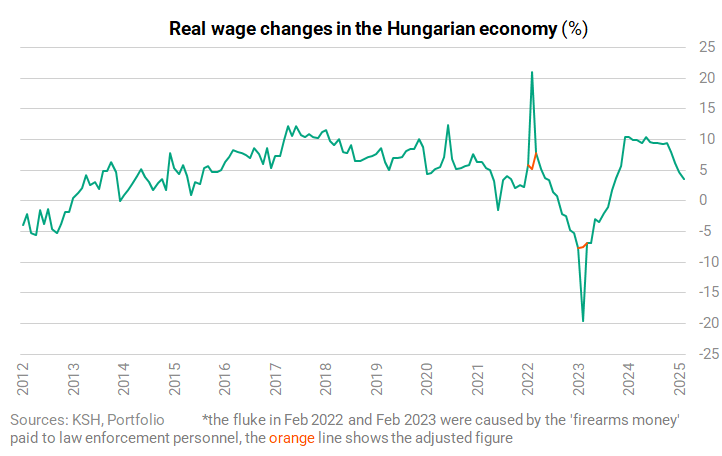
As the graph above shows, the previous 8-10% increase in real wages is coming to an end.
However, it looks very much as if February's inflation index was this year's peak, and the coming months will see smaller price rises, which could push real wages slightly higher.
This year's innovation by the KSH now allows a monthly breakdown of wages by income quintile. The smallest increase on an annual basis was achieved by those in the lowest income quintiles, while the largest increase was achieved by those in quintiles 4 and 5.
It appears that after the 9% increase in the minimum wage and the 7% increase in the guaranteed wage minimum this year, employers have not even raised the wage above the legal minimum, which may be related to the still unfavourable economic environment.
This is not the case for high-income earners, whose wages have risen by more than 10%. Average wages in the 4th income quintile are now 720,000 HUF gross, and in the 5th quintile 1,386,000 HUF.

Cover image (for illustration purposes only): Getty Images





