Dreadful demographic data released in Hungary


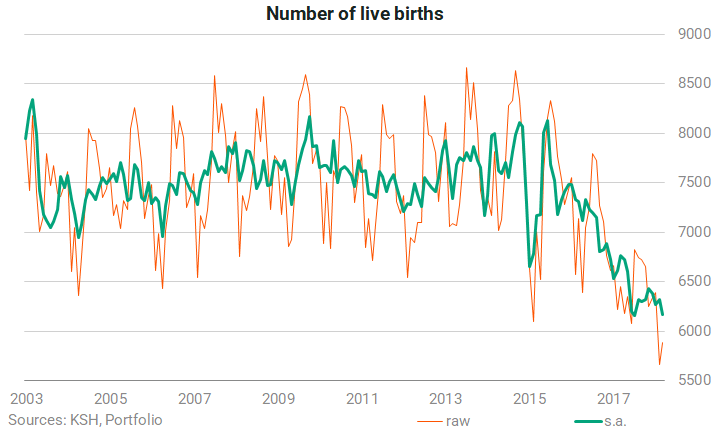
5,885 children were born in March, 8.9% fewer than in the same month of 2024. 11 ,98 Hungarians died last month, 4.9% more than in March last year. The natural decrease was 5,313 compared with 4,218 in March 2024.
According to both raw and seasonally adjusted data, the second lowest number of children were born in Hungary in March this year. According to the former, the previous month, February, was the absolute low, while the latter shows that there were a hair's breadth fewer births last July.
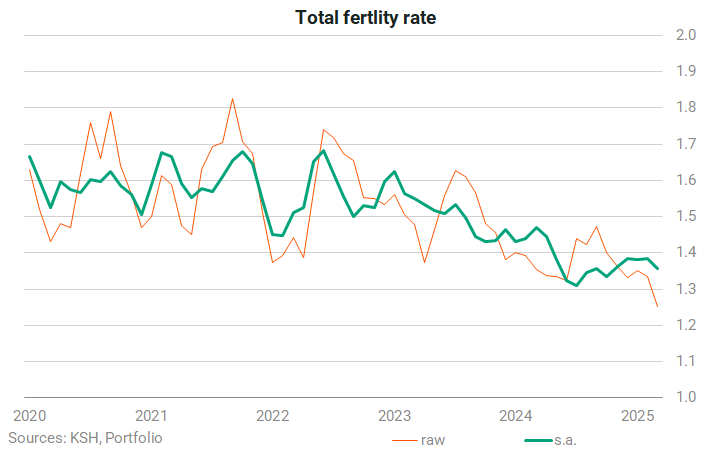
Although the decline in the number of births is due to the continuing shrinking pool of women of childbearing age, this is not the only reason. The total fertility rate, which reflects the propensity to have children, fell to 1.25 in March.
This is the sixth year that the KSH has published this indicator and by far the lowest monthly figure.
For previous periods we only have an annual average, and the only time we have seen such a low figure was in 2010.
In the first quarter, 17,945 children were born, 7.2% fewer than a year earlier. The number of live births was 4.1% lower in January and 8.8% lower in February-March than in the same months of the previous year. The leap day adjusted birth rate in January-March was 6.2% lower than in the same period of the previous year.
Since the beginning of the year, 35,245 people have died, 4.4% or 1,484 more than a year ago. The number of deaths was 7.7% higher in January, 0.3% higher in February and 4.9% higher in March than in the same period last year. Adjusted for the leap day effect, the number of deaths in January-March was 5.6% higher than in the same period last year.
The balance of births and deaths resulted in a natural decrease of 17,300 persons, 20% more than the previous year (14,419). Adjusted for the leap day effect,
the natural decrease was 21% higher than in the same period of the previous year.
Cover image (for illustration purposes only): Getty Images





