Hungarian earnings paint an increasingly grim picture


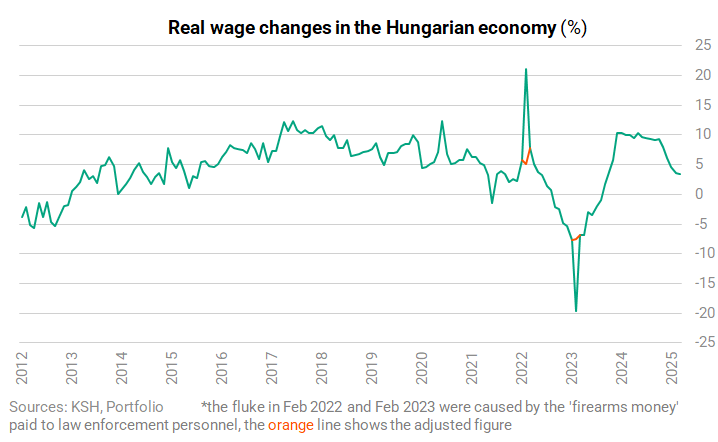
It looks like we can say goodbye to double-digit wage growth. Indeed, gross wage growth slowed to 8.5% in March, while in previous months we have seen much higher increases. As the chart below shows, the last time wage dynamics were this slow, excluding the one-off effect of the 'firearms money', was in mid-2021.

- The average gross earnings of full-time employees amounted to HUF 714 400.
- Average net earnings reached HUF 490 400, 8.4% higher than in March 2024.
- Average regular gross earnings (excluding bonuses, premiums, one-month special payments) were estimated at HUF 648 700, 8.4% higher than in the same period last year.
- Median gross earnings were HUF 550,000, 8.6% higher than in the previous year.
- Median net earnings reached HUF 381 700, 8.3% higher than in the same period last year.

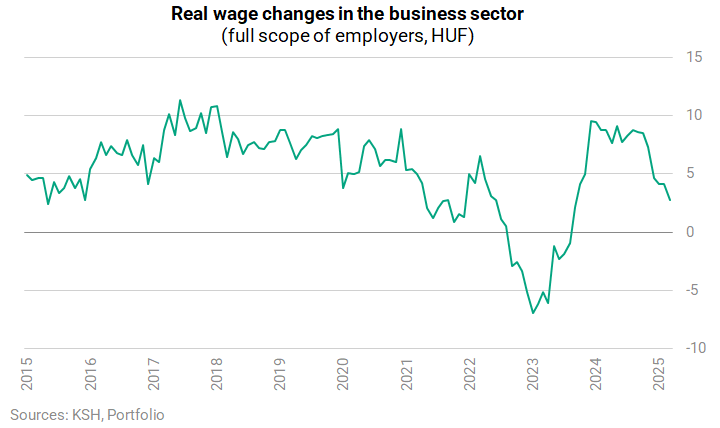
In the corporate sector, the statistical office recorded an increase of 8.5%, suggesting that companies have shifted to a slower pace of wage increases in the unfavourable economic environment. This may be due to an easing of labour shortages and a deterioration in workers' bargaining power. Weak order books and an uncertain outlook are also encouraging firms to cut costs.

There has also been a significant slowdown in the fiscal sector, as the impact of rapid wage increases has largely run its course and we are seeing more modest government wage hikes this year.

Real wages have been affected by opposing trends. A slowdown in wage growth would have kept real wages down, while a moderation in inflation would have pushed them up. In the end, the two effects cancelled each other out, with the purchasing power of wages rising by only 3.5% in March.
The growth rate of real wages was already unacceptably low last month, said Márton Nagy a month ago. He would like to see an increase of 5%. However, it seems that the moderation in inflation can only compensate for the slowdown in wage growth for the time being and is not enough to accelerate real wage growth.
A slowdown in earnings growth was expected, but today's data comes as a nasty surprise. It suggests that the economy is particularly weak and that companies have really put the brakes on (wage) costs.
Cover photo (for illustration purposes only): Getty Images





