Rating review may shape fate of Hungary's forint after Trump raises tensions with EU again


After Donald Trump's first open threat against Apple on Friday, stock markets immediately plummeted. The president wrote on Truth Social that iPhones sold in the US would have to be made locally or Apple would have to pay a tariff of at least 25%.
Then the last glimmer of optimism was dashed by the US President when he announced that he could unilaterally impose 50% tariffs on the European Union from 1 June because, he said, the EU had not made a good enough offer in the tariff war.
Brussels presented Washington with a proposal for reciprocal tariff waivers on Friday, but the US wants the EU to address non-tariff restrictions such as the ban on GMOs in agricultural imports or taxes on digital companies imposed by one or two member states.
The demands on China are following a visible arc amid threats of tariff wars. Washington's strategy is to encourage its trading partners to punish the world's second-largest economy through tariff negotiations. The United States wants to limit China's encroachment on other countries' economies and encourage them to impose tariffs on Beijing's goods.
And while the exact commitments have not yet been made public, sources say that anti-China "economic security" elements are also included in the Japanese and South Korean agreements, for example.
But China remains an important market for EU exports, and European leaders are reluctant to start an open trade war with Beijing. The fact that Trump favours quick fixes, while the EU is in constant consultation with member states, slows things down and adds to frustration.
The EU has so far resisted some of Trump's demands, but for Hungary any concessions on China could be critical, especially if they affect China's electric car and battery industries.
Stock markets fell in reaction to the news: the Dow Jones fell 0.61% or 256 points to 41 603, the S&P 500 lost 0.67% to close at 5802, while the Nasdaq fell 1% to 18 737. Apple shares fell 3% by the end of the day after the dedicated attack.

Last week's aggregate performance also paints a bleak picture. The three leading indices were all down more than 2% for the week, breaking the upward trend of the previous six weeks, which had been driven by a temporary easing of Trump's tariff policy.

Then the President suspended the harshest tariffs for 90 days and reached preliminary agreements with the UK and China, which made investors more optimistic. Now, however, the market is once again concerned that the trade war will intensify and the rally of recent weeks may prove unfounded.
European stock markets also saw their six-week upward streak snapped on news of a renewed tariff war. The largest pan-European index, the STOXX 600, fell 0.9% on Friday, its biggest one-day drop since 9 April, and closed lower on a weekly basis.
The German DAX also fell by 1.5%, although it had been hovering near an all-time high in the morning on the back of much better than expected final GDP data.
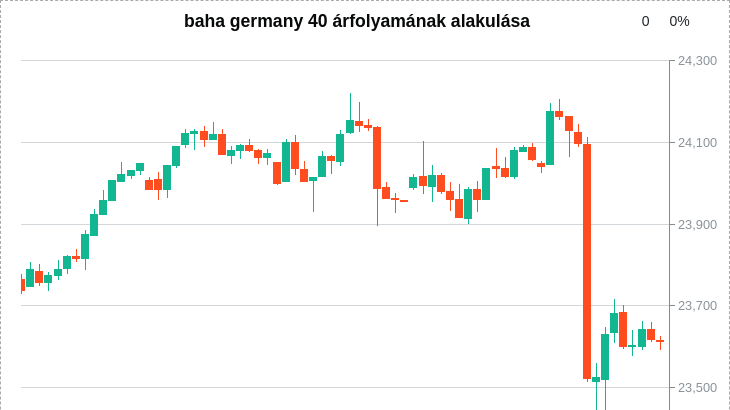
The French, Spanish and Italian stock markets all fell by more than 1%, while the biggest losers were car stocks (-3.1%), banks (-1.8%) and luxury goods companies (-2.7%).
Investors can now expect trade wars and tariff disputes to become a permanent feature of Trump's second term, and the market will have to get used to the constant rollercoaster rides.
The forint is stuck
The forint ended last week slightly weaker against the euro, with the EUR/HUF exchange rate rising from 402.91 at the beginning of the week to 403.57, a loss of around 0.16%. Weekly trading was relatively tight, with the exchange rate fluctuating between 402.14 and 403.75, and volatility remained moderate.
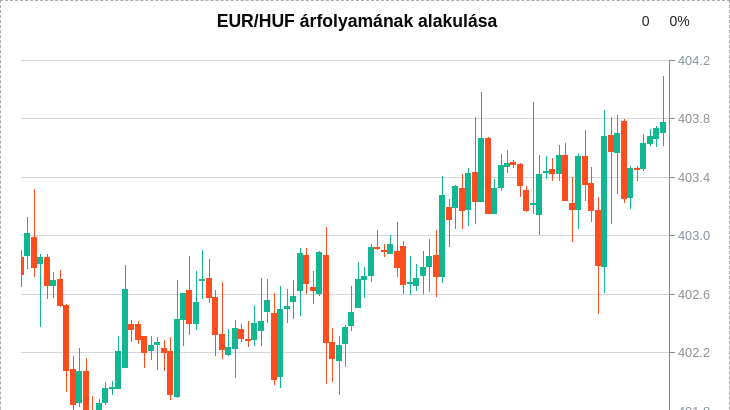
The forint remains close to the midpoint of its 52-week range of 382.63 to 416.30.
Although the rate has not broken out in either direction, the direction has been slightly negative for the Hungarian currency, which could be exacerbated this week by Friday's tariff war threats.
The forint ended the week stronger against the US dollar, with the USD/HUF exchange rate falling from 357.07 to 355.26 over the five days, a gain of 1.28% for the forint.
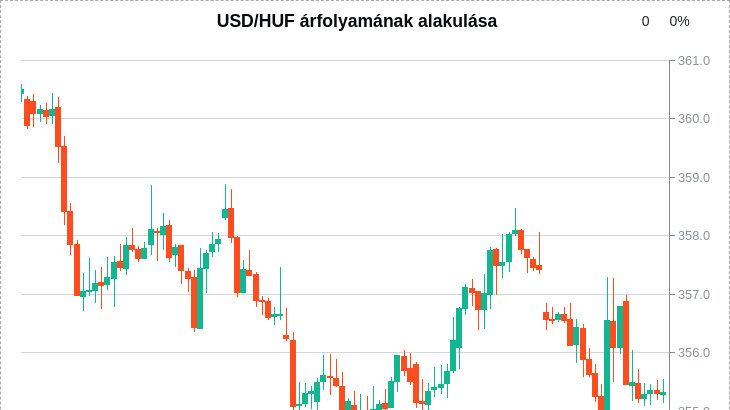
During the week, the exchange rate fluctuated between 352.52 and 357.41, a relatively wide range, indicating increased volatility for the greenback, which is often punished by the market for Trump's rapid changes in direction. The US credit rating downgrade also worked against the Dollar.
What to keep an eye on this week?
The resumption of the tariff war between the EU and the US will be the main macroeconomic theme of the week, with markets keeping a close eye on any developments that could indicate the direction of trade tensions. However, there are also a number of macroeconomic data releases that could themselves trigger significant movements in the money and capital markets.
There are no major data releases on Monday, but markets will be closed in the US for the Memorial Day holiday, so expect thin liquidity and reduced trading around the world.
On Tuesday, investors will focus on the Hungarian central bank's interest rate decision, which could determine the HUF's short-term movement. In Europe, French inflation data and the Eurozone consumer confidence index will be important and may influence interest rate expectations. From the US, durable goods orders and the Conference Board's consumer confidence index will be released, both of which are important for gauging the state of the economic cycle.
On Wednesday, detailed French GDP data, German unemployment statistics and the minutes of the latest US Fed meeting are due, which could be key for the market to understand the future path of interest rates.

On Thursday, foreign trade and demographic data will be released in Hungary, while in the afternoon the focus will be on the second estimate of US GDP and the latest jobless claims data, which could move both the dollar and bond markets.
On Friday, three important statistics will be released in Hungary in the morning: industrial producer prices, which will show inflationary pressures on the producer side; foreign trade in services, which will show the structure of Hungarian exports and imports in the services sector; and prudential data on voluntary funds, which will give an idea of the financial stability of pension and health funds.
In the evening, two events of particular market importance are expected: the Moody's credit rating review, which could lead to a change in Hungary's sovereign rating (and thus affect the forint and the government bond market), and the MSCI quarterly index review, which could change the weighting of Hungarian stocks in international indices, thus affecting foreign investor demand.
There will also be statistical publications on Saturday, closing the week with the release of China's PMI services and manufacturing data, which will provide an important picture of the state of the world's second largest economy and the expected evolution of global demand.
Cover image (for illustration purposes only): Getty Images