The Israel-Iran conflict has hit the forint, but the Fed could also land a punch this week


Last week was short on good news
The past week has not been uneventful. During the first half of the week, investors and economists focused on the US-China trade negotiations. The first round of talks had earlier ended with a big result, as both sides moved towards de-escalation. Although the omens were good this time too, the end result was an agreement that neither side can be satisfied with. The markets were of a similar opinion, as investors were not very happy after the news.
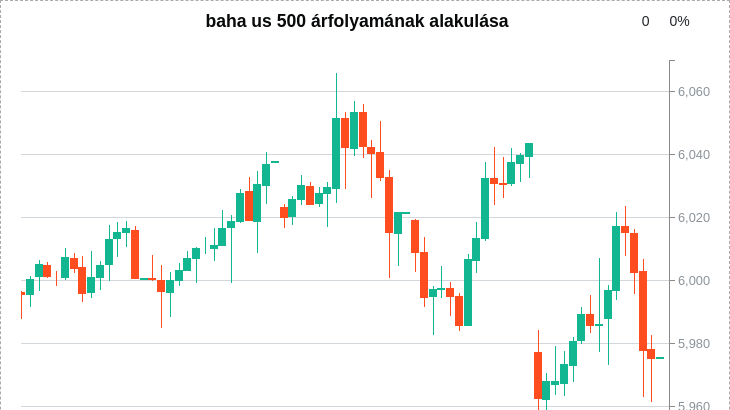
On a positive note, US inflation did not rise as expected. Yet markets were not able to rejoice, as there were already reports that something was brewing in the Middle East. This finally happened at dawn on Friday after Israel attacked Iran.

By Friday morning, the stock markets had opened with a fall and investors were heading for safe haven assets. Gold rose, the dollar strengthened and US and German bond yields fell. Risk assets such as the forint weakened sharply. We have written about the key issues related to the war here:

Hungarian side has not been bright either
On the Hungarian side, one of the most important events of the week was the significant HUF 651 billion increase in the forecast of the 2025 cash deficit by the Ministry of National Economy (NGM), and the parallel revision of the financing plan of the Government Debt Management Agency (ÁKK). The most important new element is that foreign currency bond issuance would be increased from HUF 838 billion to HUF 1685 billion. The latest announcement is another sign that the government is slowly phasing out the EU Recovery and Resilience Facility (RRF) in exchange for selling foreign currency bonds to cover the shortfall in funding.
Meanwhile, there was also bad news on domestic inflation, with a year-on-year increase of 4.4% in May in Hungary, which exceeded analysts' expectations. The surprise factor was food prices, with price rises seeping in through the vents of the margin freeze.
It didn't take long for the government to react, as a day later they extended the margin freeze to medicines.
Despite the continued bad news from the domestic side, the forint was able to strengthen in the first half of the week, presumably due to the favourable interest rate differential, but the second half of the week was worse due to the war in the Middle East.

The weakening against the greenback has been particularly spectacular with the dollar strengthening.

What are we watching this week?
Monday starts with a Chinese data dump. May house prices, retail sales data, industrial production and a host of other important data from the world's second largest economy come at a time when everyone is speculating how much the trade war will hurt China. From the Eurozone comes payrolls statistics, while from the US comes the New York Fed's business confidence index. On the Hungarian front, the National Bank of Hungary (MNB) releases the April monthly balance of payments statistics.
On Tuesday, the day starts with the April earnings statistics from the Hungarian Central Statistical Office (KSH), while from the US come retail sales, industrial production and export/import prices. Normally these are data of medium importance, but there are big questions about the damage to the US economy caused by the disruption from the trade war, so they may now be the focus of more attention than usual.
On Wednesday, the MNB will release its foreign exchange reserve statistics. And from Europe, British inflation. The most important event of the day, or even the week, will be the US Federal Reserve's rate decision meeting, where the Fed can no longer hide its views on Trump's economic policy, as the Fed will also publish its updated forecast.

Thursday will bring a UK interest rate decision, while the US will see a new batch of jobless claims. The latter has already started to rise, indicating a slowdown in the economy and signs of this are already reflected in the number of non-agricultural jobs.
Friday will see interest rate decisions in Japan and China, UK retail sales and US economic data. In addition, Friday is the next Ecofin (Economic and Financial Affairs Council) meeting, which will now play a key role in setting the direction for EU economic governance in 2025, as it is expected to adopt country-specific recommendations and could also decide on excessive deficit procedures. The meeting could be crucial to finalise Bulgaria's accession to the euro area, with the Convergence Report and the conclusion of the legislative process on the agenda. Economy ministers from EU countries will discuss reforms to reduce energy prices, which could trigger the development of new pricing models. Also on the agenda is the issue of tariff reform, which could be particularly important now, given the US-EU trade negotiations.
In addition to the above,
all attention is now focused on the Israel-Iran war,
and investors are speculating about where the conflict could escalate. The big market impact would be if supply chains and oil routes were damaged (or the risk of this materially and permanently increased) or if there was a realistic chance of a sudden escalation of the war. Moreover, the trade war is still with us and negotiations between the US and other countries are in full swing. There is no good news here so far, as the deal with China is not so confidence inspiring, while Japan is in no hurry to negotiate and the US Commerce Secretary says that a deal with the EU will only be reached at the very end.
Cover photo (for illustration purposes only): Shutterstock





