Shopping loses momentum in Hungary in May


Retail sales peaked in spring 2022 during the election period, after which they dropped significantly. Growth resumed more slowly than expected towards the end of 2023 and
has not shown a significant increase since then, although it has grown at a relatively steady pace.
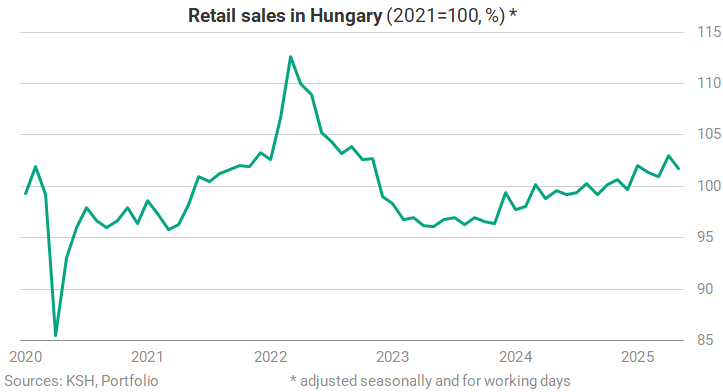
On a year-on-year basis, growth in May was 2.1%, driven mainly by turnover in non-food stores. Compared to the same period of the previous year, sales in food and grocery stores increased by 0.5%, while sales in non-food retail trade increased by 4.0%. However, sales in fuel retail trade decreased by 1.1% in calendar-adjusted terms.

The data show that people are still buying food cautiously, and rising food inflation is certainly playing a significant role in this. Margin caps have not boosted demand significantly either, as we have seen only a modest overall increase in sales. In fact, excluding food-related mixed retailing and focusing solely on food, beverages and tobacco sales reveals a significant decline in May.
In the non-food segment, demand for furniture and electrical goods has increased by an impressive 7.2% year-on-year, while sales of industrial goods have risen by a strong 9.1%.
The same factors could continue to drive retail sales in the coming months. Although rising real wages are boosting purchasing power, household caution is offsetting this effect.
Cover image (for illustration purposes only): Getty Images





