Home Start wasn't even around the corner when the Hungarians stormed the banks for loans


Half-yearly data show a lopsided credit market
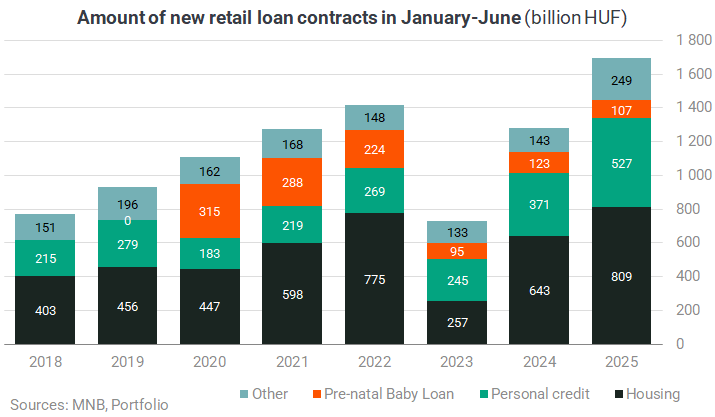
The National Bank of Hungary (MNB) has published the domestic banking sector's lending and deposit data for June, thus completing the statistics for the first half of the year. Let's start with retail lending: In nominal terms, Hungarian households have never taken out as much credit as they did in the first half of this year, with lending amounting to HUF 1,692 billion — 32% more than in the first half of 2024.
The new volume of home loans (HUF 809 billion) and personal loans (HUF 527 billion) both set new records. The former exceeded last year's figure by 26%, while the latter exceeded it by 42%. However, the contractual amount of baby loans, at HUF 107 billion, represents a 13% drop, reflecting the tightening of regulations and demographic decline.
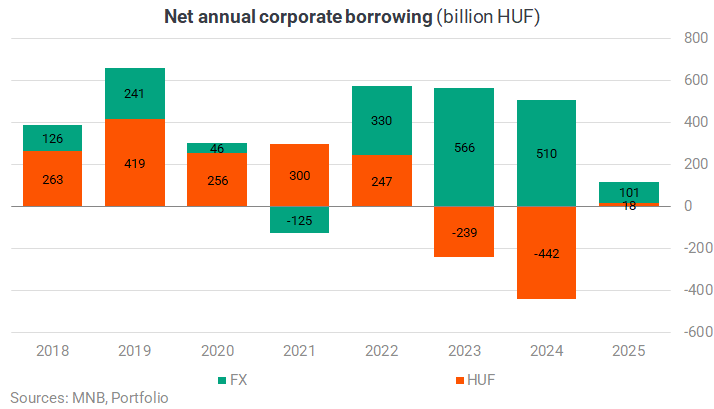
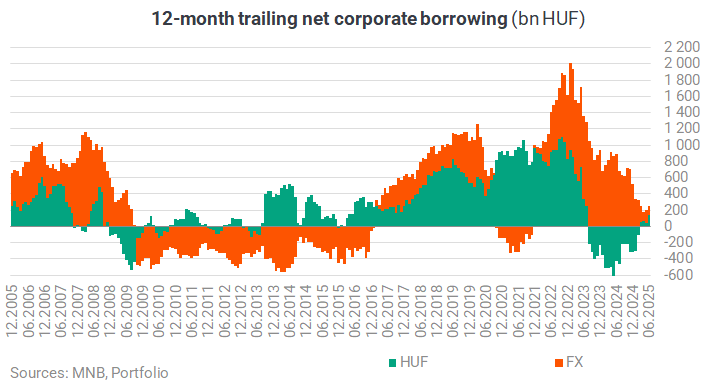
As refinancing is much more prevalent in corporate lending, it is worth examining net transactions rather than new volumes more closely. The good news is that transaction volumes for forint loans have also turned positive. However, combined with weaker foreign currency lending compared to previous years, net corporate borrowing was relatively modest at HUF 119 billion. While this is an improvement on the HUF 68 billion recorded a year earlier, it remains the third worst first-half figure in nominal terms in the last decade.
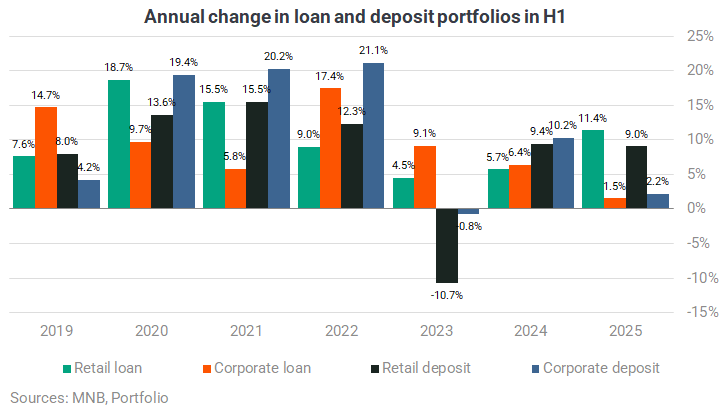
The dual nature of the Hungarian credit and deposit markets is evident from the changes in each portfolio over the past year. Over the year, retail lending grew by 11.4%, while deposits increased by 9.0%. In contrast, corporate loans only grew by 1.5%, with deposits rising by 2.2% over the 12-month period. The close-to-recession economic environment is not really affecting retail lending, but it is having a greater impact on corporate financing.
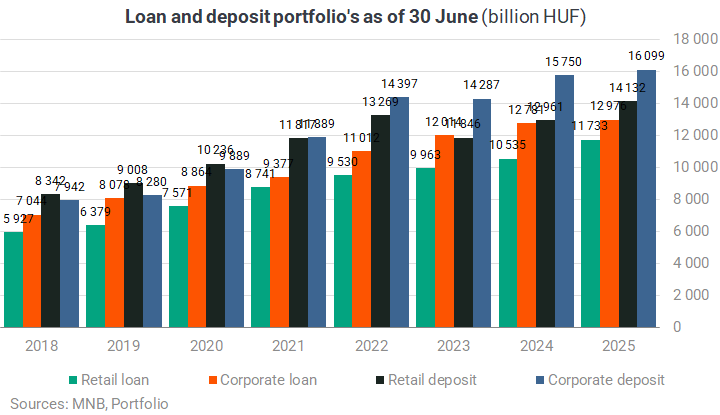
By mid-2025, households owed banks almost HUF 12 trillion, while companies owed almost HUF 13 trillion. Household deposits totalled over HUF 14 trillion at the end of the first half of the year, while corporate deposits totalled over HUF 16 trillion.
June data show weakened retail side, stronger corporate side
In many respects, June was the opposite of the overall picture for the first half of the year. Compared to May, retail lending declined slightly, while corporate lending was stronger than in April and May.
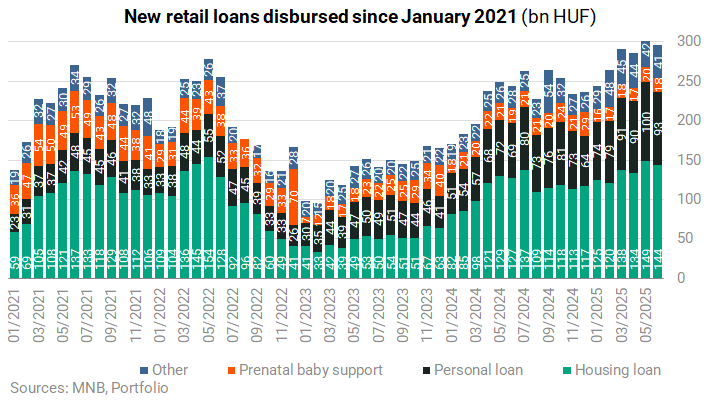
The table below shows the difference between the annual dynamics (cumulative year-to-date vs. June) in retail lending.

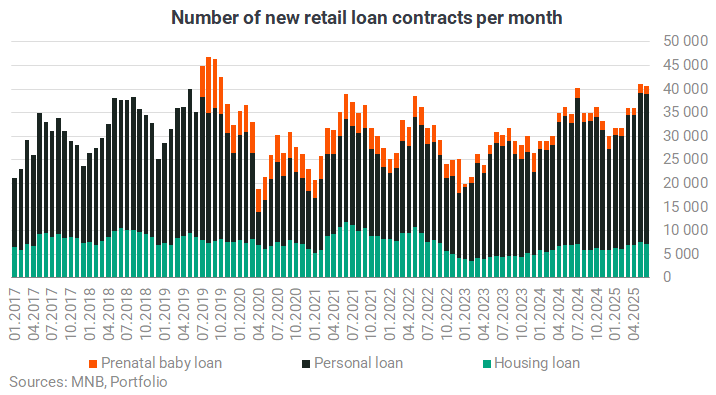
The number of new contracts shows lower growth than the average loan amount. Home loans have increased by 8% and personal loans by 15% this year, while baby loans have fallen by 14%.
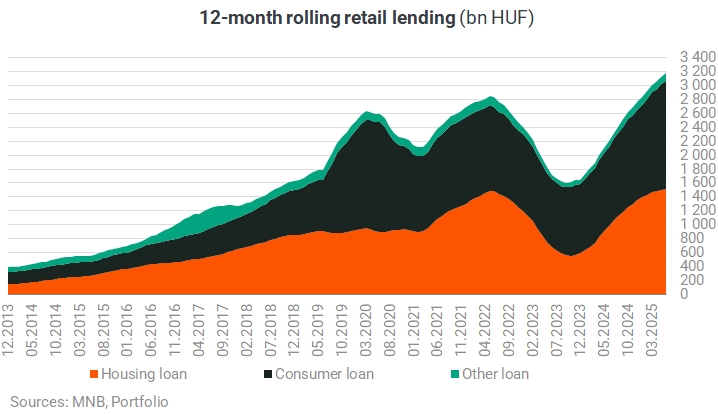
With a new volume of HUF 1.517 trillion over the past year, mortgage lending has also broken its previous 12-month record, not just consumer lending.
Interestingly, while market mortgage lending grew by 37% in the first half of the year, subsidised mortgage lending fell by 5%. This may have influenced the government's decision to introduce the interest-subsidised Home Start loan.

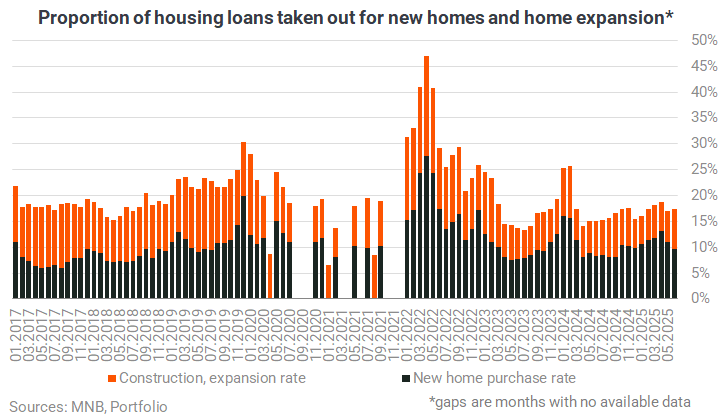
The market for newly built homes is also not in good shape from a financing perspective. It is the market of second-hand dwellings that is driving the mortgage sector.
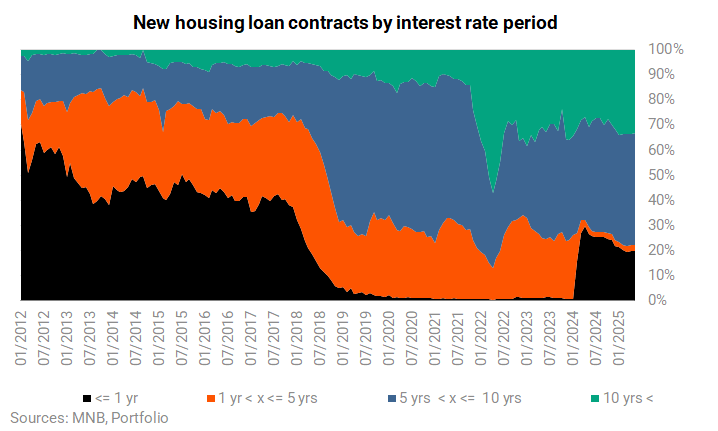
In terms of interest rates, fixed-rate mortgages with a term of at least 10 years are growing in popularity. Furthermore, from the customer's perspective, the variable interest rate statistics conceal a fixed-rate loan, namely the Home Purchase Subsidy Plus (HPS Plus or CSOK Plus).
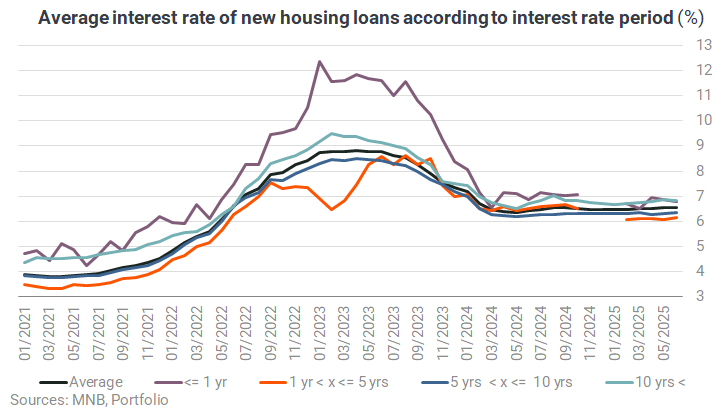
Market mortgage rates have completely frozen: they have been at 6.5% for many months now.
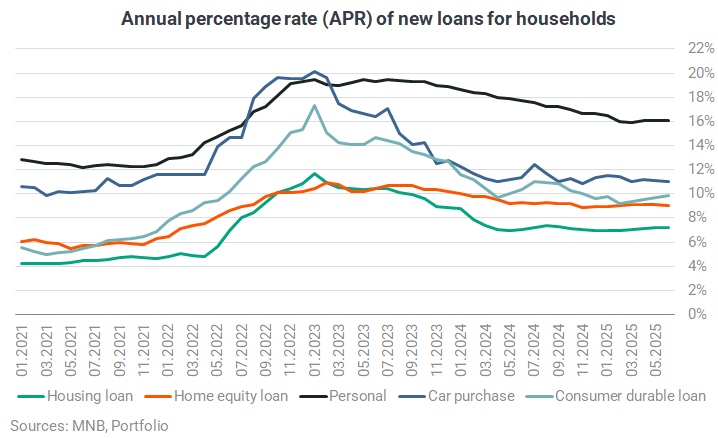
Borrowers will be disappointed to learn that interest rates on personal loans have stopped falling, with APRs now stagnating at around 16%.
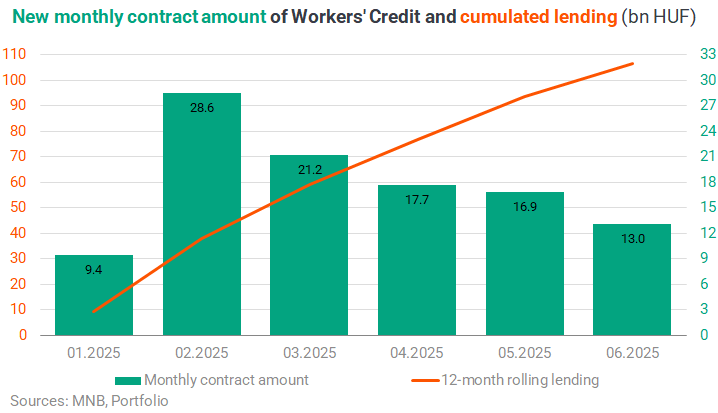
Interest in the Workers' Credit introduced on 1 January has waned, but the tally is still up at HUF 107 billion contracted by 27,000 borrowers. The question is whether the number of applications will increase after the end of the school year.
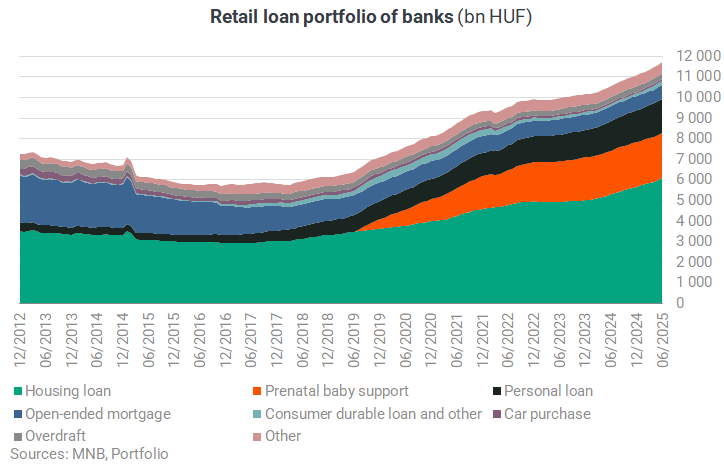
In the 12 month to end-June, the total volume of mortgage loans increased by 15%, exceeding HUF 6,000 billion, while personal loans increased by 16%, approaching HUF 1,700 billion. There is no cause for concern, as the quality of the portfolio is favourable, with the ratio of retail loans more than 90 days past due standing at less than 1.5%.
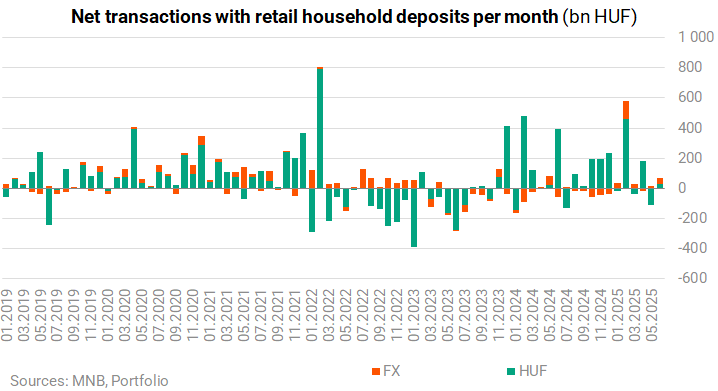
There has been little activity in deposit transactions in recent months, following the positive impact of the largest government bond interest payments.
Deposit interest rates are also almost as frozen as retail interest rates.

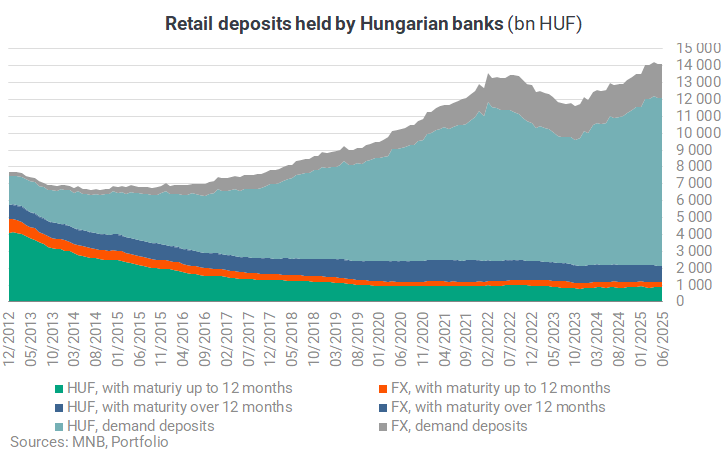
By the end of the first half, 85% of the bank deposits held by Hungarian households were demand deposits.
Meanwhile, it seemed that something had shifted in corporate lending in June. It had been exactly one and a half years since we had seen such a large net corporate borrowing.
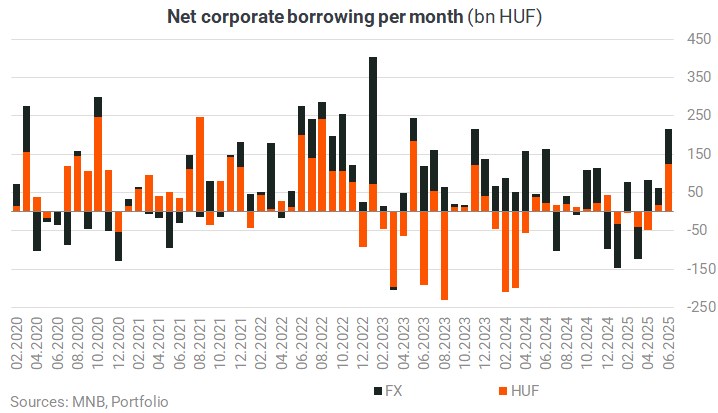
Nevertheless, over the course of a year, corporate borrowing only exceeded repayments by HUF 250 billion.
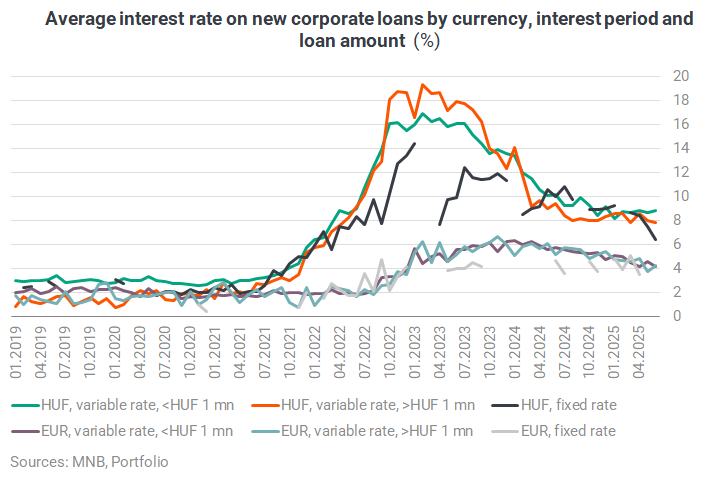
We have only seen a slight decrease in corporate forint interest rates. However, the phenomenon observed in fixed interest rates may be due to statistical composition effects.
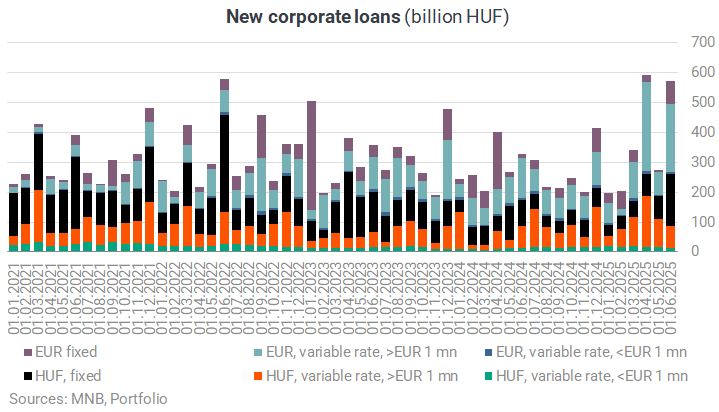
The amount of corporate loan agreements is also promising, as June was strong in this regard, following on from April. However, this is only a glimmer of hope: as it does not necessarily indicate a revivial in the corporate credit market. Companies are not currently drawing down a significant portion of their contracted credit lines due to economic uncertainty and the postponement of investments.
Cover image (for illustration purposes only): Getty Images





