New construction starts in Hungary set an unpleasant record


The domestic construction industry, which has suffered greatly in recent years, showed signs of recovery this spring. Production, which traditionally follows a zigzag pattern, showed strong growth in April and May, leading many analysts to believe that a sustained recovery was underway.
However, June saw a sharp downward correction, suggesting that the construction industry is still unable to break out of the negative trend that has lasted for three years.
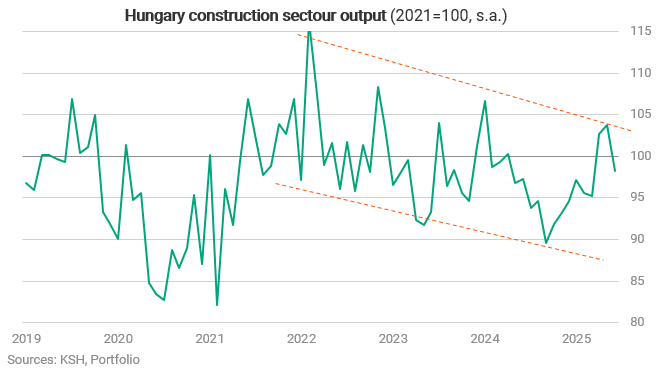
The EBI Construction Activity Report prepared by ELTINGA, iBuild, and Buildecon also confirms this agreement, as the comprehensive status report shows that
the domestic construction industry has still not found its footing.
The survey shows that in the second quarter of this year, the value of construction projects started (Activity Start) decreased compared to the first three months of the year, and the value calculated at current prices, less than HUF 470 billion, is the lowest since the coronavirus pandemic. The overall picture for the first six months of this year is not encouraging either, with construction projects worth a total of HUF 1,200 billion also approaching the Covid-stricken first half of 2020. After filtering out price effects, the figure paints an even bleaker picture of the industry, as
in terms of volume, the second quarter has not been as bad as this year in 10 years.

The main reason for the decline can be found in the high-rise construction sector, which fell by nearly 50% compared to the first three months of the year, despite the good performance of condominium construction. The only good news came from condominium construction, as the total value of construction projects started in the sector exceeded HUF 200 billion for the third consecutive quarter, far exceeding previous annual averages.
There was a slight upturn in the civil engineering sector between April and June, but experts say that the approximately HUF 100 billion worth of construction projects that have begun are still very few.
Cover photo (for illustration purposes only): Shutterstock





