Hungary's Orbán keeps beating Tisza Party's horse named 'Tax'

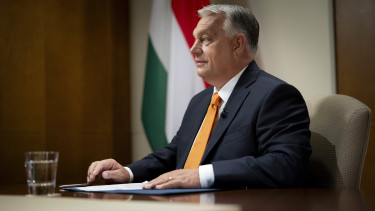
"Hungarians like the flat tax, and I feel that they support it because with a flat tax, you pay less tax than you would with a multi-rate or progressive tax. The concept is straightforward:
if you earn ten times more, you pay ten times more. This aligns with people's basic sense of justice,
said Orbán.
"I don't want to talk at length about progressive taxation, nor about how it was invented by communists in the 19th century before becoming a European or Western European product," he went on, switching to a rather condascending tone.
None of this is interesting now, but I would say to students interested in intellectual history that, if they want to find the source of this idea, they have to look to Marx.
Well, no, you should look further back in time. The year is 1798, 20 years before Karl Marx was even born, and 50 years before he and Friedrich Engels advocated for a heavy, progressive income tax in their 1848 Communist Manifesto.
The first modern income tax was introduced in Great Britain by Prime Minister William Pitt the Younger in his budget of December 1798, to pay for weapons and equipment for the French Revolutionary War. Pitt's new graduated (progressive) income tax system was implemented with a rate of 2 old pence in the pound (1/120 or 0.83%) on annual incomes over £60, rising to a maximum of 2 shillings (10%) on incomes exceeding £200. Pitt had anticipated that the new income tax would generate £10 million, however, the actual receipts for 1799 amounted to just over £6 million.
Pitt's progressive income tax was levied from 1799 to 1802 when it was abolished by Henry Addington during the Peace of Amiens. The income tax was reintroduced by Addington in 1803 when hostilities recommenced, but it was again abolished in 1816, one year after the Battle of Waterloo. The present form of income tax in the United Kingdom was reintroduced by Sir Robert Peel in the Income Tax Act 1842.
Some economists argue that Adam Smith was one of the first to advocate a progressive tax in the Wealth of Nations, which was published in March 1776. "It is not very unreasonable that the rich should contribute to the public expense, not only in proportion to their revenue, but something more than in that proportion," he wrote. Others, like the Adam Smith Institute, argue that he favoured proportionate taxation based on the ability to pay rather than an outright progressive system. David D. Friedman, an American economist, physicist, and legal scholar, has convincingly refuted this error in a blog post.
All progressive taxes are necessarily bureaucratic, cumbersome, full of loopholes, and prone to abuse,
Orbán said.
Orbán also referenced a recent survey which indicated that over 50% of Tisza voters are in favour of a progressive tax regime.
According to research by the pro-government Nézőpont Institute, 55% of Tisza Party supporters would rather support higher taxes for those earning more than HUF 416,000 gross. 39% of respondents expressed disagreement with this statement, while only 6% of Tisza voters were unable or unwilling to take a position on the issue.
Orbán reiterated that Tisza was trying to conceal its true intentions, only for details of their tax plans to be leaked.
The PM announced in Kötcse earlier this month that a new national consultation is coming, which will focus on the 'leaked' tax increase plans, referring to information that had been 'leaked' about the Tisza Party's planned personal income tax increases. The Tisza Party has repeatedly denied these "reports" and presented its actual plans.
Orbán stated that they had calculated the potential annual losses that certain professions would incur if Tisza were to assume power, raise taxes, and implement a progressive tax regime:
- Teachers – HUF 364,000
- Nursers – HUF 280,000
- Police officers – HUF 154,000
- Soldiers – HUF 476,000
- Doctors – HUF 3,172,000
The Fidesz party's "Tisza tax campaign" took wing at the end of August and consists of two elements:
- Firstly, the ruling party's communications apparatus initiated an all-out offensive, referencing an Index article lacking a definitive author. Index, which had been transformed into a pro-government news portal, presented a two-page memorandum that it claimed had been prepared by Tisza's economic working group and contained the party's tax increase plans.
- Secondly, a public discussion was held in Etyek during the summer with Zoltán Tarr, MEP and Vice-President of the Tisza Party. He explained that "many things should not be discussed before the election," including the issue of taxes. "We have to win the election, and then anything is possible," said Tarr. Following this, the potential for achieving further goals is increased. Excerpts from the video have been continuously circulated by the Fidesz media machine ever since.
Following the publication of the Index article, Péter Magyar, Orbán's challenger, refuted the information contained therein and subsequently presented their detailed tax plans. The key point to note is that there will be no increase in personal income tax, and the flat tax system will continue in place. In a subsequent post, Magyar also refuted the claim that Tisza would raise corporate tax and capital gains tax. The Tisza Party's proposal would introduce four tax credit bands below the median wage, which is the amount at which half of earners earn less than half earn more. Nevertheless, Fidesz's campaign continues unabated.
Cover photo: MTI Photo/the Prime Minister's Communications Department/Zoltán Fischer





