Gigantic energy sector shift imminent - Hungary has entered the top five, and this is only the beginning!

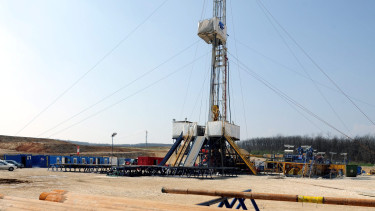
The third Budapest Geothermal Energy Summit took place on 26 September 2025. Representatives from over 100 companies and organisations in 20 countries attended the event. Participants discussed the opportunities and challenges of geothermal energy at this important regional industry event.
In his opening speech, Energy Minister Csaba Lantos emphasised that the main advantage of geothermal energy is its ability to provide a stable supply of heat and, in some cases, electricity in the long term, despite the high initial investment costs.
Hungary is among the top five countries in Europe in terms of geothermal energy utilisation.
It has quadrupled its geothermal heat production capacity since 2010 and, based on the National Geothermal Energy Utilisation Concept, a further twofold expansion is expected by 2030. Total capacity could reach 12–13 petajoules by then, which could reduce natural gas consumption by up to 1 billion cubic metres by 2035.
Miklós Antics, President of the European Geothermal Energy Council (EGEC), also attended the event. He provided insight into the current status and future of geothermal developments in Europe.
Our goal is to transition from megawatts to gigawatts. We aim to source 75% of our heating and cooling from geothermal energy. We also aim to generate 15% of our electricity and source 10% of our critical raw materials from geothermal energy.
Luca Xodo, President of ETIP Geothermal, added, "We are still in the early stages of geothermal energy production in Europe, so we can capitalise on the most readily available and low-risk opportunities for heat production, and even electricity generation in some cases."
During a roundtable discussion about the challenges facing geothermal energy, Viktor Horváth, the Deputy State Secretary for Energy Transition, emphasised that
financing is the biggest problem,
adding that "it is important to consider the entire value chain, which includes not only production but also the management of the entire system."
Martina Tuschl, director of the geothermal sector at the Croatian Hydrocarbon Agency, said that electricity and heat production attract different types of investor.
Due to the high risk involved in electricity generation, capital investors are needed, whereas heating projects often enjoy the support of local communities,
she said. Gábor Molnár, managing director of Arctic Green Engineering Services, emphasised the importance of thorough project assessment in advance to avoid costly changes during implementation.
Csaba Kiss, MVM's Deputy CEO, also spoke about the necessity of producing both heat and electricity:
In Hungary, electricity production must be coupled with heat sales to ensure an adequate return on the risks involved in geothermal exploration and drilling.
"Companies need to understand that current gas prices are not the only factor to consider," said Tímea Ladi, head of Mol's geothermal and new energy unit. "Security of supply, local availability and other key factors are just as important."
We should not be afraid of what we do not know. We need to do our research, develop solutions and find answers,
concluded Miklós Antics at the end of the event.
Cover photo: MTI Photo/Sándor H. Szabó





