Euro area inflation takes a sudden leap


Inflation in the eurozone rose in September, as expected. During the summer months, the annual rate of consumer price inflation was 2%, in line with the European Central Bank's (ECB) price stability target, but in September it accelerated to 2.2%. Core inflation, which reflects underlying economic trends, was 2.3% over the past year, meaning that the indicator has remained unchanged for the fourth consecutive month. The data are fully in line with analysts' expectations.
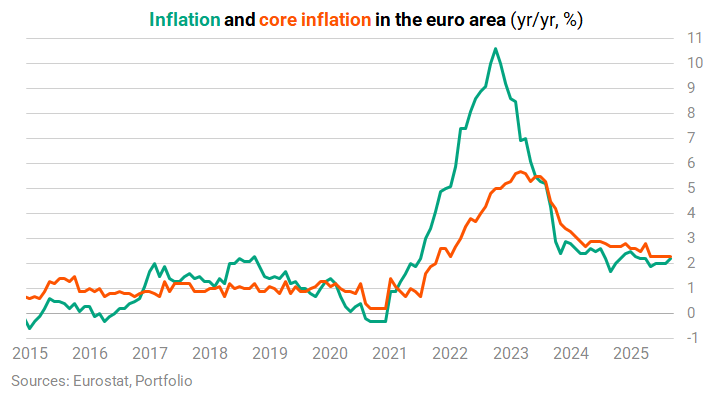
The higher inflation in the euro area in recent months is mainly due to accelerating price increases in Germany, which rose to 2.4% in September on an annual basis. The accelerating inflation was also reflected in core inflation (2.8%), which reflects the underlying economic processes, so it can be said that price pressures have increased significantly in the continent's largest economy.
The accelerating rise in consumer prices is also prompting ECB policymakers to be cautious about future interest rate cuts.
Christine Lagarde, President of the ECB, and Luis de Guindos, Vice-President of the organization, recently stated that the current interest rate is appropriate for managing inflation and growth risks, and neither of them sees any reason for change. ECB policymakers have repeatedly stated that inflation fluctuating around 2% is a natural part of economic processes, so a monetary policy response is not warranted by these movements. Market participants share the decision-makers' view, as they do not expect interest rates to change in the short term either.
According to the experts, an immediate interest rate cut would require inflation to fall below the central bank's target and a significant deterioration in growth prospects, but based on recent data, this does not seem likely at this stage.
Cover photo (for illustration purposes only): Shutterstock





