Hungary signs the longest liquefied natural gas contract in its history!

MVM has signed a long-term contract with France's Engie for the supply of 4 billion cubic meters of liquefied natural gas (LNG) between 2028 and 2038.
Szijjártó announced.
Today, we signed the longest-term LNG purchase agreement in Hungary's history with the French company Engie. The agreement ensures that we will be able to purchase 400 million cubic metres of natural gas each year between 2028 and 2038, totalling 4 billion cubic metres.
the minister said at a press conference following the signing ceremony in Budapest, and also posted a video about it on Facebook.
Not the first major announcement
Péter Szijjártó announced in early September that
Hungary signed a gas supply deal with Shell, the largest and longest-term contract it has ever signed with a Western supplier,
adding that the Hungarian government's goal is to preserve existing resources and attract new ones through energy diversification. However, he added that this does not mean that we will be able to break away from Russian natural gas. Although he did not divulge specific amounts or the duration of the deal.
However, Bloomberg reported that Budapset clinched a 10-year gas supply agreement with Shell Plc, starting in 2026, for 2 billion cubic meters.
By way of context, this volume and the newly announced Engie partnership (200+400 million cubic metres per year)
account for 6.0–7.5% of Hungary's annual demand.
It is important to note that Hungary is heavily dependent on imports, with domestic production currently standing at just 1.9 billion cubic metres, compared to an annual consumption figure of 8–10 billion cubic metres. Until now, Hungary has mainly imported natural gas from the southeast. However, in light of recent developments (see below), it has become clear that imports from the northwest will also play a greater role in Hungary's natural gas supply. This is evidenced by today's contract announcement and the Shell deal.
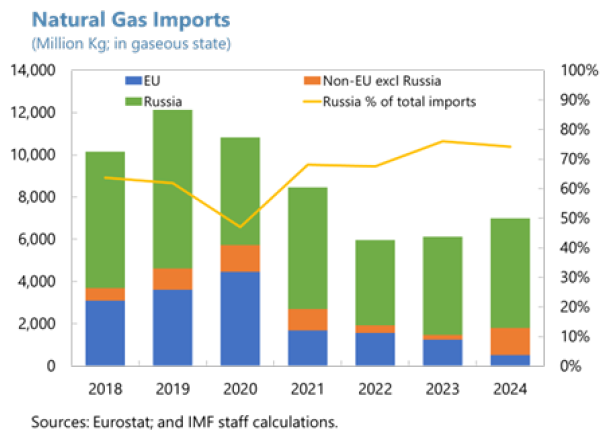
Following the EU, the US administration has now also put pressure on Hungary regarding Russian energy.
It seems that, over the next two to three years, our country may find itself in a difficult situation, unable to decide what energy sources to rely on for its supply.
Cover image (for illustration purposes only): Getty Images





