Crucial decision coming for Hungary, the forint may also be shaken up


The most important event of the past week was the US government shutdown, as Democrats and Republicans were unable to reach an agreement on healthcare spending issues. As a result of the government shutdown, government agencies have not been publishing important economic data since Wednesday, leaving investors flying blind during this period.
What did Donald Trump think about the government shutdown in 2013 during Barack Obama's presidency? „Who gets fired? It always has to be the top. Problems start from the top and they have to get solved from the top. And the president's the leader and he's got to get everybody in a room and he's got to lead. And he doesn't do that, he doesn't like to do that, and that's not his strength. And that's why you have this horrible situation in Washington. It's a very very bad thing, and it's very embarrassing worldwide." This is the fourth government shutdown during Trump's presidency.
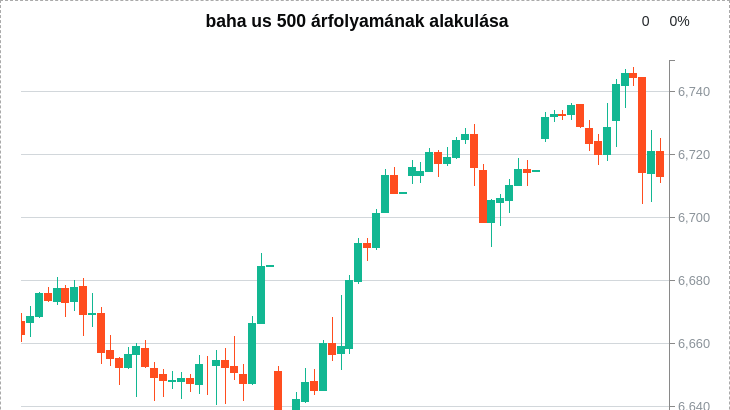
However, investors are not concerned about this for the time being, as stock indices have risen, the dollar has not weakened, and bond yields have not increased in response to the news.

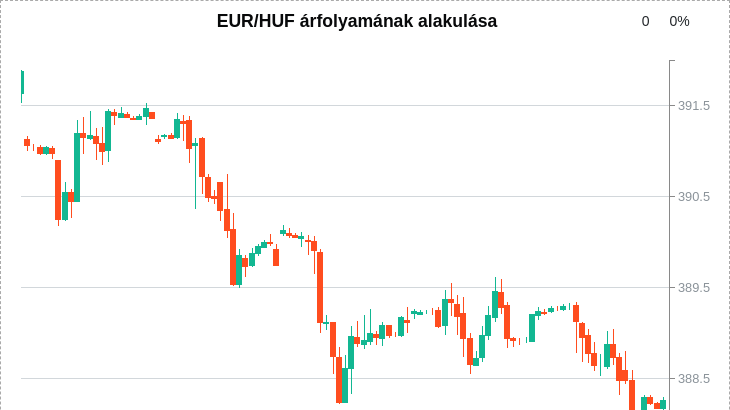
The forint strengthened by nearly 1% against both the euro and the dollar. Meanwhile, a Bloomberg analysis revealed that some analysts believe Tisza's growing popularity may also be playing a role in the forint's strengthening.

On Saturday, Prime Minister Viktor Orbán announced that the government would offer SMEs a fixed 3% loan through the Széchenyi Card Program. The Prime Minister also revealed that the government has not yet decided on corporate tax cuts, as these are still being worked out. In response to a question from Portfolio, Viktor Orbán revealed that the new economic policy measure will cost the state coffers an extra HUF 60 billion next year.
What data will be released this week?
On Monday, retail data for Hungary and the euro area will also be released. The question is the same in both cases. Can the recovery continue, or will it take more time for things to turn around?
On Tuesday, Hungarian industrial production data will be released, and it would be a big surprise if the annual indicator were to move into positive territory. German manufacturing orders will also be released in the morning, which may provide an answer to the question of how much damage the trade war has done to the German economy. US foreign trade data and inflation expectations will also be released on the same day. The US government shutdown is still ongoing, so these will not be published during that time, unless an agreement is reached by then. Stephen Miran, the new member of the Fed's Governing Council, who was the only one to vote for a 50 basis point rate cut at the last interest rate meeting, will also give a speech that day.

On Wednesday, Hungarian inflation and government sector balance figures will be released. With elections approaching, the state of the budget is becoming an increasingly important issue, so this data may be the focus of attention. The forint has had a very strong period, mainly due to the favorable interest rate differential. In this equation, it is important to see what path inflation is on.
On Thursday, German export and import data will be released, as well as the number of US unemployment benefit claims (if published). The US Federal Reserve Chair will also give a speech on Thursday, and investors will be watching his words closely after ADP employment data fell into negative territory, confirming fears that the US labor market is deteriorating faster than expected.
On Friday, the University of Michigan's US consumer confidence index will be released. Recently, US consumers' assessment of the situation has deteriorated significantly. This is important because consumption is essentially keeping the US economy afloat, but if confidence continues to decline, this cannot last long. On Friday evening, S&P Global will release its credit rating for Hungary. Our current credit rating is BBB-, with a negative outlook. If the country is downgraded, Hungary will be classified as junk. However, analysts currently see little chance of this happening.
Cover photo (for illustration purposes only): Shutterstock





