Orbán says if it were up to him, there would never be a Hungarian euro

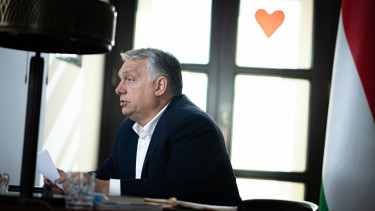
In a podcast released on Sunday, Prime Minister Viktor Orbán discussed the recently announced 3% SME loan, the recovery of the economy, and the introduction of the euro.
Regarding subsidized loans for small and medium-sized enterprises, Viktor Orbán said that the government would provide loans with a fixed interest rate of 3%, and that the program would be implemented through the restructuring of the Széchenyi Card scheme. The measure aims to make it easier, faster, and cheaper for companies to access funding.
The decision will cost the budget HUF 50–60 billion annually. However, according to the cabinet, the resulting economic growth and improved business performance will more than offset the expenditure.
The credit ceiling will remain at HUF 150 million, the conditions will be slightly relaxed and the government will seek to reduce bureaucratic obstacles. According to Orbán, the key is for companies to use the money saved on interest rate differences to fund development and investment projects, thereby directly strengthening the economy. This is in line with the government's efforts to stimulate the economy through preferential loan programmes for both the general public and businesses.
Regarding this year's major economic stimulus measures, such as the Home Start programme, the SME loan programme and personal income tax exemption for mothers with three children, the Prime Minister stated that
this year's and next year's budgets provide sufficient funding for their implementation.
The PM said that, in such cases, the most important issue is the return on investment, and the government must always consider whether the economic recovery will generate enough revenue to cover the costs of its stimulus package.
Viktor Orbán said that
this is particularly questionable in the case of social measures, while the risk is much lower when it comes to supporting companies.
Alongside the introduction of the programme, the government is working on further tax cuts that could ease the burden on businesses and employees. The main issue in the negotiations is the extent to which the state will reduce its contributions in order to achieve a double-digit increase in the minimum wage. Orbán emphasised that compromise requires an agreement between employers and employees, and that the government's goal is to provide assistance rather than intervene directly.
During the discussion, the Prime Minister specifically mentioned that
the government does not see any possibility of reducing VAT. However, they are considering expanding income tax allowances and extending tax exemptions for families and young people are being considered as viable options.
Orbán believes that low taxes are the best economic policy because they encourage hard work and high performance, thereby strengthening the country in the long term.
During the discussion, the issue of KATA (small business tax) was also raised, but the Prime Minister made it clear that reinstating the old system was not realistic because it had been associated with too much abuse. At the same time, the government is open to introducing targeted discounts for certain professional groups, but only in a form that does not reopen the door to tax evasion.
Orbán also spoke about the economic breakthrough, saying that it began in July this year with the introduction of family benefits and 3% programmes.
Although he acknowledged that the Hungarian economy's macroeconomic data does not yet show a breakthrough, he believes that the new measures will lay the foundations for growth in the coming years.
Orbán emphasised that the global technological shift towards robotisation, artificial intelligence and digitisation has reached a turning point, and that Hungary's goal is to be a winner this time, not a laggard.
Hungary has become a world leader in electromobility and battery manufacturing. According to Orbán, it will have the third largest capacity after China and the United States. The government is planning to develop separate programmes for industrial and residential energy storage solutions, as the cost and security of energy supply are set to become key factors in future economic decisions.
The Prime Minister emphasised that
the Hungarian economy's diverse structure is advantageous because it operates in several industries simultaneously, enabling it to perform more stably, even in times of crisis.
The aim is to prioritise support for a few key sectors, such as electromobility, the pharmaceutical industry and agriculture, while maintaining diversity in other areas.
Regarding the forint exchange rate, the Prime Minister said that,
although the government has no exchange rate target, the new central bank governor, Mihály Varga, prioritises stability.
He added that interest rates are currently higher than necessary, but cautious reductions may be implemented in the longer term to support economic recovery.
According to Orbán, Europe is currently moving away from integration, so introducing a common currency would be a poor strategic decision.
The introduction of the euro will definitely not happen on my watch,
Orbán stated unequivocally. According to the Prime Minister, if there are no radical changes, European disintegration will continue. In such an environment, strengthening ties with the European Union would not be advisable. However, he concluded that the introduction of the euro would serve this purpose.
At the end of the interview, the possible restructuring of the pension system was raised. However, according to Viktor Orbán, this will not happen, nor will a review of the Women 40 programme. The politician stated that the government is committed to one rule above all else: that the value of pensions cannot be reduced.
More to follow!
Cover image: Facebook





