Hungary EcoMin says the conditions are right for central bank to cut rates

In a podcast interview yesterday, Viktor Orbán said that, as Prime Minister, he should not comment on matters relating to the central bank. However, he did mention that, in his opinion, interest rates are too high and that interest rate cuts will happen much more slowly than the government would like because the Governor of the MNB, Mihály Varga, is cautious.
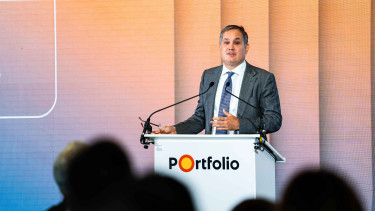
Speaking at the Portfolio conference, the Economy Minister, Márton Nagy, echoed the Prime Minister's view that the National Bank of Hungary is an independent institution. He also explained his current stance on interest rates. "This is not about positive Hungarian real interest rates disappearing. They must remain high,
but they are currently too high,
he noted.
Even with lower real interest rates, the inflation target can be achieved, exchange rate stability can be maintained and the country's finances can remain stable, said Márton Nagy in his second important message. He also discussed how such high interest rates result in a high carry, i.e. the yield from the interest rate differential that we pay to foreigners. This results in a high carry trade, in which foreigners hold hot money, he explained.
He added that if these interest rates are converted into dollars, Hungary pays the most compared to neighboring countries. In his opinion, lower real interest rates would not negatively impact the country's financing either.
When asked when the government believes interest rates in Hungary could start to fall, Márton Nagy said that it was no coincidence that the Prime Minister had begun to comment on this issue now.
He added that both internal and external factors could justify the initiation of interest rate cuts. In this regard, the Economy Minister cited the interest rate cuts by both the US Federal Reserve and the European Central Bank. A situation is emerging abroad in which major central banks are seeing significant risks to economic growth.
At the end of his statement, he reiterated that:
It is not a question of eliminating positive real interest rates, but rather reducing them and keeping them at a lower level.
Cover photo: Valter Berecz, Portfolio





