Fiscal Council reports on "the materialisation of its concerns" regarding Hungary's budget

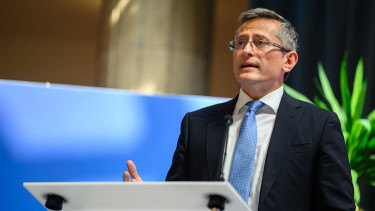
The Fiscal Council, chaired by Gábor Horváth and including National Bank of Hungary (MNB) Governor Mihály Varga and State Audit Office (ÁSZ) president László Windisch as members, met on October 9. The main topic of the meeting was the 2025 budget, as the Fiscal Council adopted its detailed opinion on this year's budget and made several serious observations.
They emphasized that the domestic and European economic situation is negatively affected by the high degree of uncertainty in the global economic environment. In the Council's view, real economic growth this year will be significantly lower than the 3.4% projected in the budget law and is expected to be below 1%. Compared to the forecast underlying the budget law, the largest shortfall is in the area of investment.
They also point out that the government's deficit forecast has gradually increased during the year and that the 3.7% deficit target is no longer achievable.
The Council also considers it necessary to ensure that the public debt ratio is reduced in a secure manner.
According to the KT's assessment, the risks indicated by the Council in its opinion on the 2025 budget planning have materialized, and tax revenues may be lower than projected due to lower-than-expected economic growth in 2025 and the base effect in 2024. The shortfall in tax revenues is mitigated by the fact that the lower-than-expected economic growth is mainly due to a slowdown in investment, while wage growth and consumption, which represent larger tax bases, are closer to the expectations of the budget law. In addition, the Council, in line with its opinion on the draft law, continues to see a material risk in the realization of EU funding inflows, as the limited availability of EU funds represents uncertainty.
The Council also recalls that the government raised the budget deficit target during the year, but the increased budget deficit target was not incorporated into the budget bill. Therefore, the Council was only able to assess the implementation of individual appropriations in relation to the original revenue and expenditure appropriations, which did not reflect the increased deficit target. And this is where the Council makes a clear criticism:
in order to maintain the economic compass role of the budget, it is advisable to amend the budget law in the event of deviations exceeding predefined thresholds for certain selected indicators.
They also mention that the government is actively involved in the deterioration of this year's budget balance. Among the budgetary measures, the following will contribute to an increase in the deficit compared to the 2025 budget law that has been passed: the introduction of personal income tax exemptions for mothers with three children in the last quarter of this year, the exemption of CSED and GYED from personal income tax, the pensioner voucher, and the wage increase for local government employees. With regard to companies, the interest rate reduction of the Széchenyi Card Program, the Demján Sándor Program, and within that, the 1+1 SME Investment Stimulus Support Program were announced after the adoption of the budget law. The budgetary impact of the newly introduced Home Start program may be minimal this year, but spending may increase in the coming years.
According to the government's latest projections, the public debt ratio could reach 73.1% by the end of this year, with a cash deficit of HUF 4,774 billion and nominal GDP growth of 7%.
In addition to all this, the Council draws attention to the fact that the increasing foreign currency share of public debt has also increased the sensitivity of public debt to exchange rate fluctuations, they warn. As a result of foreign currency bond issues, the ratio of central foreign currency debt could exceed 30% by the end of the year, they add.
Later, they also explain in detail in their opinion that the facts of the first half of the year and the expected developments in the second half point towards the fulfillment of the budget deficit forecast, which has been raised to 4.3%, but could be lower if strict control over spending is exercised. They also point out that we are not doing so well in terms of balance compared to the EU average. Even with a higher deficit than originally planned, the deficit will decrease compared to 2024, but in international comparison, the deficit may be in the top third of European Union member states.
Cover photo: Gábor Horváth, President of the Fiscal Council, will give a presentation at the 63rd Economists' Itinerary Conference in Veszprém, in the auditorium of Pannon University, on September 4, 2025. Source: MTI Fotó/Tamás Vasvári





