White House: No meeting planned between Trump and Putin in near future

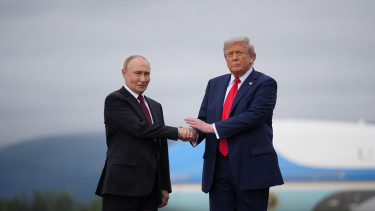
A US government official stated that 'there are no plans' for an immediate meeting between the two leaders.
The White House later confirmed this information to multiple sources, including Telex and The Hill.
Last Thursday, Trump had suggested they would discuss the Ukraine war in Budapest within two weeks. A preparatory meeting was scheduled this week between US Secretary of State Marco Rubio and his Russian counterpart, Sergei Lavrov. The White House stated that the parties had an 'effective' phone conversation, making the personal meeting currently 'unnecessary'. No further details were provided about the postponement.
Trump had previously discussed the Budapest peace summit with Putin by phone, one day before meeting Zelenskyy at the White House. Some reports suggest the talks with Zelenskyy deteriorated into a 'shouting match', with sources indicating Trump urged him to surrender significant territories in eastern Ukraine as part of a deal with Russia. Nevertheless, on Monday, Trump expressed support for freezing the Ukrainian conflict along the current frontline. Referring to the disputed Donbas region in eastern Ukraine, he stated: 'Let it be cut off as it is.'
Russia has repeatedly rejected freezing the current line of contact. On Tuesday, Lavrov said Moscow is only interested in a 'long-term, sustainable peace', suggesting that fixing the frontline would at most mean a temporary ceasefire.
Lavrov insisted that the 'root causes of the conflict' must be addressed, which is the Kremlin's shorthand for a series of demands including full Russian sovereignty over Donbas and Ukraine's demilitarisation - conditions unacceptable to Kyiv and its European partners.
Zelenskyy described frontline discussions as the 'beginning of diplomacy' but stated that Russia 'is doing everything to avoid diplomacy'. He also mentioned that the only topic Moscow 'pays attention to' is the delivery of long-range weapons to Ukraine.
Before Putin and Trump's unscheduled phone call last Thursday, speculation emerged about the United States preparing to supply Ukraine with long-range Tomahawk missiles, potentially capable of deep strikes into Russian territory. Zelenskyy suggested the Tomahawk issue forced Russia to negotiate, calling the missile discussions 'a strong investment in diplomacy'.
Meanwhile, European countries are working with Ukraine on a 12-point peace plan that includes a ceasefire, freezing frontlines, exchanging prisoners of war and abducted children, security guarantees, reconstruction support, accelerated EU accession, and gradual lifting of Russian sanctions. The proposal's implementation would be overseen by an international peace commission led by US President Donald Trump, while approximately USD 300 billion in frozen Russian assets would only be released if Moscow participates in Ukraine's post-war reconstruction. The plan, developed for the proposed Budapest peace summit, would halt fighting along current frontlines, which Russia has so far rejected despite suffering significant losses in the four-year-long war. European diplomats are consulting with the United States in Washington this week.
US President speaks out
When asked on Tuesday why his planned summit with Russian President Vladimir Putin in Hungary had been postponed, US President Donald Trump said he
did not want a wasted meeting.
Speaking to reporters in the Oval Office, the US president said he had not yet decided on the meeting, which according to the original announcements was to be held in Budapest, Reuters news agency reports.
Late Tuesday evening, Kirill Dmitriev, Russian President Vladimir Putin's special representative for investment and economic cooperation, stated on X that "preparations are ongoing" for the summit between Putin and US President Donald Trump.
On Tuesday evening, Hungarian Foreign Minister Péter Szijjártó also spoke on the matter, from Washington. Szijjártó said essentially the same things as a Kremlin spokesperson earlier, but in different words, namely that he "does not understand" why there is talk of a "postponement" when no specific date had even been set (on October 16, Trump specifically spoke of a peace summit to be held "within two weeks," which was also taken up by the Hungarian government and its affiliated media). Like Russian Foreign Minister Sergey Lavrov, Szijjártó spoke of "information warfare" and "fake news" in connection with the postponement of the meeting, and mentioned the efforts of certain "pro-war European interest groups" who, in his opinion, "are doing everything they can to prevent peace."
Speaking this morning, Russian Foreign Ministry spokeswoman Maria Zakharova also echoed the same sentiments, saying that
My theory is that this is simply misinformation—which, incidentally, they haven't finished spreading, but are continuing to spread: they spread misinformation, then publish corrections, then do it again—it's all about trying to win international support for Zelenskyy.
Meanwhile, NATO Secretary General Mark Rutte is in the United States and will meet with Donald Trump. A Western official who requested anonymity said Rutte plans to present Trump with European views on the ceasefire and subsequent peace talks.
What exactly happened?
It is worth recalling that on Tuesday evening, Hungarian time, news arrived from the White House that no meeting between Trump and Putin was planned in the near future. According to Reuters, the reason for this is that Moscow rejected an immediate ceasefire in Ukraine, which overshadowed the negotiation attempts.
The news agency reported that a senior White House official told Reuters
there are no plans for President Trump to meet with President Putin in the immediate future
after Secretary of State Marco Rubio and Russian Foreign Minister Sergey Lavrov had a "productive call" but opted against an in-person meeting.
Since then, however, it has become clear that Putin is unwilling to consider concessions. Moscow has long demanded that Ukraine agree to cede further territory before any ceasefire can be agreed. Russia has reaffirmed its long-standing conditions for a peace agreement in a private statement known as an "non paper" sent to the United States last weekend, Reuters reports, citing two US officials and two people familiar with the situation.
The news agency also recalls that Trump, who spoke with Putin on the phone last week and met with Ukrainian President Volodymyr Zelenskyy, was expecting another high-level meeting with the Russian leader after their August summit in Alaska failed to advance negotiations.
Reuters also reported on Tuesday evening that the US and Russian sides had postponed the preparatory meeting between Rubio and Lavrov, which was to take place in Budapest on Thursday. Lavrov and Rubio spoke on the phone on Monday. Lavrov said that the location and date of the next Trump-Putin summit are less important than the content of the implementation of the agreements reached in Alaska.
"Listen, we have an understanding of the presidents, but we cannot postpone what has not been finalised," Kremlin spokesman Dmitry Peskov said. "Neither President Trump nor President Putin gave exact dates." Asked if the Kremlin had an understanding of a possible date for the summit, Peskov said: "No, there is no understanding."
The news agency also emphasizes in its report that
neither side has publicly ruled out the Trump-Putin meeting taking place.
However, two senior European diplomats said the postponement of the Rubio-Lavrov meeting was a sign the Americans would be reluctant to go ahead with a Trump-Putin summit unless Moscow yields its demands."I guess the Russians wanted too much and it became evident for the Americans that there will be no deal for Trump in Budapest," said one.
Reuters and other news outlets previously reported that Trump and Zelenskyy's closed-door meeting was fraught with controversy, with the US president repeatedly swearing and forcing Zelenskyy to accept certain Russian demands. However, Zelensky described the meeting as successful, as Trump publicly supported the current ceasefire based on Kyiv's long-standing position.
In light of all this, the EU summit scheduled for the end of the week will be particularly interesting. European leaders will meet with President Zelenskyy this week, first at an EU summit and then at a meeting of the "coalition of the willing" countries, where they will discuss a security force to guarantee the post-war settlement in Ukraine. Russia rejects the creation of such an international security force.
Viktor Orbán also weighs in
Szijjártó in Washington. Preparations for the peace summit continue. Date still uncertain. When the time comes, we will hold it,
the Hungarian prime minister wrote on Facebook, before turning his attention to developments in the political event known as the Peace March.
Russia carried out a comprehensive air strike against Ukraine overnight
Right after the initial news of the postponement of the peace summit, Russia launched a massive air attack on Ukraine overnight, while Ukraine conducted a retaliatory strike on a Russian chemical plant.
Zelenskyy reported that
the Russian attacks resulted in seven deaths, including two children, with 17 others injured.
Multiple regions across Ukraine were hit, causing power outages in Kyiv and the Dnipropetrovsk region. 'Another night that proves Russia doesn't feel enough pressure over the prolongation of the war', Zelenskyy posted on X.
Later, Zelenskyy also reported that a Russian drone strike hit a kindergarten in Kharkiv, killing one person.
Prior to the Russian air assault, the Ukrainian military had launched an attack using British Storm Shadow missiles on a chemical plant in Russia's Bryansk region. The facility produces gunpowder, explosives, and rocket fuel components for the Russian military. While Ukrainian forces claimed a 'successful hit' on X, Russian authorities have not yet commented on the incident.
Cover photo (for illustration purposes only): Andrew Harnik/Getty Images





