Autumn brought historic figures in Hungarian demographics


According to preliminary data published by the Central Statistical Office (KSH) on Friiday , 6,172 children were born in September 2025, which is 8.3% fewer than a year earlier. Five months this year have seen fewer children born in Hungary.
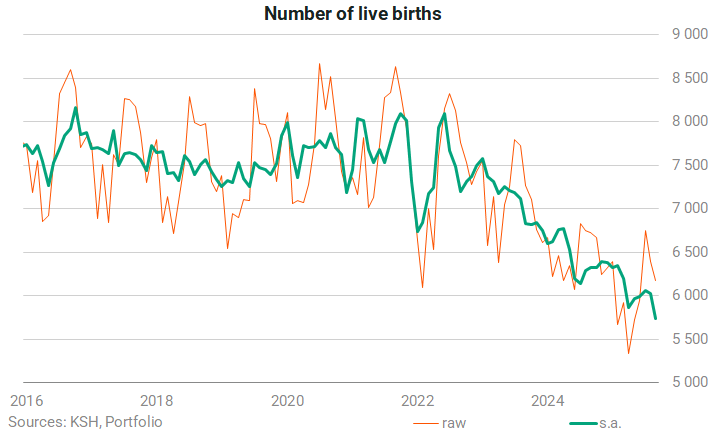
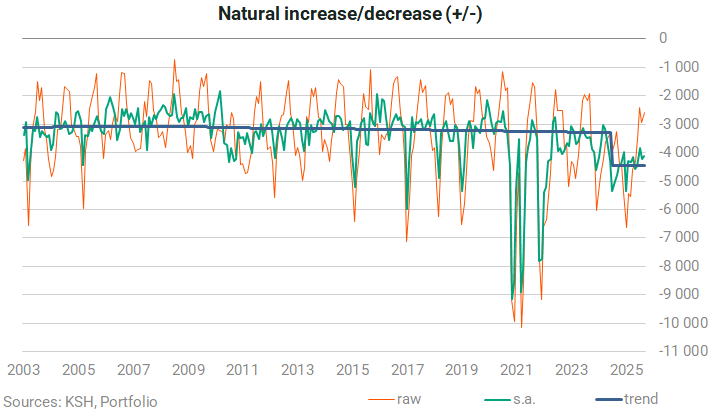
However, when we consider the seasonal characteristics of each month (as shown by the green line in the above figure), it emerges that
September actually had the lowest number of births in modern Hungarian history.
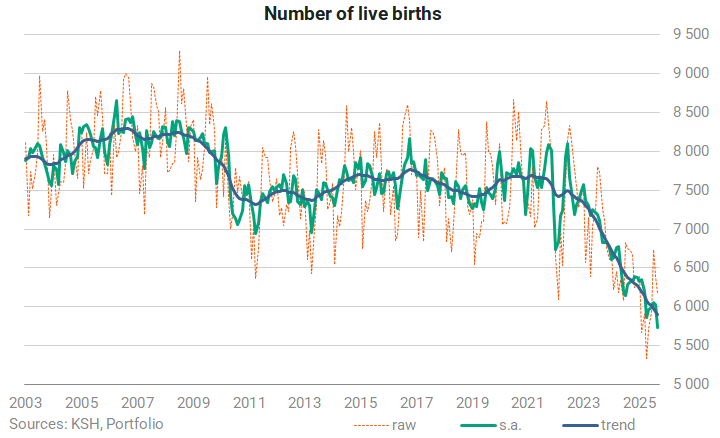
The last four years have seen the sharpest decline in the number of births over the past two decades. Prior to 2010, an average of more than 8,000 children were born per month, but this figure fell to 7,500 in the 2010s and now stands at 6,000.
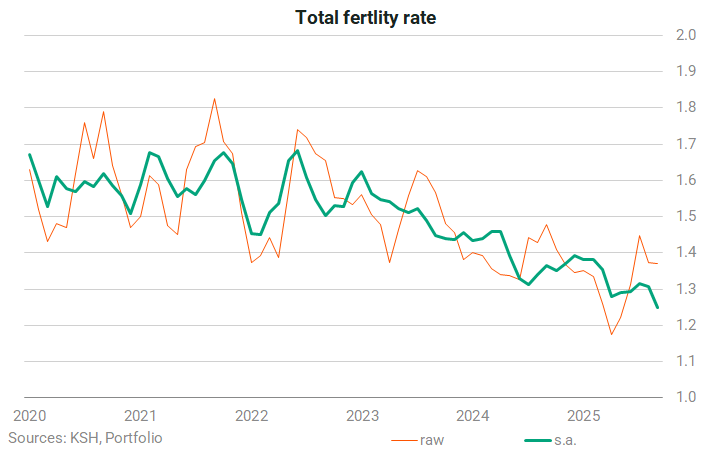
The primary cause of the dramatic decline in the number of children is the decrease in the number of women of childbearing age. This should be offset (or at least mitigated) by an increase in the desire to have children. However, the opposite is happening: the total fertility rate, which shows how many children a woman would give birth to on average if the birth rate remained unchanged, is estimated at 1.32 for September, or 1.25 when adjusted for seasonal factors. The Central Statistical Office has been publishing monthly data since 2020, and this adjusted figure is the lowest yet.
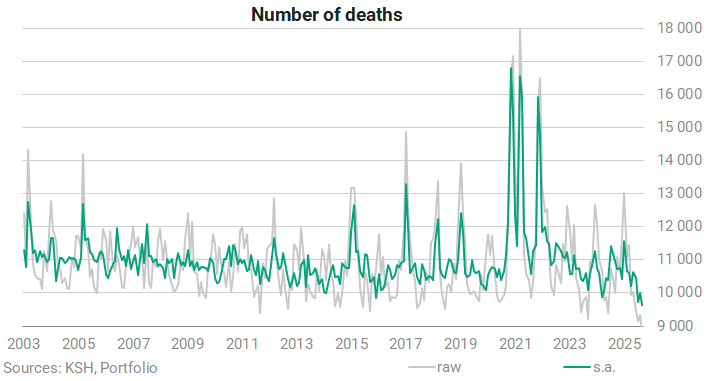
However, amid the demographic trends, there is some good news: 8,758 people lost their lives in the first month of autumn, which is 12% fewer than a year earlier. This is the first time the indicator has fallen below 9,000, and even when adjusted for seasonality, it represents a new historic low. While the decline may be partly related to the steady decline in population, the mortality rate remains low relative to population size, suggesting that other factors may be at play.
These two opposing demographic trends still point towards an accelerating population decline. Since last year, we have seen a break in the trend of monthly natural decline (the balance of deaths and births), and the population decline has increased by around a thousand people since then.
Cover image (for illustration purposes only): Getty Images





