Respiratory infections show mixed picture in Hungary

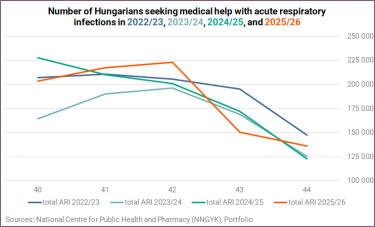
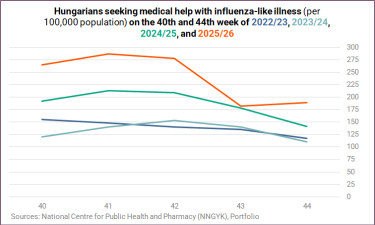
The current respiratory season starts worse than in the previous years. The number of people seeking medical help with acute respiratory infection (ARI) was higher than in the previous two seasons but lower than in 2022/23. The number of influenza-like illness (ILI), however, was still higher on the 44th week than on the same week of the previous three years.
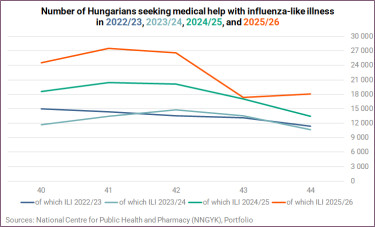
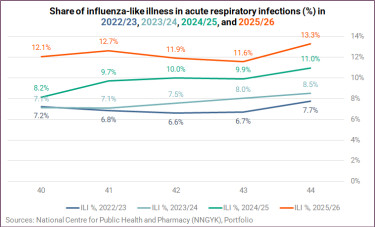
The share of ILI in ARI was 13.3%, also higher than in the previous three years.
With regard to the number of ARI patients per 100,000 inhabitants, we were better off than three years ago, but worse than ithe previous two seasons.
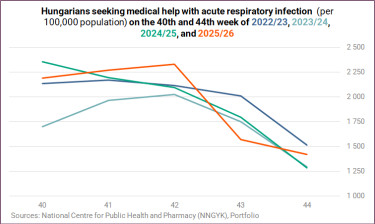
The number of patients with ILI per 100,000 people remained higher than the comparative figures of the previous three seasons.
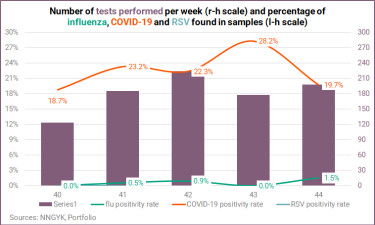
The Covid-19 positivity rate came in at 19.5% when considering all positive tests (33) of the samples submitted by sentinel GPs (169) and at 19.7% when calculating with all positive tests (39) in all of the samples (i.e. those submitted by sentinel hospitals and also traditional diagnostic samples, 198 in total).
The coronavirus positivity rate was lower in 2024/25 (17%), but higher in 2023/24 (21%), with no covid infection detected on the same week of 2022/23.
Hospitalisations
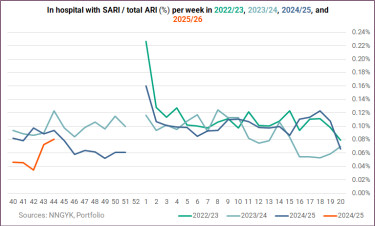
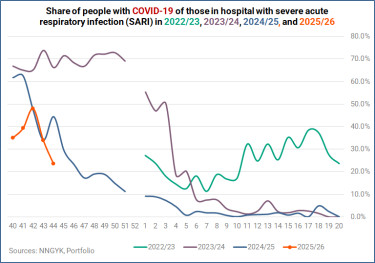
There were 110 people in hospital with severe acute respiratory infection (SARI), practically unchanged from a week earlier (109), of whom 26 tested positive for COVID-19 (23.6%), which compares with 44.3% in 2024/25 and 66.2% in 2023/24, when hospitals admitted more SARI patients on the 44th week, 115 and 154, respectively.
Twelve of the 110 patients needed intensive of subintensive care, a ratio of 10.9%, which compares with 11 in the same week of 2024 and 16 in 2023 (with ratios of 9.6% and 10.4%, respectively).
About two thirds of people admitted to hospital with a coronavirus infection were over 60 years old (17 in total), and 45.5% of SARI patients were in this age group (50 in total). A bit more than a quarter of SARI patients were under two years old (29 in total).
The NNGYK also had some key data published since the official end of the previous respiratory season on the 20th week, which show a general increase in the number of hospitalsed SARI patients since the 35th week, except for a surprise drop on the 42nd week. We also find that SARS-CoV-2 is the main reason behind hospitalisations.
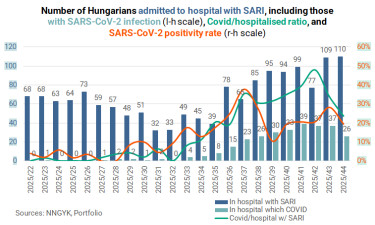
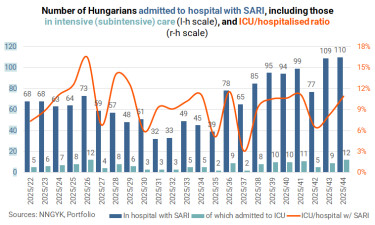
We anticipated further moderation on the 43rd week due to the shortened week, but were wrong which does not bode well for the future. However, so far, this season is less serious than the previous ones when it comes to how many of all people with ARI end up in hospital. Let's hope that orange line does not cross the blue (or green) ones or at least not by a lot!
Age breakdown
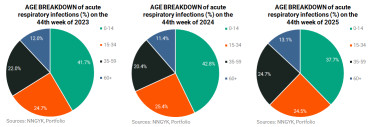
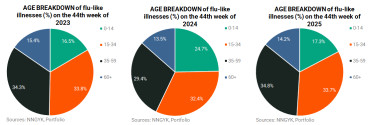
Almost 38% (about 46,000) of people seeking medical help with an acute respiratory infection (ARI) in week 44 were children aged up to 14, down from around 78,000 or 45%. About a quarter (cc. 30,000) were aged 15–34.
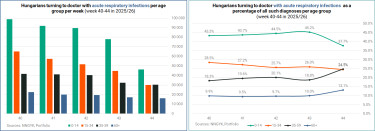
The graphs below show a breakdown of ARI patients by age group for this year and the previous two seasons.
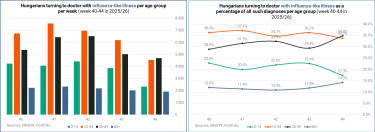
When it comes to ILI, the most affected age group was people aged 35-59, accounting for 4,550 (34.8%) of all patients with influenza-like illness, followed by the 15-34 age group (4,550 or 33.7%).
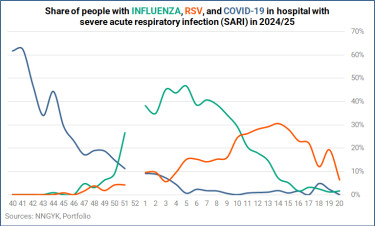
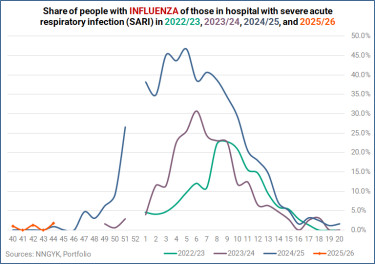
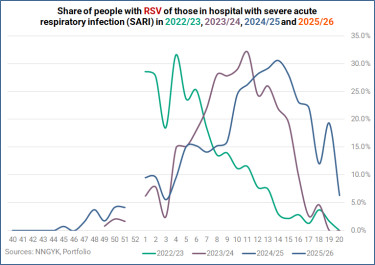
The patterns of the previous years suggest that the ratio of coronavirus infections in hospitalisations should start dropping just about now and get close to 0-10% by the 5th or 6th week of next year. In parallel with this, influenza infections behind hospitalisations should start to pick up before the end of the year or early 2026. And then there's the respiratory syncytial virus (RSV) to consider.
This is how the pathogens 'swapped places' as the main reason behind hospitalisations last year.
And this is how they changed over the past three respiratory seasons.
Cover image (for illustration purposes only): Getty Images