Breakneck speed! Hungary's new autumn tax package passed in just over 24 hours

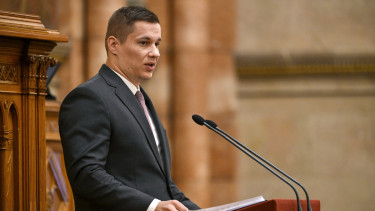
Bence Gerlaki, State Secretary for Taxation, Consumer Protection and Trade at the Ministry of National Economy, presented the 11-point proposal during Tuesday's general debate. The proposal contains tax and tax administration reduction measures affecting sole traders and enterprises of all sizes.
The government and parliament passed this tax package at an extraordinary speed.
The government submitted it to the National Assembly yesterday morning.

The personal tax exemption threshold will increase in three stages, starting at HUF 20 million on 1 January 2026, then rising to HUF 22 million on 1 January 2027 and finally reaching HUF 24 million on 1 January 2028.
The government will increase the general rate at which sole traders opting for flat-rate taxation can claim expenses without documentation from 40% to 50% in two stages: to 45% from 1 January 2026 and to 50% from 1 January 2027.
From 1 January 2026, the minimum social contribution tax and social security contribution base payable by entrepreneurs will be the same, since the 112.5% multiplier used to determine the social contribution tax base will be abolished.
The entry and retention thresholds for the Small Business Tax (KIVA), which is available to micro, small and medium-sized enterprises, will double. Among the entry conditions, the headcount limit will increase from 50 to 100, and the revenue and balance sheet total limits will increase from HUF 3 billion to HUF 6 billion. The exit limit will increase to HUF 12 billion in revenue and 200 employees.
The retail tax brackets, which have remained unchanged since 2020, are to be revised. Instead of the current thresholds of HUF 500 million, HUF 30 billion and HUF 100 billion, new thresholds of HUF 1 billion, HUF 50 billion and HUF 150 billion will be introduced, with the tax rates staying the same. This amendment will apply to tax liabilities for 2025 onwards.
From 2026, the general threshold for corporate tax prepayments will increase from HUF 5 million to HUF 20 million. This means that, in future, only companies with a corporate tax liability exceeding HUF 20 million in the previous year will be required to pay tax monthly.
The proposal introduces a uniform quarterly obligation for sole traders to declare their social security contributions, regardless of whether they fulfil their personal income tax obligations under flat-rate or business income taxation rules. He added that, at present, those applying flat-rate taxation fulfil these obligations quarterly, whereas entrepreneurs who account for their expenses individually fulfil them monthly.
Cover photo: Bence Gerlaki, State Secretary for Taxation, Consumer Protection and Trade at the Ministry of National Economy, speaks at the plenary session of the National Assembly on November 18, 2025, on measures to reduce the tax burden on businesses. Source: MTI Photo/Tamás Purger





