Hungary's big energy opportunity could be an unexpected sustainable source

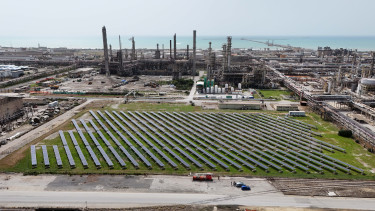
Green methanol is typically produced from green hydrogen generated using solar energy and captured carbon dioxide produced by industrial plants that consume significant amounts of fossil energy, using a process known as hydrogenation. It is therefore more expensive to produce than green hydrogen, but its use is much simpler and cheaper. The peripheral conditions for economical green methanol production include the availability of adequate solar power capacity, water sources, natural gas substations and users, and carbon capture capacity in the immediate vicinity.
A particularly critical boundary condition in Hungary is
the availability of water resources for the production of green hydrogen by electrolysis.
To produce 1 kilogram of green hydrogen by electrolysis, at least 0.3 m³ (300 litres) of water per hour is needed, and the proposed methodology suggests water from wastewater treatment plants as a solution to meet this demand. Therefore, a water treatment plant within 10 kilometres of the site is one of the boundary conditions for economic production.
Other important conditions include, for example, the proximity of an industrial plant emitting at least 140,000 tonnes of CO2 per year or a natural gas network substation node where the surplus green hydrogen produced can be blended with natural gas.
The Geographic Information System (GIS) analysis identified a total of 9,213 European municipalities meeting most of the criteria, but the number of technically viable "methanol valleys" sites was reduced to 3,016 after taking into account the approximately 100 hectares of space required for a solar power plant of at least 50 megawatts (MW).
The researchers then conducted an economic assessment based on three different production/sales scenarios, which include optimistic, baseline and conservative price projections for methanol, hydrogen and CO2 capture.
Costs are largely determined by the investment costs of electrolysers for green hydrogen production
- but the natural gas market and the carbon emissions market (EU ETS) prices are also key considerations for investors.
- The baseline scenario reflects market conditions in 2023, assuming moderate investment costs of €1,350 per kilowatt (kW) of hydrogen electrolyzer and a CO2 price of €80 per tonne.
- The optimistic scenario assumes a decreasing CAPEX of €1200/kW for green hydrogen and CO2 capture costs of €70/tonne.
- The conservative scenario foresees higher costs of €1500/kW and €90/tonne, respectively, but higher sales prices for hydrogen and methanol.
An analysis of the different scenarios looking ahead to 2030 shows that a significant number of projects would be economically viable,
with an internal rate of return of up to, or even possibly exceeding 15%.
This would be the case in particular in the conservative scenario of higher prices, mainly in Southern Europe, but the study also identified several such potential locations in the southern region of Hungary, in the Szeged area.
Potential European green methanol investment locations according to the study, based on internal rate of return (%):

However, the combined estimated investment costs of all the projects considered feasible by the analysis would be very significant, amounting to around €700 billion.
Similar plants are already in operation in Europe and the study shows that there is potential for the widespread deployment of green methanol production from hydrogen produced by solar power plants on the continent. The energy and climate policy objectives indirectly point in this direction, if only because the expected mass introduction of green hydrogen production, as a result of the development of weather-dependent renewable energy sources, will entail significant costs for industry, making the development of alternative fuels essentially indispensable.
The world's first commercial-scale e-methanol plant started operations in Denmark in May.
One of the most important customers for the green methanol produced by the plant will be the shipping giant Maersk. Low-emission marine fuels such as green ammonia and methanol from renewable energy sources have so far generally been more expensive than conventional fuels, largely because they are produced in small quantities.
The promoters of the Danish project expect price parity with fossil methanol - typically produced from natural gas and coal - to be achieved around 2035.
n addition to its use as a fuel, green methanol can also replace fossil methanol in the production of plastics, and the green methanol produced in the new Danish plant is used as a raw material by Lego, for example.
Other studies have also pointed out that Europe can produce green methanol in an economically viable way, not only with its solar power plants but also with its offshore wind turbines, which could become cost-competitive with conventional fuels after 2030 and uniformly cheaper by 2035.
Cover photo (for illustration purposes only): Portfolio


