How many batteries does Hungary need to make proper use of solar energy?

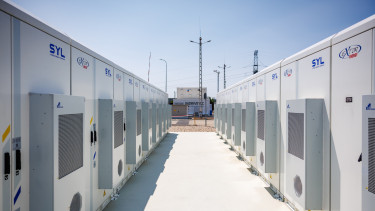
In order to curb climate change, greenhouse gas (GHG) emissions must also be significantly reduced in the field of electricity generation. Currently, one of the most suitable and cheapest means of doing this is weather-dependent renewable energy production technologies, but since their output is uncertain and does not match consumption needs, it is also essential to increase the flexibility of the electricity system.
One of the most important solutions ensuring flexibility in recent years has been battery energy storage systems, which have led to significant cost reductions. However, it is not clear exactly how many batteries are needed to balance variable, weather-dependent renewable energy sources.
According to calculations covering several scenarios by researchers at the Regional Centre for Energy Policy Research (REKK), the cost-optimal size of the battery energy storage fleet in the European electricity system at the end of the decade would be
approximately 5% of the total weather-dependent renewable energy power plant capacity on average, but in any case less than 10% of the total capacity of weather-dependent renewable energy power plants.
Battery capacity on this scale would be able to manage—and presumably significantly reduce—the production restrictions imposed on weather-dependent renewable energy power plants in order to maintain system balance, and would ensure the optimal integration of solar energy in Europe. This amount of battery energy storage would also mitigate the powerful cannibalization effect of solar power plants, i.e., the phenomenon whereby solar panels flood the market with so much electricity during their peak production hours around noon that they drive wholesale electricity prices to near-zero or below-zero levels, thereby significantly reducing their own profitability.
The use of batteries also makes it possible to store a large part of the surplus solar energy generated during the day and then bring it to market during peak consumption in the evening, smoothing out fluctuations in the spot electricity market.
One important finding of the research is that
there is an upper limit to the cost-optimal performance of photovoltaic and battery storage systems,
as well as their combination.
According to their findings, weighing up the expected cost advantages and disadvantages, a solar power plant fleet with an installed capacity of 530-880 gigawatts (GW) at European level and a battery energy storage capacity corresponding to 2.5–7.5% of that would represent the cost-optimal range in 2030. In terms of total system cost, the least expensive solution would be approximately 707 GW of solar power plants and a battery energy storage capacity equal to 5% of that.
As regards the expected future development of the Union's solar power capacity, the REPoweEU plan targets an increase in the EU's total installed solar capacity to 750 GW by 2030, up from around 400 GW this year, and based on the 797 GW forecast by industry organization SolarPower Europe, this target is achievable.
According to the results of REKK's research, if the installed capacity of European solar power plants exceeds 880 GW in 2030, the total cost of the system would rise sharply, with the use of higher levels of battery energy storage. Based on the results, installing photovoltaic capacity of less than 530 GW would not be cost-optimal for the EU electricity system.
The study notes that the approaches taken by Member States in their planning differ significantly with regard to the battery energy storage targets set by individual European countries for 2030. According to the study, although the installation of photovoltaic power plants is the most significant driver of flexibility requirements,
there is no clear correlation between the solar power capacity targets set by countries and their battery energy storage capacity targets.
This is indicated by the fact that the national targets for solar power and battery capacity for 2030 vary considerably, ranging from 2.9% (Romania) to 48.75% (Ireland). The variation between countries is much smaller when comparing the 2030 battery target to the combined expected capacity of solar and wind power plants (1.7% in Lithuania to 17.73% in Ireland).
In Hungary, the government's National Energy and Climate Plan (NEKT) has set a target of 12 GW of solar and 1 GW of wind power installed capacity by 2030, as well as 1 GW of electricity storage capacity. Although it is not entirely clear from the NEKT whether the latter category includes only battery energy storage systems or other technologies as well, the REKK study takes the former interpretation.
Thus, the installed capacity of Hungarian battery energy storage systems could reach 8.3% of the capacity of solar power plants and approximately 7.7% of the combined capacity of solar and wind power plants in 2030, which is
close to the cost-optimal value determined by REKK at the end of the decade.
Based on the solar and wind power plant and battery energy storage targets planned by individual countries for 2030, as well as the considerable variation between them, researchers have concluded that there is currently no consensus among Member States on the optimal methodology for installing battery storage systems to effectively meet the flexibility needs caused by weather-dependent, particularly solar power plants. However, daily battery utilization rates are fairly homogeneous across most Member States, with the exception of northern countries, where pumped storage capacities mitigate the need for batteries.
The analysis also points out that EU countries differ significantly in terms of the proportion of their solar power plant output (0-20%) that they have to forego due to production restrictions aimed at maintaining system balance. The extent of this is influenced not only by the size of installed photovoltaic capacity, but also by market factors such as the availability of flexible capacities, the level of market price volatility, and cross-border electricity trade.
According to the study, these findings suggest that
battery services could be shared efficiently even between European countries
if sufficient cross-border capacity were available.
Cover photo: The Hungarian Ministry of Energy's Facebook page


