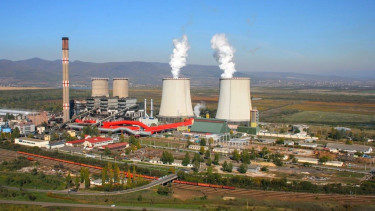
Coal energy production hits all-time low in Hungary

In May 2025, total net electricity generation in the OECD reached 860.6 TWh. Of this total,
- 356.6 TWh (41.4%) was produced from fossil fuels,
- 358.5 TWh (41.7%) from renewable sources and
- 141.6 TWh (16.5%) from nuclear power.
On a year-to-date basis, total net electricity production increased by 2.3% in the first five months of 2025.
Electricity generation from fossil fuels decreased 4.8% year-on-year in the OECD in May 2025. The shares of natural gas, coal and oil as a percentage of total electricity generation were 26.4%, 13.4% and 1.1%, respectively. Generation from natural gas decreased by 6.3% yr/yr (-15.4 TWh), and generation from coal decreased by 1.3% yr/yr (-1.6 TWh). On a year-to-date basis, electricity generation from natural gas has fallen 0.6% (-7.1 TWh) whereas coal increased by 6.2% (+40.1 TWh) in the OECD, mainly owing to growth in OECD Americas and OECD Asia Oceania.
Electricity generation from renewable sources increased by 6.0% year-on-year (+20.2 TWh) in the OECD in May 2025. The output from solar generation continues to increase (+20.7% yr/yr, +19.0 TWh). Wind generation also increased year-on- year (+8.4% yr/yr, +7.0 TWh). This trend was mainly driven by OECD Europe, where electricity generation from wind increased by 20.3% year-on-year (+7.1 TWh), driven by Germany (+1.8 TWh), the United Kingdom (+1.6 TWh) and Sweden (+1.1 TWh).
Nuclear power generation decreased 1.0% year-on-year (-1.4 TWh) in the OECD in May 2025, mainly due to decreases in Europe (-4.2% yr/yr), and the Americas (-1.3%), while there was growth of 6.8% yr/yr in Asia Oceania.
on a year-to-date basis, all OECD regions have increased nuclear production this year.
In Hungary in May 2025, electricity generation from coal (Mátra Power Plant) reached an all-time low of 82.0 GWh. As a result,
coal generation made up only 2.5% of Hungary’s total electricity generation in May 2025, also an all-time low.
The share had previously been as high as 9.1% in December 2023.
It is clear that the role of coal in Hungary's energy mix is declining rapidly, while renewables and nuclear energy are becoming increasingly important.

Cover photo: Portfolio


