What will happen if 15 bn cubic meters of gas suddenly disappears from Hungarian supply

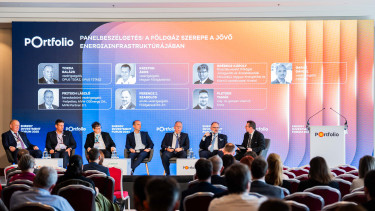
About decoupling from Russian supplies - When will the change come and what will it bring?
Szabolcs I. Ferencz, Chairman and CEO of the natural gas transmission company Földgázszállító Zrt., reminded us that Russian gas must be phased out by 1 January 2028 and that there is a parliamentary motion to bring this deadline forward by one year. The relevant decision is expected to be made at the end of October.
After that, we need to prepare for a new world. In terms of infrastructure, we have coined the term 'United States of Landlocked Countries' to refer to countries without coastlines. Outside our region, this includes Ukraine, Romania and Bulgaria, which do not have direct access to LNG. These countries have a combined gas consumption of approximately 65 billion cubic metres.
If we add up the figures for the region, we see that even if we subtract 15 billion cubic meters from the 65 billion cubic meters and optimistically assume that 8 billion cubic meters will come from the Romanian gas field (Neptun Deep), there will still be a shortfall of 7 billion cubic meters.
In theory, this could be compensated for with LNG. However, Eastern Europe currently has a poor LNG supply. Therefore, not only is there no expected underutilisation of capacity, but no surplus quantities can be brought in for the time being either.
If the 15 billion cubic metres disappear, countries will compete with each other to obtain the necessary quantities, which could have a lasting effect on prices and cause long-term damage to national economies.

László Fritsch, Deputy Commercial Director of MVM CEEnergy Zrt., pointed out that it is not yet clear how or when the decoupling from Russian gas will take place, or what opportunities and obstacles this will present. In any case, it is clear that, following the separation, we will become a premium market and prices will rise.
In terms of gas flow, Serbia will be the bottleneck.
Gas can only reach the region via the Turkish Stream if Russia's current pipeline (with a capacity of approximately 3 billion cubic metres) is available. Therefore, we will have to wait and see how Gazprom reacts to the situation.

Dániel Garai, the CEO of CEEGEX, pointed out that the current price map in Europe is expected to undergo a complete reshuffle after the separation, which could create new trading opportunities. However, this is an optimistic scenario. If such a large volume is lost due to the decoupling from Russia, prices will rise due to reduced supply and the high cost of alternatives. Even though global gas prices are expected to fall in the future, this will put the region at a significant competitive disadvantage.
Furthermore, all of this has a significant impact on the electricity sector,
given that the two areas are closely linked. If the Hungarian market is priced out of the regional market, this could also have extremely unfavourable consequences.

According to Károly Grébecz, head of the Natural Gas Supervision and Price Regulation Department at MEKH, the Romanian market is an important opportunity, as are the Croatian and Polish markets.
Hungary has worked hard to become a transit hub. It is almost there,
he said.
It is also important to note that
if the regional deficit of 7–8 billion cubic metres materialises, the value of domestic production will increase
and greater attention may be given to geothermal energy. In addition to these factors, it should be emphasised that alongside significant changes to the supply side, the demand side is also undergoing a significant transformation.

Ákos Kriston, the CEO of Hungarian Natural Gas Storage, pointed out that their storage facilities are currently 65% full. This means that,
even in the event of extreme weather conditions, there will be no supply problems this year.
Weaning the country off Russian supplies is another issue entirely, and the loss of resources is not the storage facilities highest priority. While it is true that storage facilities play a more important role in the short term in the event of a supply shortage, such a situation is unlikely to arise.

According to Balázs Torda, the CEO of Opus Tigáz, the availability of gas is a combination of technical and commercial factors; ultimately, the focus is on how much we charge customers for energy.
A much more exciting topic is whether natural gas will still be important in the energy infrastructure in 20 years' time.
"If we give up the gas network, how will we get through the final period?" he asked rhetorically.

Other issues discussed
In addition to the above, consumer habits and demand trends in the industrial sector and among the general public were discussed. For example, it was mentioned that, while a slow decline is expected among the general public,
the future of industry across Europe is unclear.
The spread of hybrid systems was also discussed, with experts highlighting the importance of biomethane in this regard. Although it will not represent a paradigm shift in domestic supply, it will be an important supplement to domestic production.
Other important messages, without claiming to be exhaustive:
- One expert pointed out that the integration of renewables has already begun in the electricity market, and that it may be worth learning from this sector in the gas market as well.
- 'Flexibility is king' – responding competently to rapidly and significantly changing demands is crucial in the current gas market. Every bit of extra flexibility is needed in the system.
-
Short-term contracts are more common in the gas market due to high levels of volatility and uncertainty. Long-term contracts will also be atypical in the near future.
Cover photo: Portfolio


