Inflation devours Hungarians' savings, billions of government transfers gone


The National Bank of Hungary has released preliminary financial accounts statistics showing that local households' gross financial assets (i.e. not adjusted for debt) stood at HUF 77,545 billion at the end of March, an increase of 9.7% over a year and 1.4% over three months.
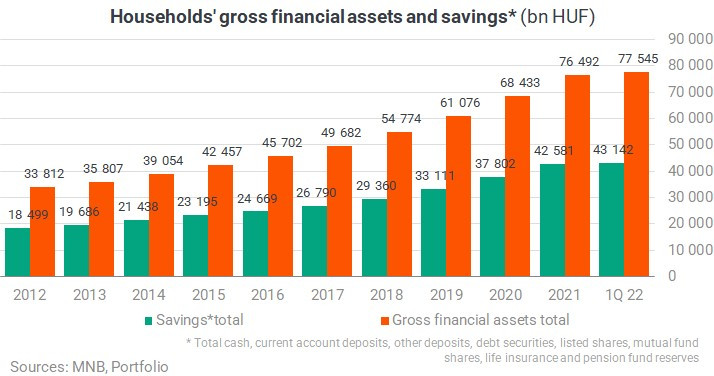
Of these, the total stock of assets that we consider as savings was HUF 43,142 billion, also up 1.4% in three months. However, adjusted for a rise in consumer prices of around 4.3% in the first three months of the year, this represents a fall of 2.7%, which is how much the real value of our savings declined in the first quarter.
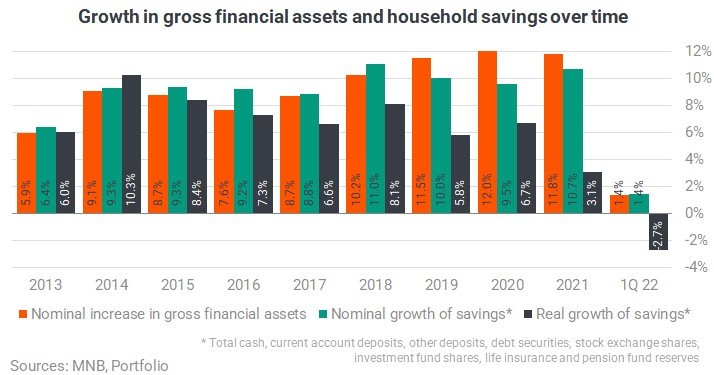
The decline in the real value of savings is partly due to the fact that 49% of them are sitting in assets (bank accounts, cash, other deposits) where there is virtually no chance that the return will at least match inflation. Even for a significant proportion of the remaining 51% of savings, today's realisable returns are lower than the recent annual inflation rate of 9.5%, but at least they carry and occasionally/at times deliver the promise of positive real returns even in the current environment, such as commodity funds.
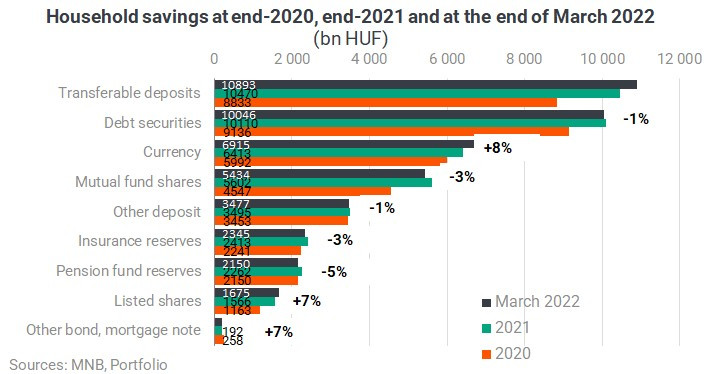
The largest amounts are held in current accounts, government bonds and cash, of which only some government bonds are inflation-protected, but not in "real time": since the yields of the Premium Hungarian Government Security (PMÁP), the Premium Euro Hungarian Government Security (PEMÁP) and the Baby Bond are also determined on the basis of the previous year's inflation, they do not ensure a continuously positive real domestic yield in periods of a surging CPI.
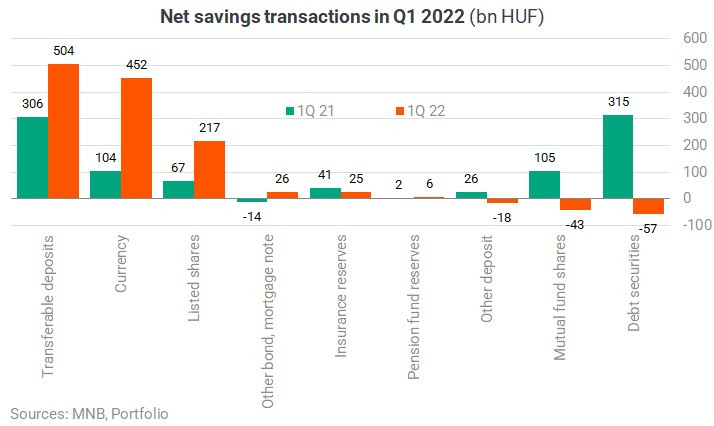
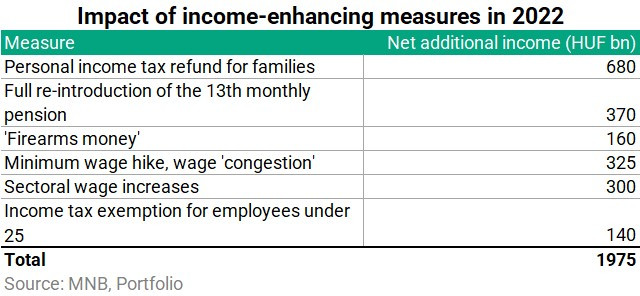
The biggest event for the savings market in the first quarter of 2022 was the series of pre-election government transfers, with HUF 1,200 billion of the nearly HUF 2,000 billion in extra payouts being one-off or once-a-year payments. So we looked at what impact this might have had on the savings market.
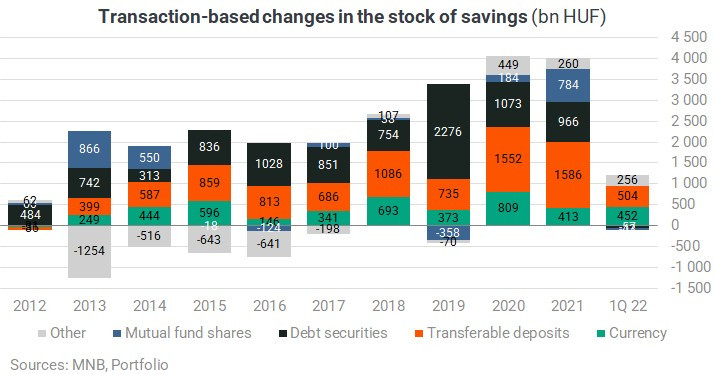
When compared to the net amount of transactions a year earlier, a significantly larger amount went into current account (transferable) deposits, currency and listed shares than in the first quarter of 2021, but less was bought than sold in government securities. Overall, net "fresh" savings amounted to HUF 1,112 billion, which is only HUF 159 billion more than a year earlier.
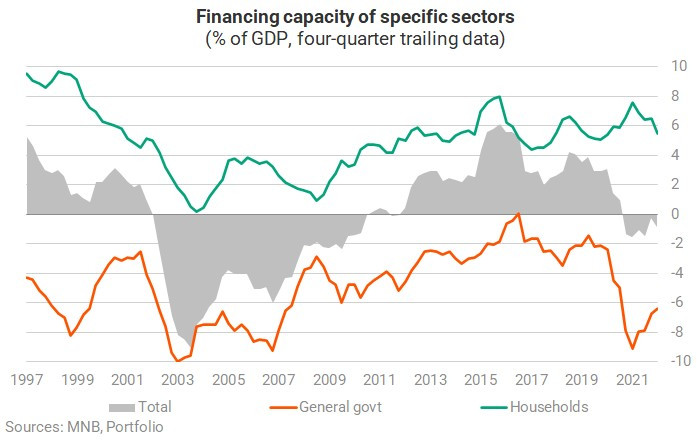
The MNB reported on Wednesday that in the 12 months to end-March, the financing needs of the general government amounted to 6.4% of GDP, while the financing capacity of the public sector in the year to the end of the first quarter was 5.5% of GDP. The latter figure is actually a bit surprising, as the already mentioned large public transfer would have implied a higher net saving. Formally, the significant increase of consumption and borrowing at the beginning of the year could be the explanation.
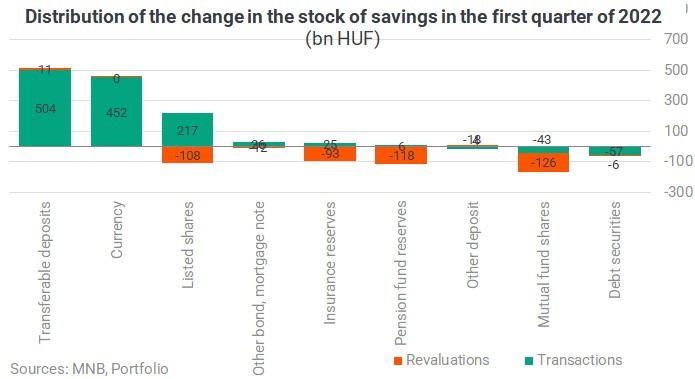
At the end of the first quarter, Hungary's public debt stood at 77.3% of GDP, up from 76.6% at the end of 2021, according to financial accounts data. The increase comes as no surprise given that the first months of this year have been characterised by massive public spending. The pre-election public transfers had to be financed, which in turn boosted debt issuance.
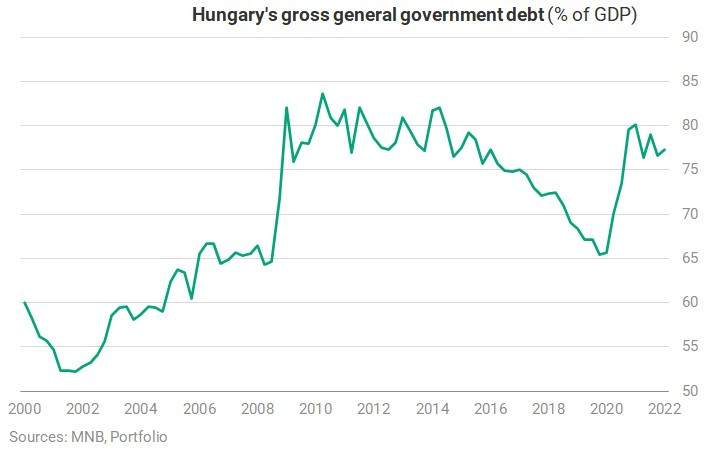
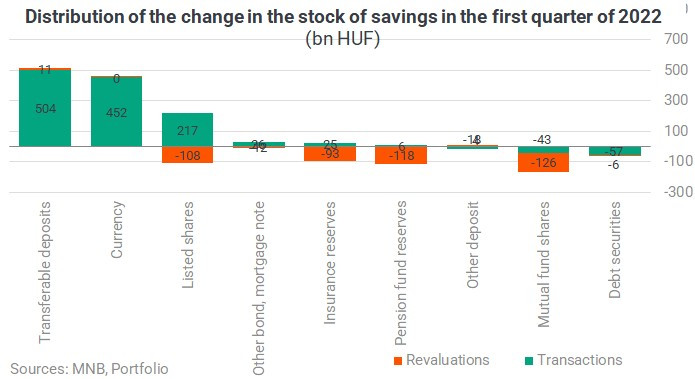
Of the HUF 1,112 billion net "fresh" savings generated in Q1, HUF 504 billion remained in current accounts and HUF 452 billion in currency by the end of March, with the combined share of the two being 86%.
The MNB's statistics can also tell us how much households gained or lost in nominal terms in each category, provided that the assets in question are those with more than minimal risk exposure. The first quarter was a turbulent period with heavy exchange rate fluctuations due to the war between Russia and Ukraine, and the end of the Russian aggression is nowhere in sight. The negative revaluation of listed shares, life insurance reserves, pension insurance reserves and investment funds was greater than the positive amount of net transactions. In other words, overall, savers lost more (mostly in unrealised losses) than they invested in these assets as fresh money.
Cover photo: Getty Images