Hungarian pension system in big trouble - Young people's attitude is worrying


Number of young people saving for retirement declines radically
The Hungarian pension situation is still not looking good, according to recent figures from the MNB.
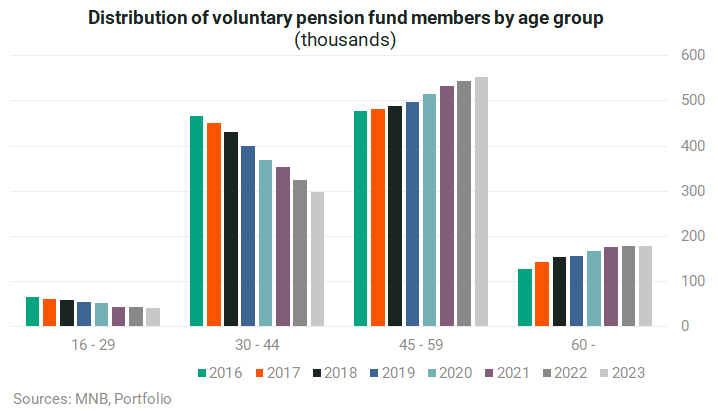
Year after year, the pension system seems to be losing the battle for young people:
The proportion of younger people aged 16-29 and 30-44 in the scheme falls every year (especially the 16-29 age group), which is precisely the group that should be included in the scheme in the greatest possible proportion.
According to the latest figures for 2023, the number of the youngest voluntary fund members fell to nearly 42,000 from 43,600 in a year, a 4% decrease. The picture is worse if we go back to 2016, the year for which the MNB provides the data: in this case, the decline is 36%.
The next age group, 30-44 year olds, does not look good in terms of membership either, with a drop of 8% in one year and 36% in eight years.
Only the older age groups, 45-59 and over 60, have seen an increase in membership, which is an understandable trend in the sense that many people tend to start saving for retirement at an older age, but also sad as it shows that young people are unable or unwilling to save for their old age, while the state pension system is already struggling on many different levels:
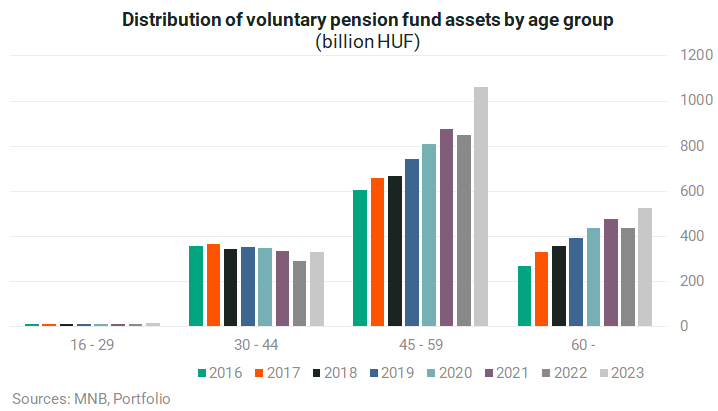
There are not too many surprises in the age distribution of assets under management. Younger members' assets are largely stagnating, with older members saving more for their retirement (obviously, the fact that they are saving more as they approach retirement plays a role).
A particular highlight is the surge in savings of 45-59 year olds over a year, with 55% of voluntary pension assets concentrated in their accounts:
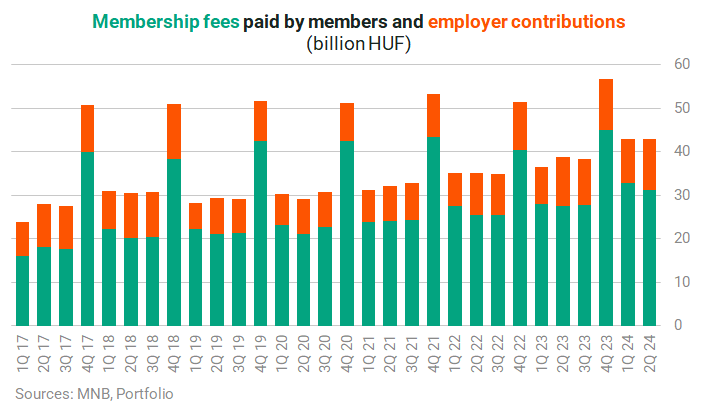
Contributions jump
First quarter contributions started strongly, and the trend did not change in Q2 either: according to the MNB's latest figures, more than HUF 31 billion in contributions were received from members in April-June, with an additional contribution of nearly HUF 12 billion from employers, making it
the strongest first half of the year for the sector.
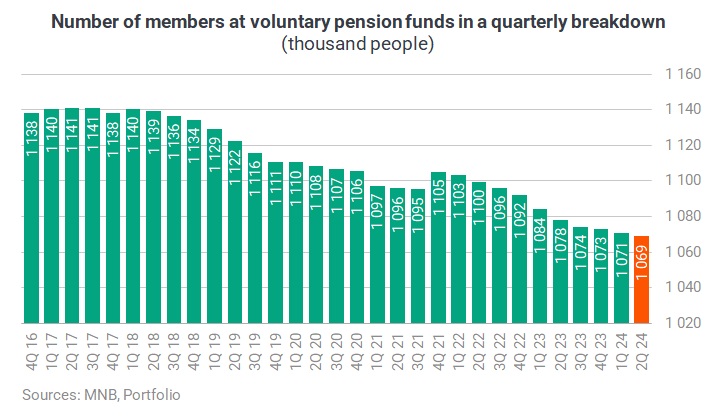
Meanwhile, unfortunately, the decline in the number of members of voluntary funds continued (as indicated by the breakdown by age group): While at the end of December last year the sector had around 1.073 million members, at the end of June there were 4,400 fewer members, bringing the total to below 1.069 million.
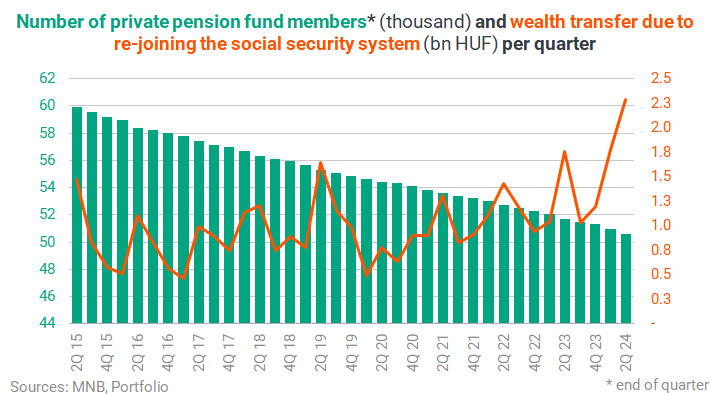
The number of members of private pension funds has also been steadily declining, largely due to the fact that many people are opting to return to the state pension scheme when they reach retirement age, in order to receive a 100% state pension.
So far this year, the total number of members has fallen by 715 to 50 590.
Convincing returns
According to the latest data from the MNB, the trend in fund yields continued in the second quarter, as a result of which:
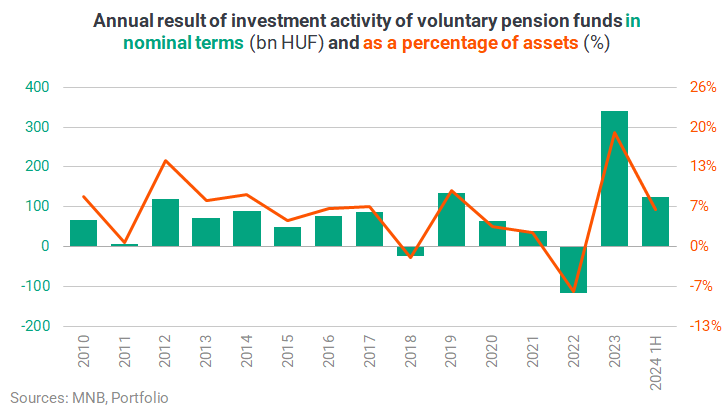
voluntary funds have already achieved a return on assets of more than 6% in the first six months of the year, representing an investment gain of HUF 125 billion.
2023 was an outstanding year in terms of yield generation for pension funds, but if this year's 'yield machine' maintains its pace until the end of the year, 2024 could be one of the best years for pension fund growth:
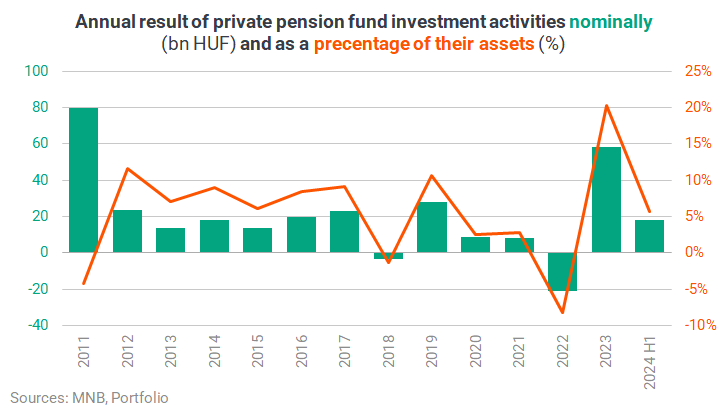
Private pension funds saw a return on assets of 5.7% in the first six months, a gain of more than HYF 18 billion.
Portfolios reshuffled
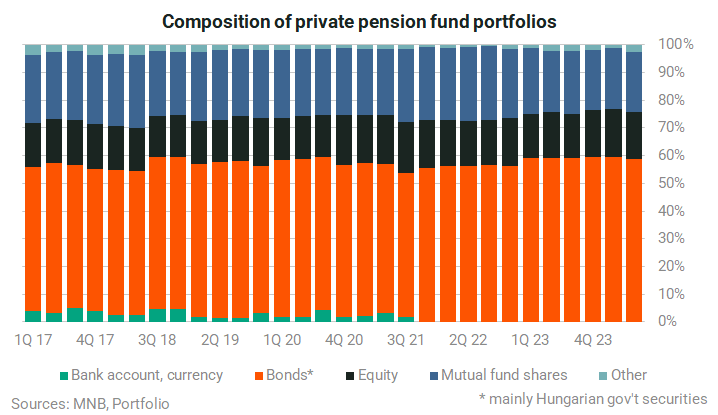
In the first half of this year, the weight of bond investments in the portfolio decreased, but the share of bank deposits and currency, mutual fund shares and equities in voluntary funds increased.
The surge in fund assets in mutual funds and equities may also explain the good market performance in the first half of the year, while the rise in bond market yields seen in the first months of the year may have made pension fund managers more cautious.
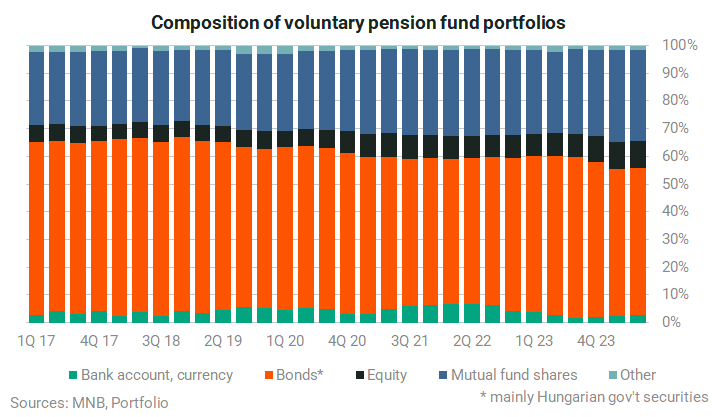
Private pension fund portfolios tended to show a decline in bank deposits and cash-like assets, with bonds stagnating and the share of other categories increasing compared to December last year:
Cover photo (for illustration purposes only): Getty Images