Hungary shackles the EU again, even though Brussels would remove Russian names from the sanctions list


EU ambassadors in Brussels discuss the continuation of sanctions against Russia over the war in Ukraine. They support extending the sanctions for a further six months instead of one year against some 1,800 individuals and entities.
However, three names will be removed from the list because the evidence supporting their inclusion is weakest, Politico learned from three EU diplomats.
But Hungary is also pushing for a fourth name to be dropped, which will complicate the negotiations.
It has become common practice in sanctions negotiations for the Hungarian government to stall the process. Most recently, in May, it tried to block EU sanctions against Russian dissident Vladimir Kara-Murza, a Russian official.
The decision on the sanctions was due to be finalised by EU foreign ministers in Brussels on 22 May, but Hungary vetoed at the last minute at least one Russian name on the list, delaying the process. Hungary finally voted in favour of the sanctions a week later. The sanctions put those who persecuted Kara-Murza on the EU's list of the world's most serious human rights violators, alongside figures such as those involved in the poisoning of Russian dissident Alexei Navalny, as well as human rights abusers in China and Africa.
The Hungarian Foreign Ministry has not given any reasons for blocking the Kara-Murza decision. The Orbán-led cabinet has previously blocked the inclusion of Russian businessmen, arguing then that it was at the request of the Turkic and Central Asian countries. The most famous case, however, was when the government blocked the sanctioning of Patriarch Kirill, arguing that it did not agree with the spirit of imposing punitive measures on religious leaders.
It is not yet known which person would be taken off the list, nor what the Budapest cabinet's explanation is.
Currently, EU sanctions are decided unanimously, which allows individual EU leaders to use their veto power for national interests. To solve this problem, the European Commission has proposed a new sanctions regime that targets the worst global kleptocrats and allows names to be taken by a majority vote of EU member states, with the aim of preventing countries from hijacking EU decision-making for corrupt reasons.
Meanwhile, Germany and France would also take the initiative in the Council of the European Union to introduce a qualified majority voting system for foreign policy decisions, or more precisely the "double majority rule", which requires 55% of EU member states to vote unanimously, but so that they together represent 65% of the EU population. This would take the veto weapon out of the Hungarian government's hands.
Bill Browder, CEO of Hermitage Capital, criticised the current system and called for an end to the self-serving reasons for any one country to block sanctions, stressing the need for reform to prevent such dysfunction from continuing.
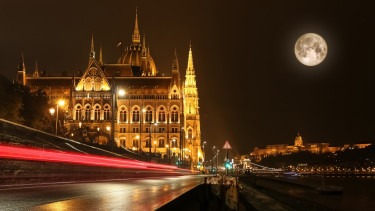
Cover photo: Portfolio/Dániel Szabó