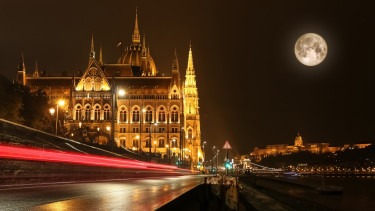
EPP head urges the EP to review the unblocking of cohesion funds for Hungary


Viktor Orbán's government has got into a protracted dispute with the European Union, resulting in billions of euros of cohesion funds being frozen. The EU has expressed concerns about human rights and the rule of law in Hungary, leading to the suspension of financial support.
In December 2022, the European Commission took the crucial step of withholding around €22 billion from EU cohesion funds to support investment in the economies of less well-off member states. These funds are mainly used to reimburse national governments for spending on domestic initiatives.
Finally, on 13 December, the European Commission released €10.2 billion of frozen EU cohesion funds for Hungary. The EU executive indicated at the time that the decision to release the funds was taken after a thorough assessment and a series of discussions with the Hungarian government. The Commission said that Hungary had taken the necessary measures, adopting a judicial reform to strengthen judicial independence, which paved the way for the release of the frozen funds.
As a result, Hungary is now entitled to receive a total of around €10.2 billion, a significant financial boost for the country. Although on paper all €22.5 billion of cohesion funds could in principle be released if the horizontal eligibility criteria are met, payments are blocked due to the conditionality procedure and other rule of law procedures.
However, not everyone agrees with the Commission's decision. In a letter obtained by Politico, Manfred Weber, leader of the European People's Party (EPP), calls on the European Parliament to examine the Commission's decision on the matter.
The letter, addressed to EP President Roberta Metsola and signed by key figures such as Siegfried Mureşan, Petri Sarvamaa, Jan Olbrycht and Monika Hohlmeier, expresses scepticism about the Commission's reasoning. The document calls for a comprehensive assessment of the Hungarian judicial reform by the EP's Committee on Budgetary Control and other relevant services.
According to the EP's largest political groups, Hungary has not met the requirements.
The letter also accuses Orban of obstructing the review of the EU's long-term budget, which the signatories say is "a complete disregard and violation of the EU's strategic interests". They thus call on Parliament's legal service to carry out a thorough analysis of the situation and propose a concrete measure for a comprehensive review of the bloc's long-term budget.
The release of frozen funds and the ensuing debate highlights the tensions between Hungary and the EU and raises questions about the effectiveness of the conditions attached to financial support and the wider relationship between member states and the European Commission.
Although the European Parliament has limited powers to block Hungarian payments, it can put pressure on the European Commission to start new procedures.
Looking ahead to the EP elections in June, Brussels cannot risk a scandal, and in the Hungarian case the EU executive has already been accused of releasing Hungarian cohesion funds only to make a political deal with the Viktor Orbán-led cabinet. Several EP political parties accused the body of this, and immediately after the decision they wrote a letter criticising Brussels.
The Commission has flatly denied that they have given in to any form of blackmail, indicating all along that they are bound by the rule of law. Finally, at the EU summit in December, the Hungarian Prime Minister voted against a possible political deal on the review of the common budget, a key issue for Brussels.
As the European Commission has informed Portfolio, the procedure on horizontal qualifying criteria is not yet closed per se. The implementation of the judicial reform will be continuously monitored and if the government's actions show that the package is not sufficient, all cohesion funds will be suspended again. So if a possible EP inquiry were to show that the Hungarian judicial reform does not meet EU standards, the Commission would be forced to take some corrective action before the June elections.
Cover photo: Getty Images