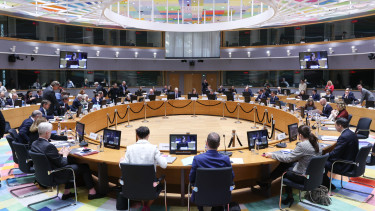
EU's excessive deficit procedure could target eleven member states, including Hungary


The member states concerned, including Hungary, exceeded the 3% of GDP deficit limit allowed by EU rules last year. The Commission will decide in June whether to open the excessive deficit procedure in each case. Countries in the euro area could face fines if they do not correct their deficits, while countries outside the euro area could face a reputation risk. Brussels will take action over excessive public spending once the new budget rules come into force this year.
Brussels is almost certain to take action against Hungary after the deficit has jumped to 6.7% in 2023 after several adjustments to the planned deficit target. Moreover, the target of 2.9% has already been revised this year, the government has adjusted it to 4.5% and postponed the payment of HUF 675 billion in investments, but even this may not be enough.
France, Italy and Belgium, which have deficits above the 3% threshold and do not plan to return to compliance in the coming years, are likely to be sanctioned. Fiscal rules were suspended during the Covid-19 pandemic and are now being reinvigorated after a partially tighter but investment-friendly reform.
The new rules have been confirmed by the European Central Bank, which has indicated that it may exclude countries from its new, but as yet untested, bond-buying programme if they do not follow the recommendations of the excessive deficit procedure. Some countries, such as Spain and the Czech Republic, argue that their deficits will return to 3% or below this year and that they should not be penalised for temporary breaches.
Things are different for Hungary, however, with Standard & Poor's recent rating affirmation ('BBB-/A-3' long- and short-term foreign and local currency sovereign credit ratings, with a stable outlook) predicting a budget gap of 5.3% of GDP this year, well over the government's upwardly revised 4.5% target, and expect it to be down only at 4.2% in 2025 (versus the cabinet's goal of a 3.7% gap). The shortfall is seen coming in at 3.7% in 2026 and 3.3% in 2027. In other words, S&P's economists do not believe Hungary will reduce the deficit to under 3.0% of GDP - the level expected by the EU - over three years in the 2024-2026 period.
Valdis Dombrovskis, Vice-President of the European Commission responsible for economic affairs, acknowledged that there can be borderline cases. In such cases, the commission may decide not to initiate an excessive deficit procedure if a country's excessive deficit is close to 3% but is only a temporary bump in the 2024 budget, the Financial Times reports.
Romania is currently the only country outside the euro area with an excessive deficit procedure. Poland, Romania and euro area member Slovakia are seeking an exemption on the grounds that military spending has risen above the threshold due to Russia's full-scale invasion of Ukraine.
Andrzej Domański, Poland's Finance Minister, argued that Poland has the highest defence spending among NATO countries, ahead of even the United States. He said this exceptional situation should be taken into account when assessing the excessive deficit procedure and the new EU budget rules. Dombrovskis said defence spending was one of the key factors in deciding whether or not to open the excessive deficit procedure.
However, not all defence spending is eligible for the soft treatment: under the reformed EU budget rules, increases in government investment in defence can be discounted, but not recurrent defence spending. The Commission has been criticised in the past for not respecting the deficit rules, in particular in the case of France. In the negotiations on reforming the rules, Germany and others have called for stricter implementation.
One likely outcome is that countries will remain under the excessive deficit procedure, but the fiscal adjustment required by the Commission in the autumn will be smaller. Dombrovskis stressed that the rules are clear and the main parameters, including the 3% GDP threshold for triggering the excessive deficit procedure, have not changed.
Cover photo: Valdis Dombrovskis, Vice-President of the European Commission responsible for economic affairs. Source: EU.