Hungary submits medium-term fiscal-structural plan - GDP estimates lowered


Based on EU regulations, Member States' plans must include net expenditure paths, the underlying macroeconomic assumptions, and budgetary and structural measures. The regulation also sets strict requirements for the management of public debt and deficit, which the EU also provides a technical dialogue for member states to meet, as part of which it has sent its budget/structural plan.
"The Government of Hungary remains committed to gradually reducing the government deficit and reducing the debt ratio, thus ensuring macroeconomic stability, which is also key to economic growth," reads the plan submitted four days after the 31 October deadline expired.
The plan will be assessed by the European Commission and the Council, which will either adopt it or, if they feel there are shortcomings, initiate a renegotiation.
The government forecasts that the Hungarian economy will grow by 0.8% in 2024 and 3.4% in 2025, with rates of over 4% from 2026 onwards.
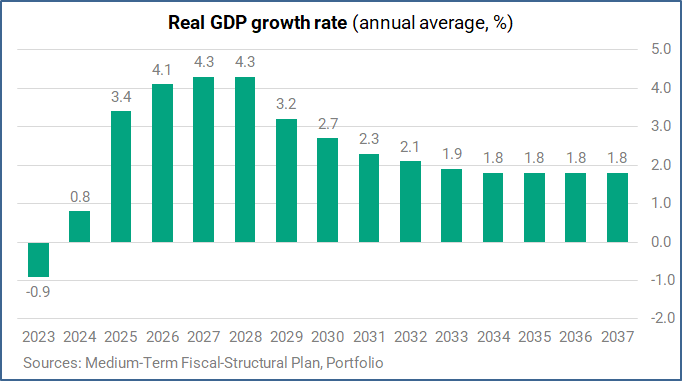
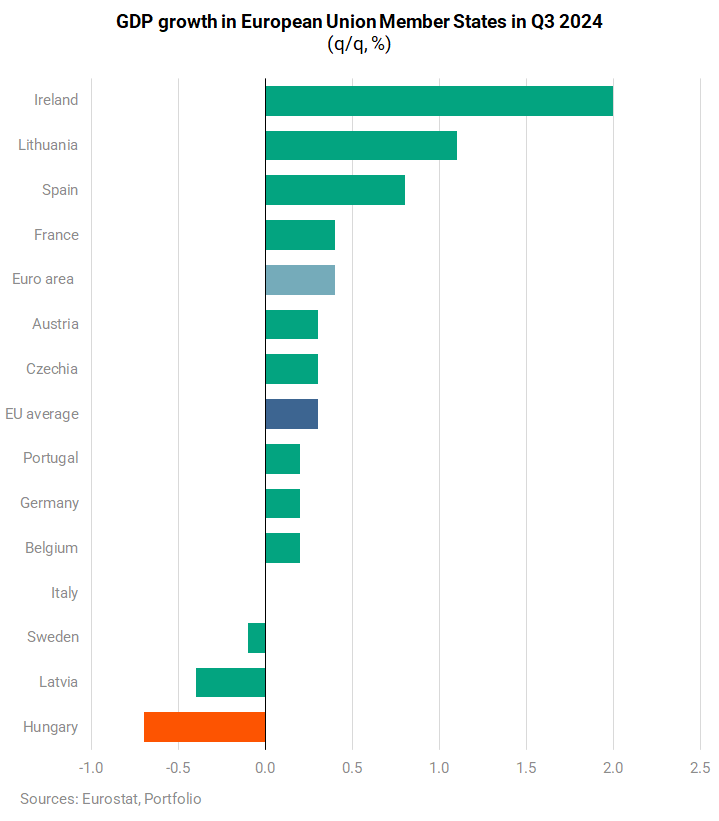
The 0.8% growth forecast is a sharp downward revision from the previous official forecast of 1.5%. The more pessimistic picture is explained by the disappointing performance of the Hungarian economy in the third quarter, which has seen the country slip back into a technical recession.
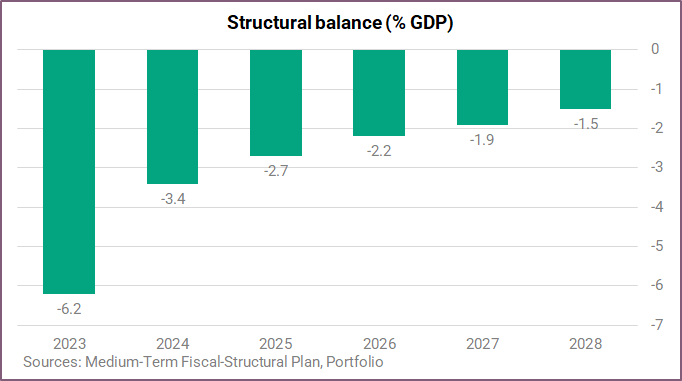
According to the government's newly announced plans, the structural deficit will be 2.7% of GDP in 2025, falling to -1.5% by 2028.
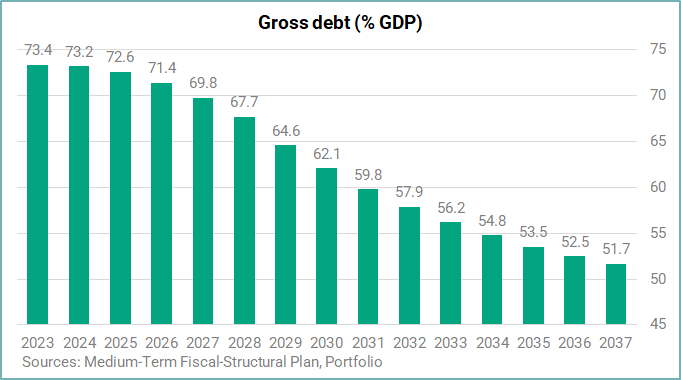
Government debt is projected by the cabinet to fall by an average of 1.4 percentage points per year in the projection to 2033, but given current debt dynamics, it is not surprising that the decline will only accelerate in the second half of the period.
inflation is expected to fall to 3.7% this year, to 3.2% in 2025, and to stabilise around 3% from 2026.
The GDP deflator is to be around 8.0% in 2024, 4.0% in 2025 and 3.2% in 2026-2028, as a consequence of continued rapid real convergence.
Reducing external exposure, keeping the foreign exchange ratio at low levels and increasing the residual maturity of the debt remains a strategic direction in Hungary’s public debt management,
the document says.
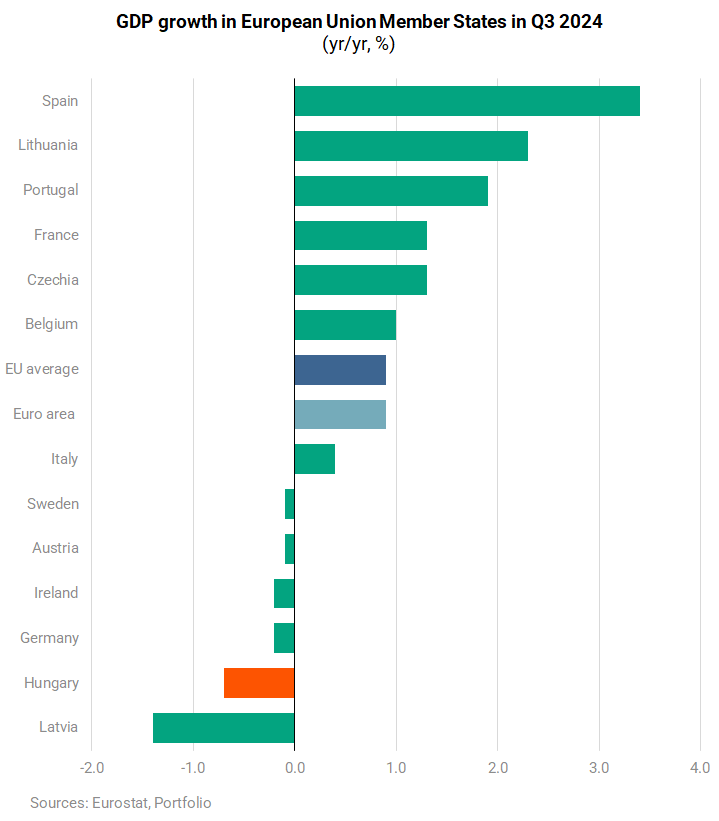
Economic growth will be supported by rising household consumption and positive export performance, according to the Orbán government's forecast. They note that in the first half of 2024, the volume of Hungarian GDP grew by 1.5% in annual comparison, above the EU average (0.7 %), according data adjusted seasonally and for working days. The document fails to mention that based on Q3 data, Hungary's GDP growth is expected to be under the EU average (1.0%).
As regards investment developments, the return to corporate sector activity is supported by a declining interest rate environment, accumulated savings by companies and replacement of previously postponed developments,
the document says.
Long-term goals include labour market stability and increased competitiveness. The continued expansion of the labour market and dynamic wage outflows should lead to further growth in the coming years, while the decline in inflation rates should provide an opportunity to preserve purchasing power.
The government is introducing various incentives to support the SME sector - such as the launch of the Demján Sándor Programme - to promote technological development, innovation and digitalisation, which it promises will boost the productivity and sustainability of the Hungarian economy.
Budget in transition
The government expects "accelerated growth and low inflation to provide a better opportunity to strengthen the position of the budget than before. Accordingly, reducing deficits and debt and maintaining financial stability will be a priority."
"As in previous years, support for families and the provision of domestic support will remain a priority, as well as a strong focus on maintaining national defence spending. Maintaining a labour and business-friendly tax system remains the primary objective of tax policy."
Budget 2024
In 2023, inflation was significantly higher than expected due to the adverse external environment and the economic performance moderated. The budgetary base for 2023 is therefore less favourable than assumed in the 2024 budget planning. This required a new deficit target of 4.5%.
Despite the new deficit target, the main priorities for the budget remain unchanged.
The main priorities of the 2024 budget is energy support for households (overheads reduction scheme) and defence. Defence spending remains at 2% of GDP in 2024.
The document also reveals that the government sector’s wage bill as a share of GDP is to rise to 10.4% of GDP this year, from 9.8% in 2023. Preserving the real value of pensions is also an important objective, the government claims, which will result in an actual increase in real value this year, when benefits for the elderly are planned to rise by 5% due to lower expected inflation.
Among the measures to improve the efficiency and sustainability of public investment, the government decided to postpone HUF 675 billion worth of projects in the first half of the year, which are expected to be implemented in the coming years.
In addition, the government claims that in July it introduced further corrective measures worth HUF 400 billion. These include a change in the conditions of the tax on the banking sector, an increase in the financial transaction tax on bank transfers and cash withdrawals, and a newly introduced financial transaction tax on currency conversions. As regards the energy sector, the Urals-Brent tax is amended. There are also other minor revenue measures, such as increases in fines and tax fines.
Based on the fiscal forecast, the government's deficit target of 4.5% of GDP will be met, with a further reduction in the coming years, with a structural deficit target of 3.7% by 2025 and 1.5% by 2028.
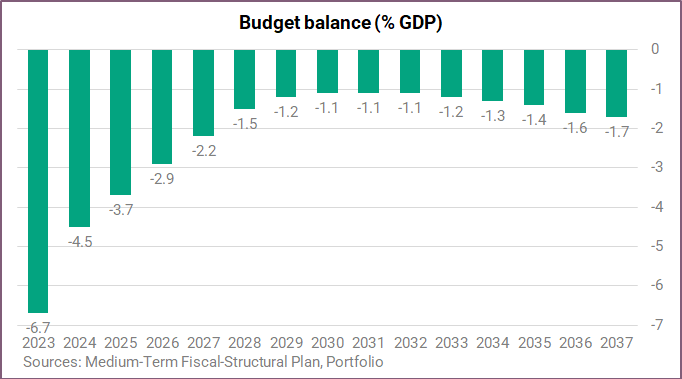
In addition to the planned deficit reduction, the debt-to-GDP ratio is also targeted to be reduced by at least 0.5 percentage points per year.
The deficit path ensures that debt remains on a declining path over the entire horizon, moderating at least 0.5 percentage points per year. In order to ensure that the above deficit and debt path is reached, expenditure under the so-called net expenditure indicator is expected to grow at 4.9% and 6.1% in 2024 and 2025 respectively, with an annual average of 4.2% between 2026 and 2028. The European Commission's reference scenario shows a similarly tight growth rate, which will ensure continued debt reduction.
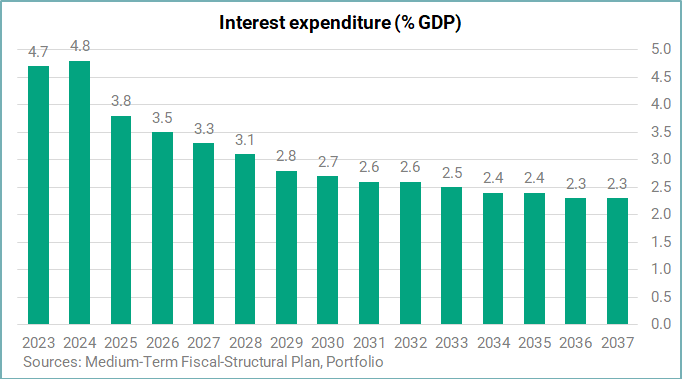
Based on the budgetary outlook, the cost of debt financing is steadily decreasing. Interest expenditure will decrease from 4.8% of GDP in 2024 to 3.8% in 2025 and to 3.5%, 3.3% and 3.1% of GDP between 2026 and 2028.
The government underlines that
lower interest expenditure leaves more resources for programmes to promote economic growth and employment and to maintain social spending.
"In autumn 2024, the Government announced the New Economic Policy Action Plan, which includes economic recovery measures to support economic growth. In addition to revitalising the economy, the Government aims to ensure that the recovery of economic activity is inclusive and benefits the widest possible range of society and economy, in particular Hungarian families and Hungarian micro, small and medium-sized enterprises. The key pillars of the Action Plan are increasing wages, ensuring affordable housing and increasing the size of domestic enterprises (Demján Sándor Programme).
"In order to support housing, 50 % of the Széchenyi Leisure Card benefits and voluntary pension fund savings will be used temporarily for residential purposes on the basis of an individual choice. In cooperation with the banking sector, an interest rate cap on a 5 per cent voluntary residential loan may be introduced. The government is helping to support and further strengthen the SME sector with new measures.
"In particular, the ‘1+ 1 SME Investment Recovery Support Programme’ and the investment-type loan products of the Széchenyi Card Programme are reduced to 3.5 % of the annual interest payable. In addition, the 21-point action plan includes the doubling of family tax credits, the launch of the Labour Loan Programme to support young people’s start of life and the introduction of the Rural Otthon Renovation Programme. Both the direct budgetary impact and the positive indirect tax revenue impact of all these measures on the macro-track will be included in the 2025 draft budget."
Model calculations underpin government argument
The government aims to lower the deb-to-GDP ratio to below 60% over the medium term and it would do so in all adverse scenarios. Adverse scenarios:
- Lower structural primary balance: the structural primary balance is assumed to decrease by 0.5 percentage points of GDP overall, by 0.25 percentage points per year over the first two years and to remain at this level thereafter.
- Negative r-g: the interest rate (r) and growth rate (g) gap is steadily increasing by 1 percentage point over the projection horizon;
- Financial stress: market interest rates are assumed to increase temporarily by 1 percentage point over one year.
The stochastic analysis follows the methodology developed by the European Commission to assess the sensitivity of debt ratio projections in the first five years after 2028. The criterion of soundness of debt reduction means that the debt ratio is at least 70 % likely to decline between 2029 and 2033.
According to the results of the stochastic analysis, the probability that the debt ratio will be lower in 2033 than in 2028 is close to 77 %, which is above the defined threshold.
This level above the threshold will allow the Hungarian government to keep the debt on a sustainable path in the long term, ensuring compliance with EU rules.
"In view of the diversification of the investor structure of public debt, maintaining a high share of government bonds held by the domestic population remains an important objective.
Interest income generated by Hungarian households also contributes to GDP growth and, indirectly, to an increase in tax revenues,
the document says.
The government acknowledges that "the rise in energy prices requires meaningful public engagement to keep overhead costs low, and the system remains in place. Nevertheless, related expenditure could decrease beyond 2024 due to the expected decrease in energy prices. State and municipal institutions, non-state human service providers and public utilities also benefit from subsidies, as well as low public service costs."
Investments and programmes to increase energy efficiency can further reduce the country's energy dependence, which in the long run will contribute to debt reduction targets, according to the Ministry of Finance's reform plan.
In order to increase the rental housing stock, the government intends to purchase and renovate at least 1600 dwellings under the RRF project and to build at least 400 new social housing by 2026.
However, it is highly questionable how much of the Recovery and Resilience Programme's funds can be drawn down by the government. According to the official EU treaties, RRF commitments should be completed by summer 2026, not started by then. Although the deadline is expected to be extended, Hungary does not yet have access to the €10.4 billion in subsidised loans and repayable grants available under the programme.
The Hungarian National Social Inclusion Strategy 2030, adopted in 2021, continues to frame the Hungarian Government’s efforts for social inclusion (MNTFS 2030). The main objective of the MNTFS 2030 remains to reduce poverty, prevent its reproduction and improve equal access to socio-economic goods. The first action plan sets out tasks until 2024, and the implementation of the strategy is expected to continue in the years 2025-2027 on the basis of a new action plan.
The MNTFS 2030 measures are planned to improve a number of elements of the social security system, which can be viewed freely and are subject to a public government decision. In particular, the new action plan also aims to fulfil two enabling conditions for the mobilisation of funds: (a) the national strategic policy framework for social inclusion and poverty reduction (enabling condition 4.4) and (b) the national strategic policy framework for Roma inclusion (enabling condition 4.5).
Cover photo (for illustration purposes only): Getty Images