EU to contribute to teacher pay hike in Hungary


At the end of 2023 and at the beginning of 2024, the Hungarian government adopted decrees to start a long-term increase in schoolteachers’ salaries. The aim is to reach at least 80% of the average graduate salary by 2025 and maintain this minimum 80% salary level at least until 2030. Around EUR 1.8 billion (HUF 735 bn at current exchange rates) of cohesion policy funds have been allocated to this end.
This means an average increase of HUF 5 million per teacher over the whole period of the programme.
The European Commission pointed out that the issue of pay rises has been on the agenda for years, as teachers' salaries in Hungary have long lagged behind the average salary of university graduates.
Since 2017, the European Commission's country reports and the EU Council's country-specific recommendations have warned of a teacher shortage, with low pay being one of the main causes. Compared to the EU average, Hungarian teachers' salaries lag far behind: while in the EU teachers earn 90% of the average salary of university graduates, in Hungary the figure was only 60%.
However, this year's pay rise is a significant step forward and, thanks to EU support, Hungarian teachers' salaries can become more competitive also in the long run.
Although education and its funding is primarily a national responsibility, the European Union has taken an exceptional step in the case of Hungary. It has included teachers' salaries among the measures to improve the quality and accessibility of education, which made EU support for the pay rise programme possible.
the Hungarian government and the European Commission agreed in 2022 on the minimum conditions for the wage increase programme, which are also set out in the Recovery and Resilience Plan (RRP) and the human resources development Operational Programme Plus (hrdop+).
In addition to increasing teachers' salaries, the agreement also includes the need to strengthen social dialogue. The European Commission attaches great importance to ongoing consultation with teachers' unions, which is essential for the long-term development of education. While the pay rise is an important step forward, professional organisations and stakeholders say that further measures are needed to restore the prestige of the teaching profession and to reduce the number of teachers leaving the profession and the shortage of teachers.
A couple of figures to put Hungarian teacher salaries into perspective
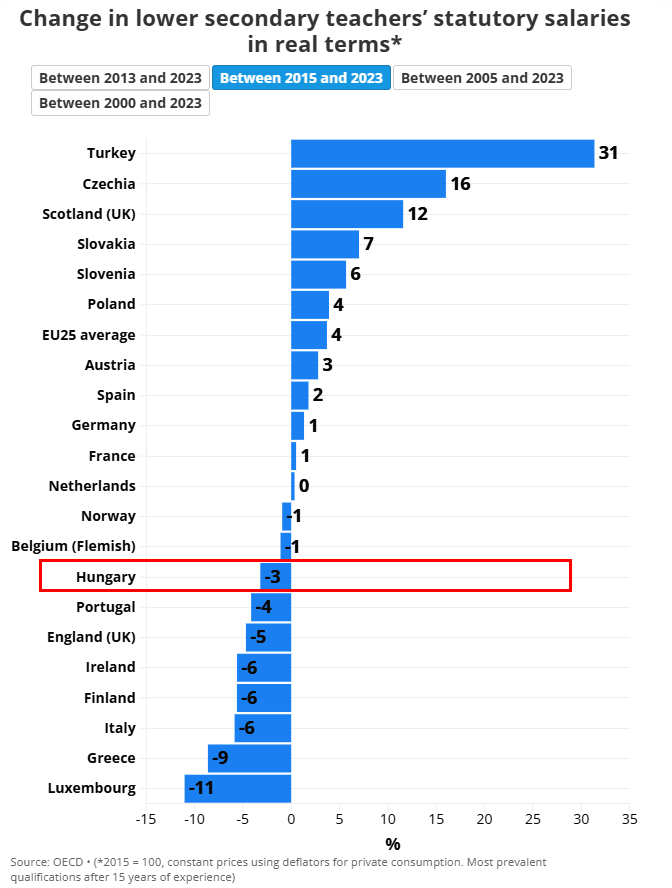
Among 22 countries and regions, the statutory salaries of lower secondary teachers in real terms declined in 10 of them between 2015 and 2023, with some experiencing significant decreases, according to the OECD's Education at a Glance 2024 report, Euronews reported about a week ago.
Salaries saw the sharpest decline in Luxembourg, dropping by 11% during this period, followed by a 9% decrease in Greece and a 6% decline in Ireland, Finland, and Italy.
Salaries also fell by 5% in England, 4% in Portugal, and 3% in Hungary between 2015 and 2023.
The increase was 4% on average in the EU-25, while it was lower in some of the EU's top economies, such as Spain (2%) and Germany and Italy (1%).
Conversely, Türkiye recorded the highest increase, with teacher salaries rising by 31%. Czechia followed with a 16% increase, and Scotland saw a 12% rise, making them the only regions with increases exceeding 10%.
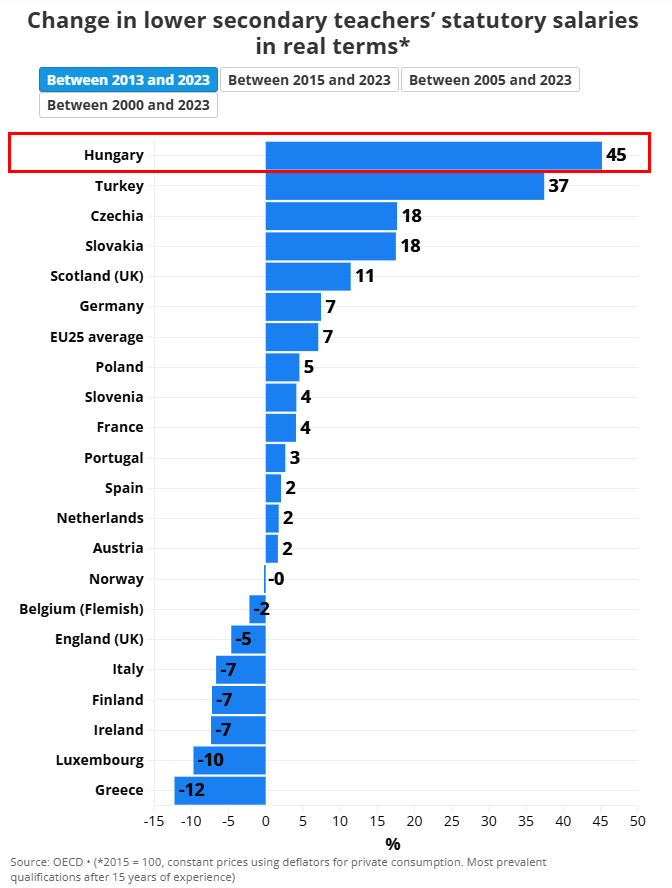
Between 2013 and 2023, a similar trend emerged. Greece topped the list for the largest decrease at 12%, followed by Luxembourg (10%) and Ireland, Finland, and Italy (7%). In England, teacher salaries dropped by 5% in real terms as well.
Teacher salaries in Hungary rose by nearly 50% in 2014 compared with 2013, measured in US dollars. This significant increase strongly impacts the results when analysing changes over time. The line chart below illustrates this pattern clearly.
While salaries declined by 3% in Hungary between 2015 and 2023, the overall increase from 2013 to 2023 was an impressive 45%. This places Hungary at the top of the list for the largest salary increases during this period, followed by Türkiye at 37%.
Czechia and Slovakia experienced notable increases of 18% over the past 10 years, with Scotland following closely with an 11% rise.
Among the EU's largest economies, Germany reported the highest increase at 7%, followed by France at 4% during the same period.
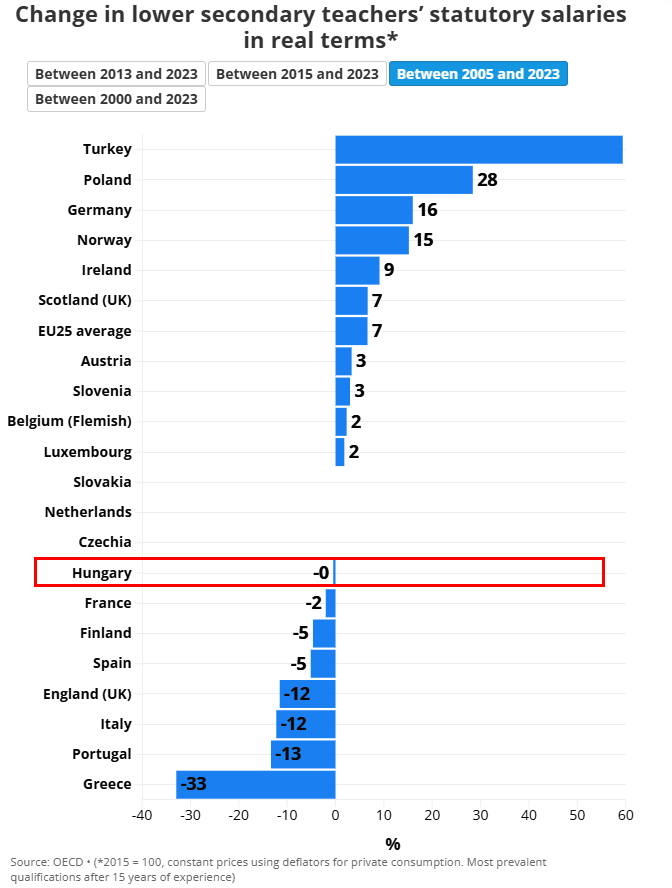
Looking at changes over a longer period, such as between 2005 and 2023, Greece experienced a dramatic decline in teacher salaries. Teachers in Greece lost a third of their salaries in real terms during this period, a decrease of 33%. Significant declines were also observed in Portugal (13%), as well as in Italy and England (both 12%).
Although the decreases were smaller, salaries also declined in Spain and Finland (both 5%) and France (2%).
Between 2005 and 2023, Türkiye saw a significant increase in teacher salaries, with a reported rise of 59%. Poland (28%), Germany (16%), and Norway (15%) followed Türkiye, though with lower rates of increase.
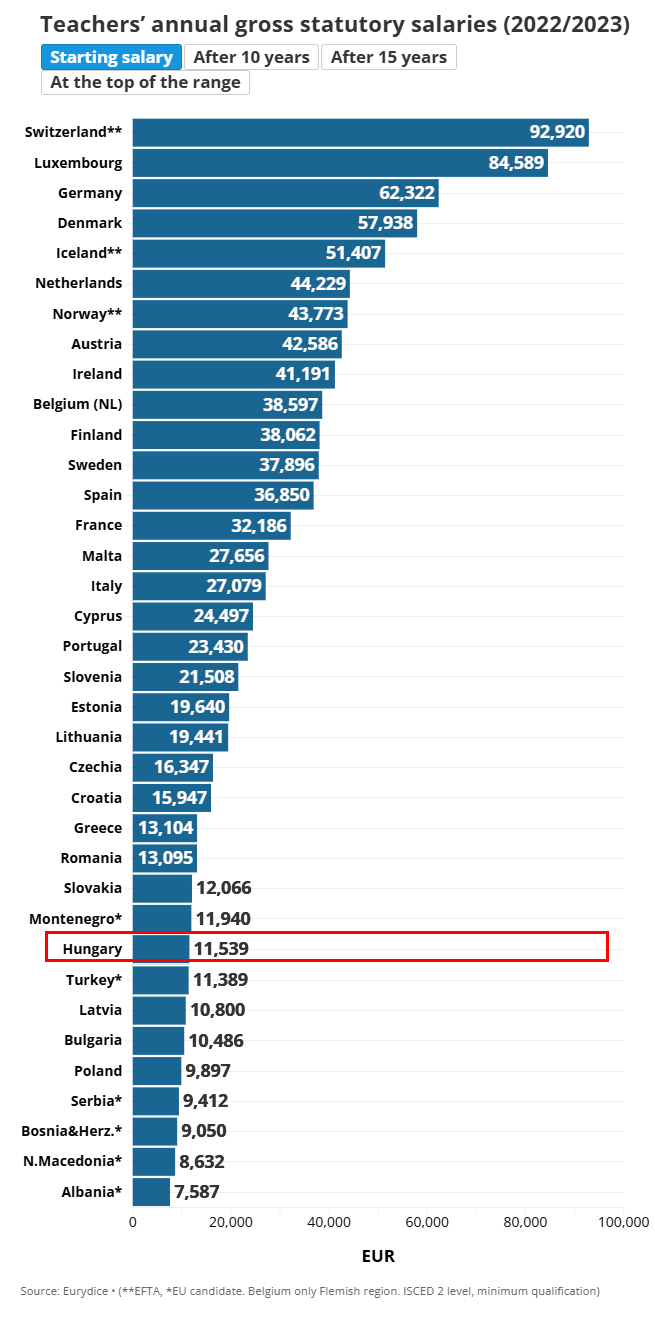
Teacher salaries vary significantly across Europe, with qualifications and experience playing a key role in differences within each country.
According to the European Commission's Eurydice, annual gross statutory salaries for starting teachers in 2022/23 ranged from €9,897 in Poland to €84,589 in Luxembourg within the EU.
Teachers in Germany (€62,322) earned nearly double the salaries of their counterparts in France (€32,186). Spain (€36,580) was slightly above France, while Italy (€27,079) fell below.
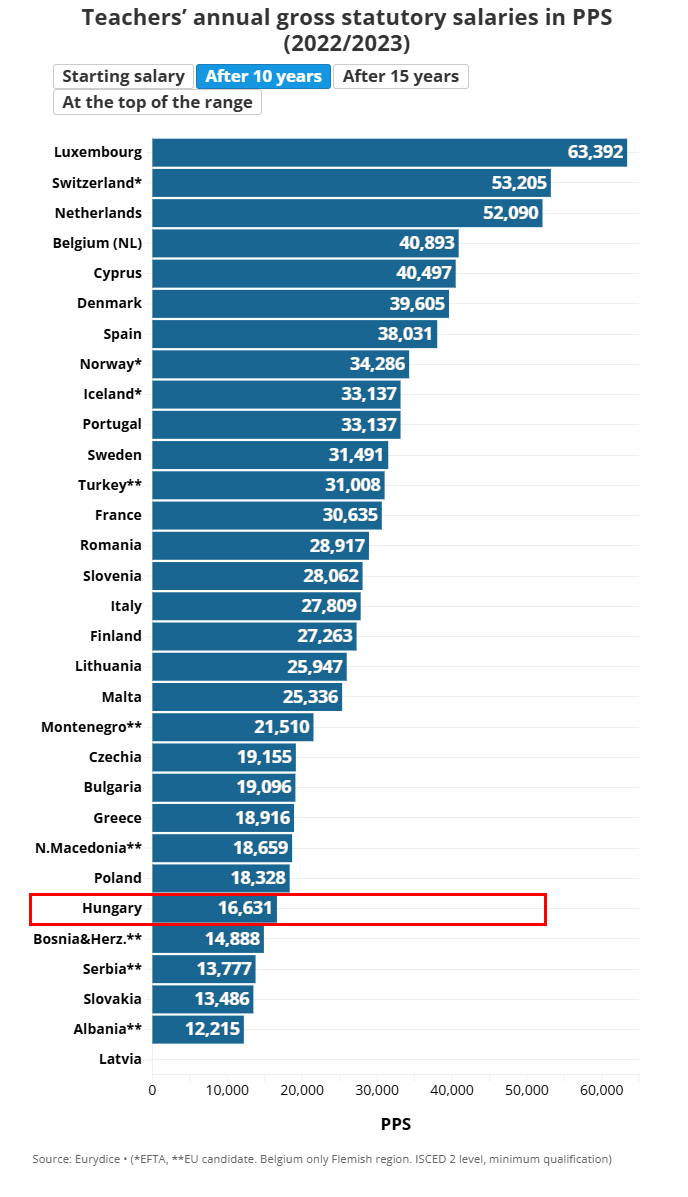
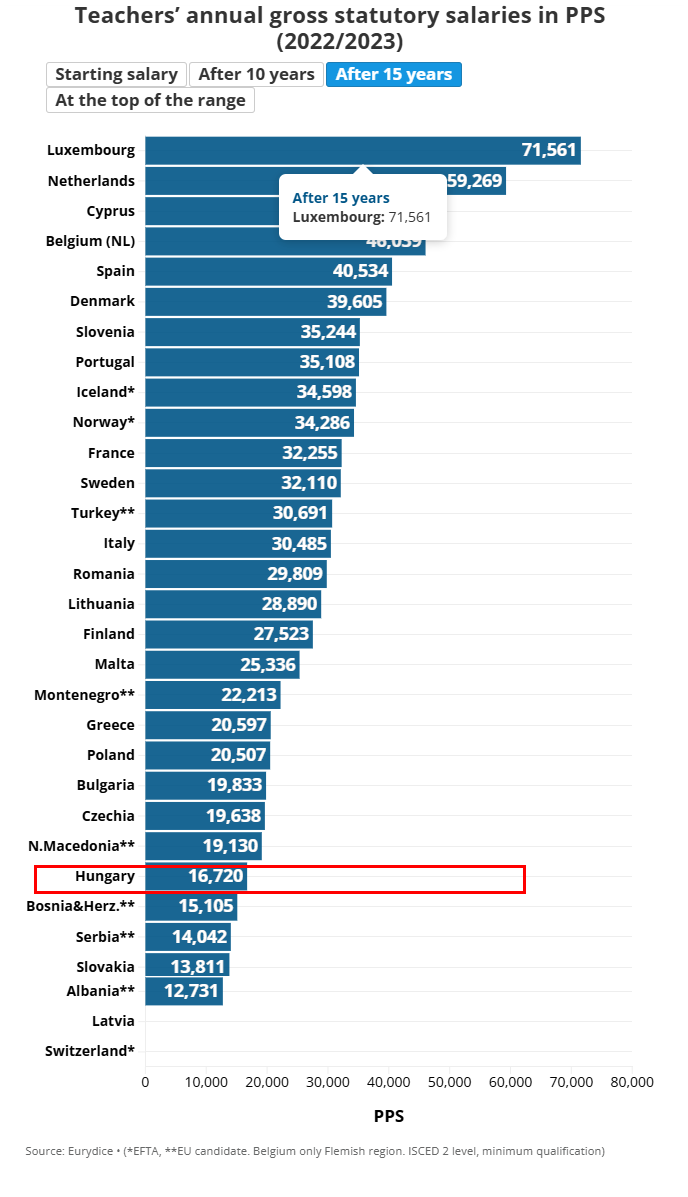
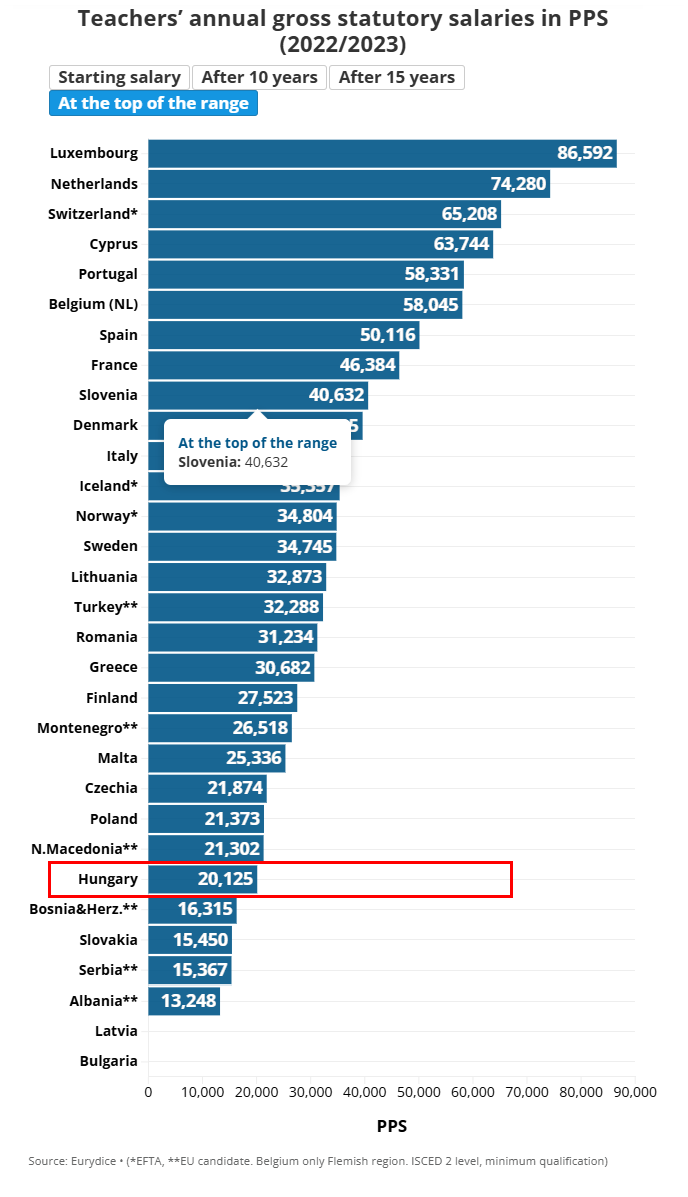
Teachers in the EU candidate countries earn less than €12,000 in a year. Hungary is at or close to the bottom of the ranking whether we look at starting salaries or earnings after 10 yrs, 15 yrs and the top salary available.
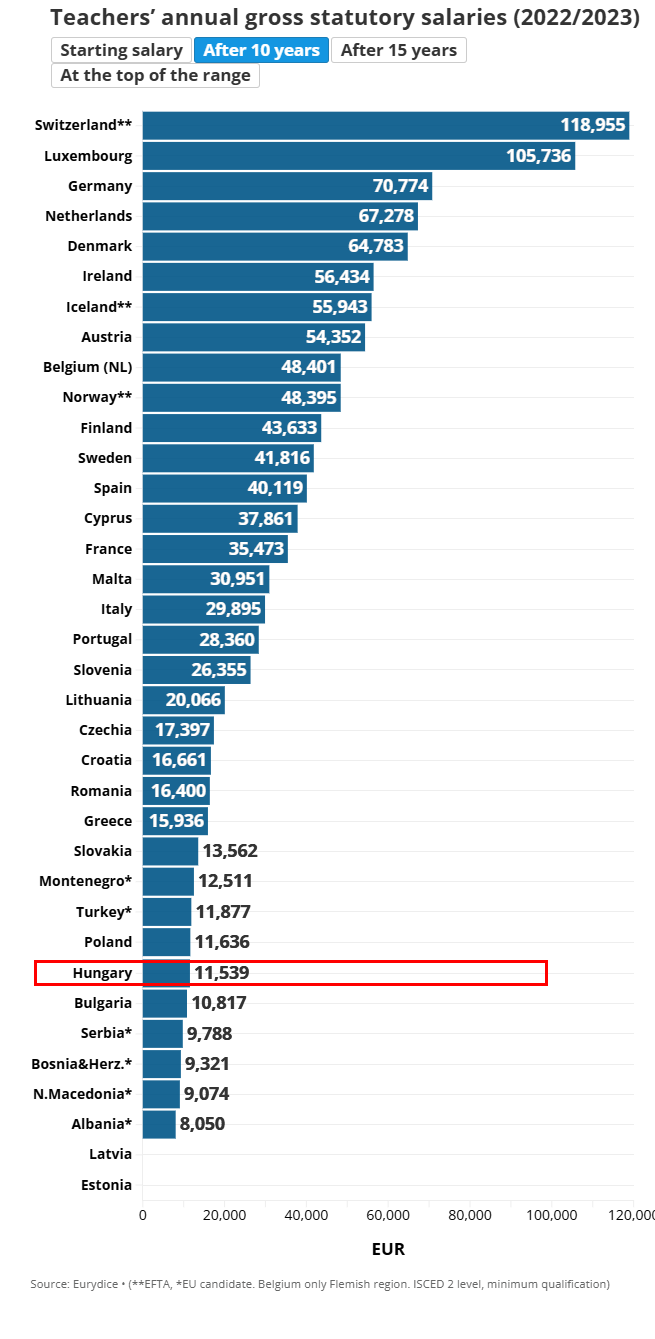
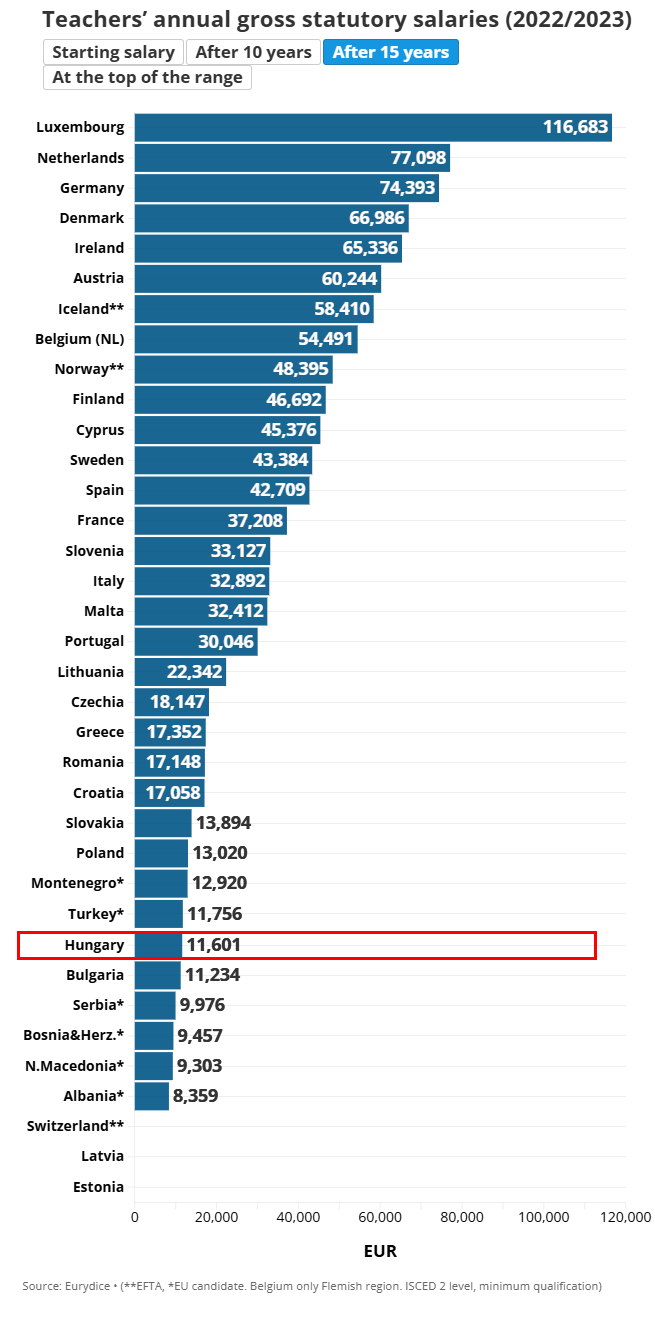
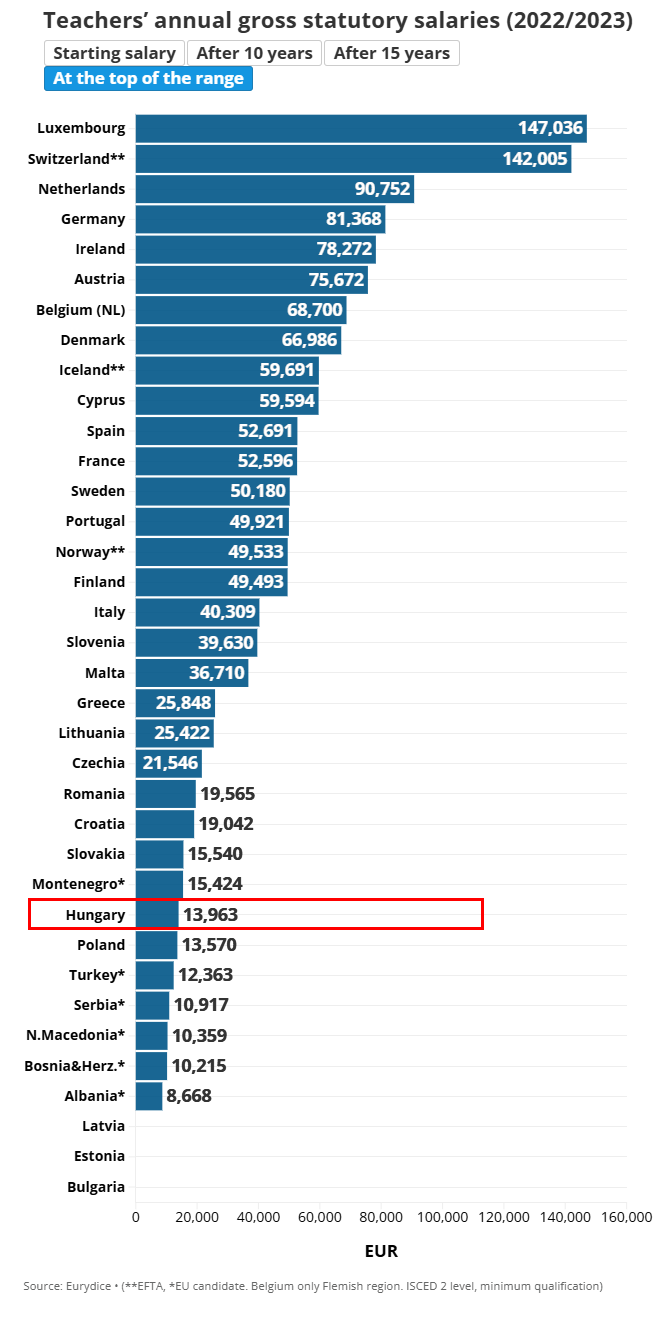
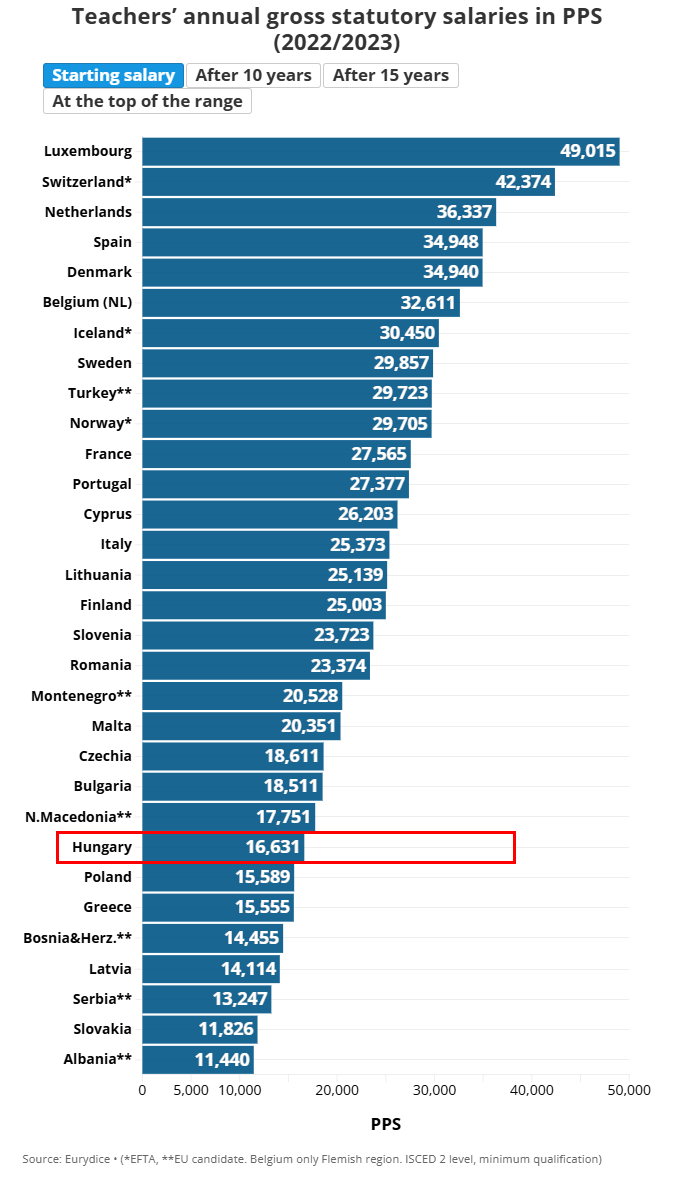
Teacher salaries expressed in Purchasing Power Standards (PPS) allow for a fairer comparison. PPS is an artificial currency unit that reflects the same purchasing power across countries, meaning one PPS can theoretically buy the same amount of goods and services in any country.
Annual gross statutory salaries in PPS for starting teachers within the EU ranged from 11,826 in Slovakia to 49,015 in Luxembourg. While the gaps between countries are narrower, they still persist.
In this indicator, several EU countries reported lower salaries than some candidate countries.
Again, Hungary is ranked at or close to the bottom, regardless of how many years the teachers spent in their profession.
Cover photo: EU





