Chinese minister to visit Brussels while Trump gets cold shoulder

China announced new export restrictions on October 9th, tightening controls on rare earth elements and other crucial materials citing national security reasons. The regulation also affects foreign exporters using Chinese-sourced materials, even in trace amounts. Analysts view Beijing's move as a response to Washington's similar chip export ban and as another tool of China's economic pressure ahead of the Trump-Xi meeting.
While Donald Trump has made several attempts to engage with and pressure the Chinese side, Beijing has ignored all his approaches.
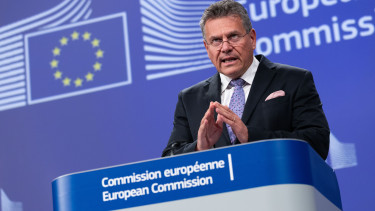
Maroš Šefčovič announced that Chinese Commerce Minister Wang Wentao will visit Brussels this week. According to the Commissioner,
EU companies have submitted approximately two thousand emergency applications for export permits to Chinese authorities, but only half of these have been properly processed.
The EU trade chief emphasised that Brussels is pushing for a quick resolution as the new export restrictions 'cast a shadow over EU-China relations'. He added that while
the EU is not interested in escalating the conflict, it considers the restoration of a transparent and predictable regulatory environment essential.
The severity of the situation is reflected in the European Commission's 2026 work programme presented on Tuesday, which includes launching a new strategic stockpiling programme for critical raw materials in the EU. This would primarily affect sectors heavily dependent on Chinese suppliers, such as the automotive, defence and battery manufacturing industries.
Meanwhile, member states and the European Commission have prepared an anti-coercion instrument that could deliver a severe blow to China and Chinese companies operating in the internal market.
What exactly is this anti-coercion instrument?
At last Thursday's summit in Brussels, the European Union discussed China's restrictions on raw material exports and possible sanctions for the first time. Beijing has been restricting exports of rare earth metals and other critical raw materials for months, causing serious concern in European industry, Handelsblatt reported.
Germany, France, and the European Commission are playing a key role in putting the issue on the agenda, and several member states have already proposed activating the "European Anti-Coercion Instrument."
This legal framework allows the EU to impose tough counter-sanctions in the event of economic blackmail.
Possible EU countermeasures include punitive tariffs, the exclusion of Chinese companies from EU public procurement, and the imposition of special taxes.
Diplomatic sources say Berlin considers the situation "serious," but the decision is still in its early stages. Chinese export restrictions are particularly sensitive for the European automotive, aircraft manufacturing, and defense industries, as they are heavily dependent on rare earth metals and magnets from China.
According to the EU's delegation in Beijing, the Chinese regulation introduced in October has introduced an even stricter licensing system than before, which could even prevent the development of Europe's own processing capacities.
This could be bad news for companies setting up in Hungary, such as BYD, CATL, and Sunwoda, which are heavily dependent on Chinese supply chains.
Beijing officially denies that the measures are directed against Europe. According to the Chinese government, the restrictions are necessary due to the military use of metals and the "turbulent global situation." In July, Foreign Affairs Advisor Wang Yi promised German companies an accelerated approval process during a meeting with German Foreign Minister Johann Wadephul, but in practice, only a few export applications have been approved. Furthermore, the Chinese authorities have ruled out the possibility of companies stockpiling in advance.
The situation is critical for German industry, which may also be a cause for concern for Hungarian manufacturing companies, especially those in the automotive sector:
several companies have already been forced to scale back or halt production because they do not know when Chinese shipments will arrive.
There are virtually no alternative sources, so any disruption to supply threatens the entire European production chain. The EU hopes that, when the Chinese regulations are implemented, it will be possible to secure an exemption for European companies without having to impose formal sanctions. The news of the coming negotiations supports all these hopes.
Cover photo (for illustration purposes only): Getty Images





