Largest developers on why the Hungarian real estate investment market crashed


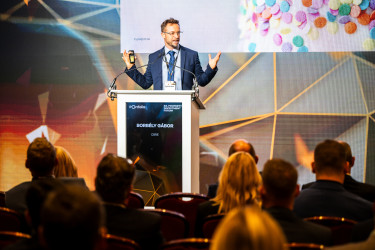
"If we look back a generation - since 1990 - the EU economy has shown very dynamic growth, including the spectacular convergence of Central Europe, but among the Central and Eastern European countries, the Hungarian dynamic has slowed down in recent years", said Gábor Borbély, Research Director of CBRE.
In terms of the property investment market, typically 1-2% of GDP goes to commercial real estate. For a long time, this was the case in Hungary, but it has now fallen to a fraction of that. However, in some countries with mature markets, the share is much higher, mainly due to the institutional housing market, which is completely absent in Hungary.
In terms of the share of asset classes, at the European level we are seeing a loss of office space, while everything else is seeing a strong upturn.
In the first half of this year, the volume of real estate investment in Hungary was EUR 150-160 million, which is extremely low. The Czech Republic and Slovakia are already showing signs of an upturn, while growth is more moderate in Poland. In Hungary, the share of domestic capital is 80%, while foreign capital is at an all-time low, he added.
How's the perception of the different segments?
The most expensive housing markets in Europe in income terms are typically found in Eastern Europe.
According to investor preferences, the industrial segment remains the most popular,
followed by multifamily, office, retail, hotel, and then by PBSA (student housing) and financing, the expert said.
The regional capitals have seen a significant increase in office stock, and Budapest is no exception. Meanwhile, yield levels have been on a rollercoaster ride, but in 20-year terms yields are still falling, as the region has joined the "core" Western European markets.
The logistics market has been slower to take off, but has recently seen explosive growth, although there is still room for further growth.
Hungary is absolutely underrepresented in the retail sector when looking at the range of international brands. Retail consumption growth could be strongest in Budapest over the next five years.
We are also expecting a big growth in the hotel sector, as we are the other central destination in the region next to Prague. The hotel market is experiencing a renaissance, but Budapest is very much shifted towards luxury, while there is room for growth in the economic segment as well, Gábor Borbély pointed out.
Challenges of the real estate market
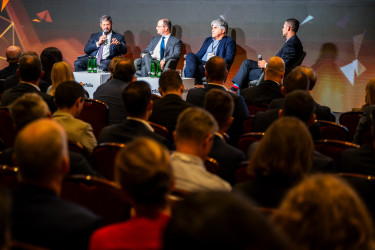
"What are the biggest problems with the property market today? What will be the main directions for the future? What do we need to pay special attention to?" asked Gergely Ditróy, Business Development Director of Portfolio Group.
During a global crisis, we look at the market very differently than in hindsight.
The biggest problem now is that the structure of capital is not healthy: there is little foreign capital and a lot of state intervention.
Hungarian and foreign institutional capital is not sufficiently present in the market. Looking back, I see mainly macro criticisms, but those problems are difficult to pinpoint while you're in the middle of them, said Gábor Futó, co-founder and co-owner of Futureal Group.
I see the mistakes of the past years less on the macro front and more on the micro side, such as the lack of transparency built into yields and pricing,
pointed out Dániel Jellinek, Partner and CEO of Indotek Group. Another mistake is not paying attention to education and training the next generation. In addition, we often point the finger at others instead of ourselves, but we have not done enough to ensure that the Hungarian market is perceived favourably at international level.
"I was once told by a Buddhist monk that everything happens exactly as it should, but he added that it is difficult to recognize this in a given situation in life," stressed Noah Steinberg FRICS, CEO of WING.
The difficulty is that the decision has to be taken at the moment. The foreign capital ratio is low, so if foreign capital does not come here, we have to use domestic capital to solve the problems, but we also have a presence abroad, for example. You always have to pay attention to what is happening at the moment.
Hungarian institutional investors should be more proactive
pointed out the CEO.
Gábor Futó added that
the market perception of the country is not determined by market players, but by politics.
The money that Hungarians invest in Hungary is in bad shape. The regulated real estate investment companies are not evolving enough, but the capital is not stable either. None of the funds on which the capital stands are stable, while the capital that could be raised is available. The regulations would have to be adapted to this. Attracting foreign capital would also be very important through transparency and communication to allow investors to flourish again.
What is the main direction for the future?
Generational, demographic and workforce challenges are the most common challenges identified by the audience, but preparing for climate disaster and digitalisation/AI are also important issues.
According to Noah Steinberg, the profession is based on cash flow positivity, so you need to create buildings that are attractive to the end user. This is where the role of AI, sustainability, etc. needs to be found.
According to Gábor Futó, climate change and AI are the two biggest challenges facing the world today. He pointed out that there is also a very tough regulation coming in the real estate market, for example in the field of CO2 emissions.
This will result in very significant CAPEX costs, we need to figure out how to convert the existing stock, but there is not enough capacity. The question is what will happen to the older buildings. He pointed out that globally there are huge problems with house prices rising more than the rate of inflation, but the lack of innovation in the construction industry means that this trend could continue in the future.
Dániel Jellinek drew attention to the importance of market transparency and said that
environmental protection is important, but at the same time the European market is competing with the American and Asian markets.
It is impossible to be competitive with the current production efficiency, he pointed out.
Cover photo: MARTON MONUS


